
As pet parents, we dedicate a massive amount of time to researching the absolute best food for our furry family members. We scan ingredient lists, calculate protein ratios, and seek out premium brands. Yet, we rarely stop to think about the other vital component of their daily intake: water.
Water makes up roughly 60% to 70% of an adult pet’s body weight. It is responsible for driving nutrient absorption, lubricating joints, regulating internal temperatures, and flushing out cellular toxins.
When you fill up your dog, cat, or bird’s bowl, do you reach for the tap or do you use filtered water? Let’s explore the scientific truth behind Tap Water vs. Filtered Water to help you choose the safest, healthiest option for your companion animal.
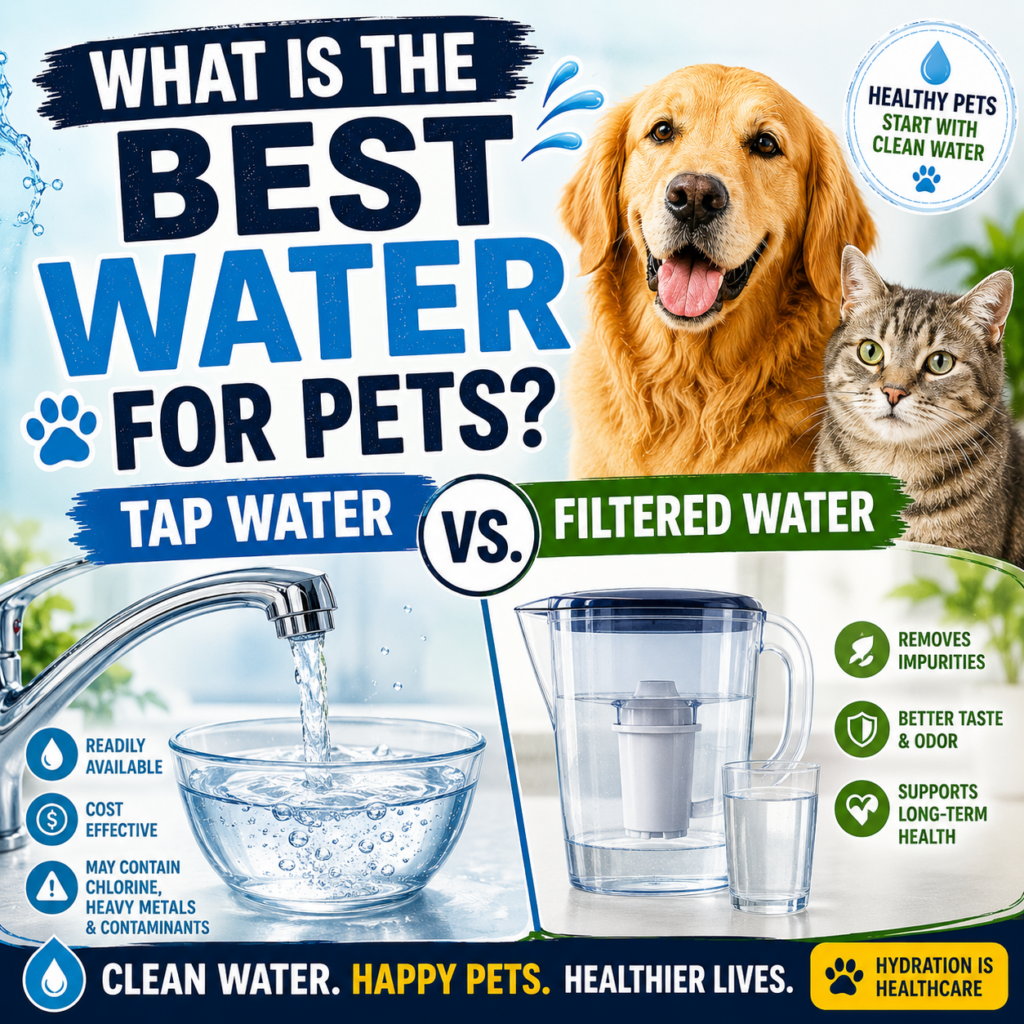
1. The Reality of Tap Water: Is It Safe for Pets?
In many modern municipal areas, tap water is treated thoroughly and deemed perfectly safe for human consumption. However, “safe for humans” does not always translate to “safe for a tiny animal’s long-term health.”
Municipal tap water typically contains several chemical additives and potential contaminants that can present subtle dangers to pets over time:
- Chlorine and Chloramines: Cities add these chemicals to tap water to kill harmful bacteria and viruses in the pipe systems. While the low doses don’t hurt humans immediately, a pet’s olfactory system is up to 100,000 times more sensitive than ours. The strong, chemical smell of chlorinated tap water can actively deter animals—especially stubborn cats—from drinking enough water, leading to quiet dehydration.
- Heavy Metals and Contaminants: Even if water leaves the treatment plant clean, it must travel through miles of ancient underground pipes. Tap water can pick up traces of lead, copper, rust, and microplastics along the way. Because pets have much smaller organs, their livers and kidneys face a heavier burden when trying to filter out these micro-toxins daily.
- The “Hard Water” Dilemma: Tap water in many regions is packed with high levels of minerals like calcium and magnesium. While mild hard water is fine, chronic consumption of excessively hard tap water has been linked to a higher incidence of urinary tract infections (UTIs) and bladder stones in susceptible male cats and small dog breeds.
2. Filtered Water: The Ultimate Avian and Mammal Safeguard
Filtered water—whether it comes from a carbon-activated pitcher, a refrigerator dispenser, or a reverse osmosis system—is universally regarded by veterinarians as the premium choice for companion animals.
- Enhanced Palatability: Carbon filters pull out the pungent smells of chlorine and sulfur. To your pet’s hyper-sensitive nose, filtered water smells completely clean and natural, which triggers their hydration instincts and encourages them to drink significantly more liquid throughout the day.
- Profound Benefits for Birds: If you own highly sensitive exotic animals like African Grey parrots, filtered water is an absolute necessity. Birds possess highly delicate respiratory and metabolic tracts. The trace amounts of heavy metals or chemical vapors found in standard tap water can build up in a bird’s small body rapidly, leading to chronic toxic overload.
- Long-Term Preventive Care: Providing clean, contaminant-free water acts as an internal shield, preserving your pet’s kidney function, maintaining clear skin, and preventing the crystal formations that cause painful urinary blockages.
Quick Comparison: Tap Water vs. Filtered Water
| Feature | Tap Water | Filtered Water |
| Chemical Additives | High levels of chlorine, chloramines, and fluoride. | Chemicals are entirely removed or significantly reduced. |
| Aroma & Flavor | Chemical-heavy smell; can deter picky pets. | Odorless, clean, and highly appealing to animals. |
| Risk of Hard Minerals | High (Potential factor for urinary crystals). | Managed or filtered out to safe baselines. |
| Best Suited For | Large livestock or emergency hydration backups. | Domestic cats, small dogs, and sensitive parrots. |
Practical Tips for Keeping Your Pet Hydrated
Choosing the right water is only step one; you also need to manage how you serve it to ensure optimal feline, canine, and avian health:
- Ditch the Plastic Bowls: Plastic water bowls easily develop microscopic scratches over time. These scratches act as perfect breeding grounds for harmful bacteria and slime, which alters the taste of the water. Switch strictly to stainless steel, ceramic, or glass bowls.
- Wash the Bowl Daily: Simply topping off an empty water bowl isn’t enough. Empty the bowl completely, wash it with hot water and mild dish soap once a day, and refill it fresh to prevent biofilm accumulation.
- Deploy a Pet Water Fountain: If you are using filtered water for a cat or dog, consider pouring it into a circulating pet water fountain. Animals are instinctually hardwired to prefer moving water over stagnant puddles, as moving water signals safety and high oxygenation in the wild.
Conclusion
While tap water can serve as a decent emergency backup, filtered water is the undisputed winner for daily pet care. By removing harsh chemical odors, toxic heavy metals, and excess minerals, filtered water takes the processing burden off your pet’s small organs and actively protects them from painful urinary illnesses. Fill their bowls with the same clean, pure water you would drink yourself—their long-term health, vibrant energy, and shiny coats will thank you for it!