
If you’re a cat owner, you’ve likely experienced it: you settle into bed or sit down on the couch, and within minutes, your feline friend has curled up directly on your chest, lap, or even your face.
While it is an incredibly endearing habit (albeit occasionally uncomfortable), it begs the question: Why does my cat sleep on me?
Are they just looking for a comfortable mattress, or is there a deeper psychological reason behind this behavior? Let’s dive into the fascinating world of feline psychology to find out.
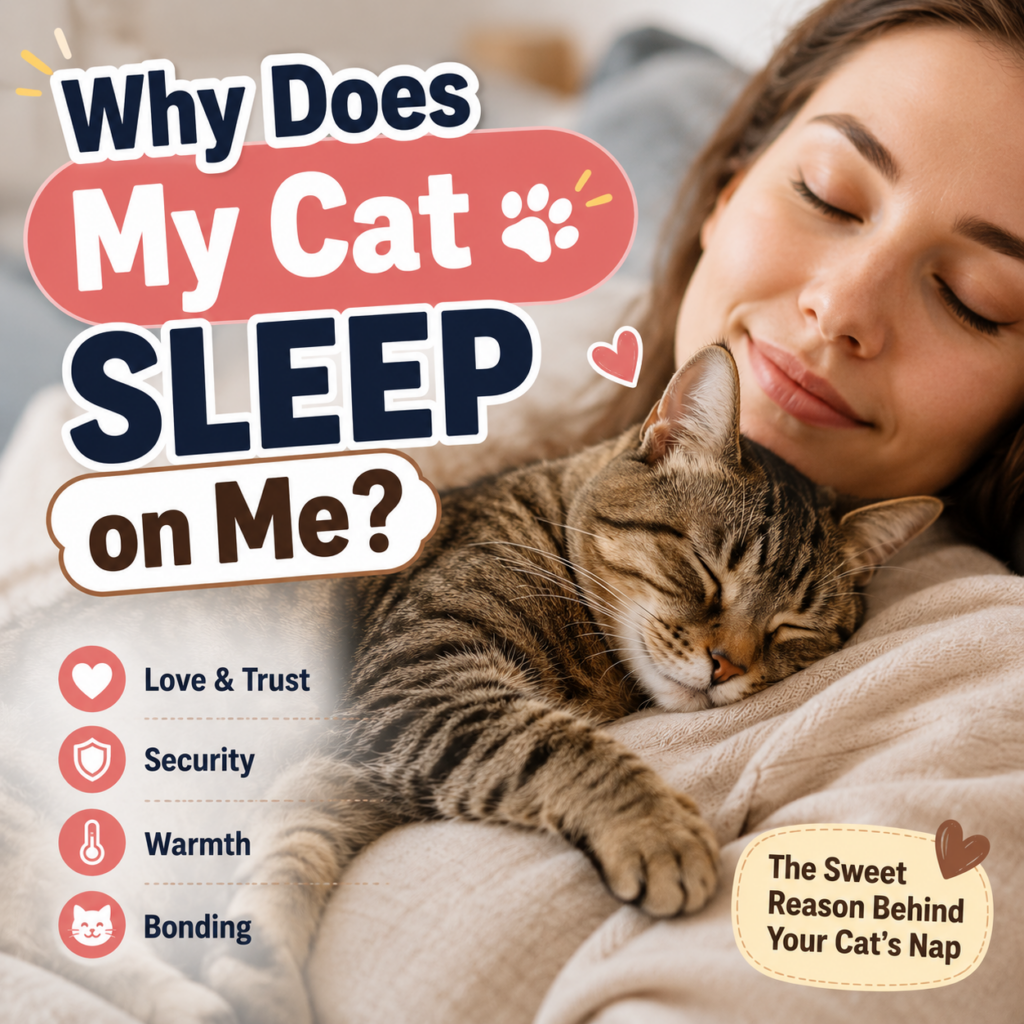
1. Seeking Ultimate Warmth
Cats are natural heat-seekers. A cat’s normal body temperature is around 101°F to 102.5°F (38.3°C to 39.2°C), which is significantly higher than a human’s. To maintain this high body temperature, they require extra energy.
By sleeping on you—especially on high-heat zones like your stomach, chest, or head—your cat is essentially using you as a living, breathing heating pad. It’s a clever way for them to conserve energy while they rest.
2. Security and Trust
In the wild, sleep is the most vulnerable time for any predator. When your cat chooses to sleep on you, it is the ultimate compliment. It means they trust you completely.
By curling up against your body, your cat knows that you will protect them from any potential threats. If they choose to sleep with their back to you, it’s an even bigger sign of trust, showing they feel safe letting their guard down in your presence.
3. Scent-Marking and Claiming “Their” Human
Cats are highly territorial animals that communicate heavily through scent. They have scent glands located on their cheeks, paws, and the tops of their heads.
When your cat sleeps on you, rubs against you, or kneads you (often called “making biscuits”) before settling down, they are depositing their pheromones onto your clothing and skin. In the cat world, this is their way of saying, “You belong to me, and I belong to you.”
What Does Their Sleeping Position Mean?
Where and how your cat chooses to drape themselves over you can tell you a lot about their current mood and emotional needs.
| Sleeping Position | What It Usually Means |
| On your chest | They want to be as close to your heartbeat as possible; it reminds them of being a kitten with their mother. |
| On your lap | Convenience and comfort. They love the security of your lap while you are awake and stationary. |
| On your legs or feet | They want to be near you but also want an easy escape route if you move too much in your sleep. |
| On your head/pillow | They are seeking the warmest part of your body, and your head moves the least while you sleep. |
4. The Soothing Heartbeat and Rhythmic Breathing
If your cat loves sleeping directly on your chest, they are likely drawn to the rhythmic sound of your heartbeat and the steady rise and fall of your breathing.
This auditory and physical sensation mimics the experience they had as tiny kittens when they huddled together with their mother and littermates. For an adult cat, your heartbeat acts as a natural white noise machine that lowers their stress levels.
5. Pure Deep Affection (Yes, Cats Love You!)
Despite their reputation for being aloof, cats form incredibly deep bonds with their owners. If you work away from home during the day, your cat misses you.
Sleeping on you is their way of making up for lost time. It’s a display of pure affection and a desire for social bonding that reinforces the connection between you.
💡 Is It Bad to Let Your Cat Sleep on You?
For most people, letting a cat sleep on them is completely safe and actually reduces stress and blood pressure. However, you might want to discourage the habit if:
- You suffer from severe allergies or asthma.
- Your cat disrupts your sleep by waking you up throughout the night.
- You have a very young kitten (to avoid accidentally rolling over on them).
How to Get Your Cat to Sleep in Their Own Bed
If your cat’s nightly cuddles are starting to disrupt your sleep quality, you can gently train them to sleep in their own space using these tips:
- Create a Warm Alternative: Place a heated pet bed or a self-warming cat mat near your bed.
- Use Your Scent: Put an unwashed t-shirt or blanket that smells like you into their new bed to make it more inviting.
- Play Before Bedtime: Initiate a high-energy play session right before bed, followed by a meal. This triggers the natural “Hunt-Eat-Groom-Sleep” cycle in cats.
The Bottom Line
When your cat sleeps on you, it is a beautiful mixture of biological instinct, a desire for comfort, and deep emotional attachment. They see you as a warm, safe, and loving protector. So, as long as it isn’t ruining your sleep schedule, feel free to sit back, relax, and enjoy the cozy feline company!


