Anyone who has ever lived with a parrot knows that these birds are not your average pets. They are highly intelligent, emotionally complex, and incredibly expressive.
But if you share a home with a parrot and multiple family members, you might have noticed something peculiar: your bird completely adores one person while giving everyone else the cold shoulder (or worse, a sharp nip).
This leaves many bird owners wondering: Do parrots have favorite people? Why do they choose one specific human to bond with, and can you change a parrot’s mind? Let’s dive into the fascinating world of avian psychology.
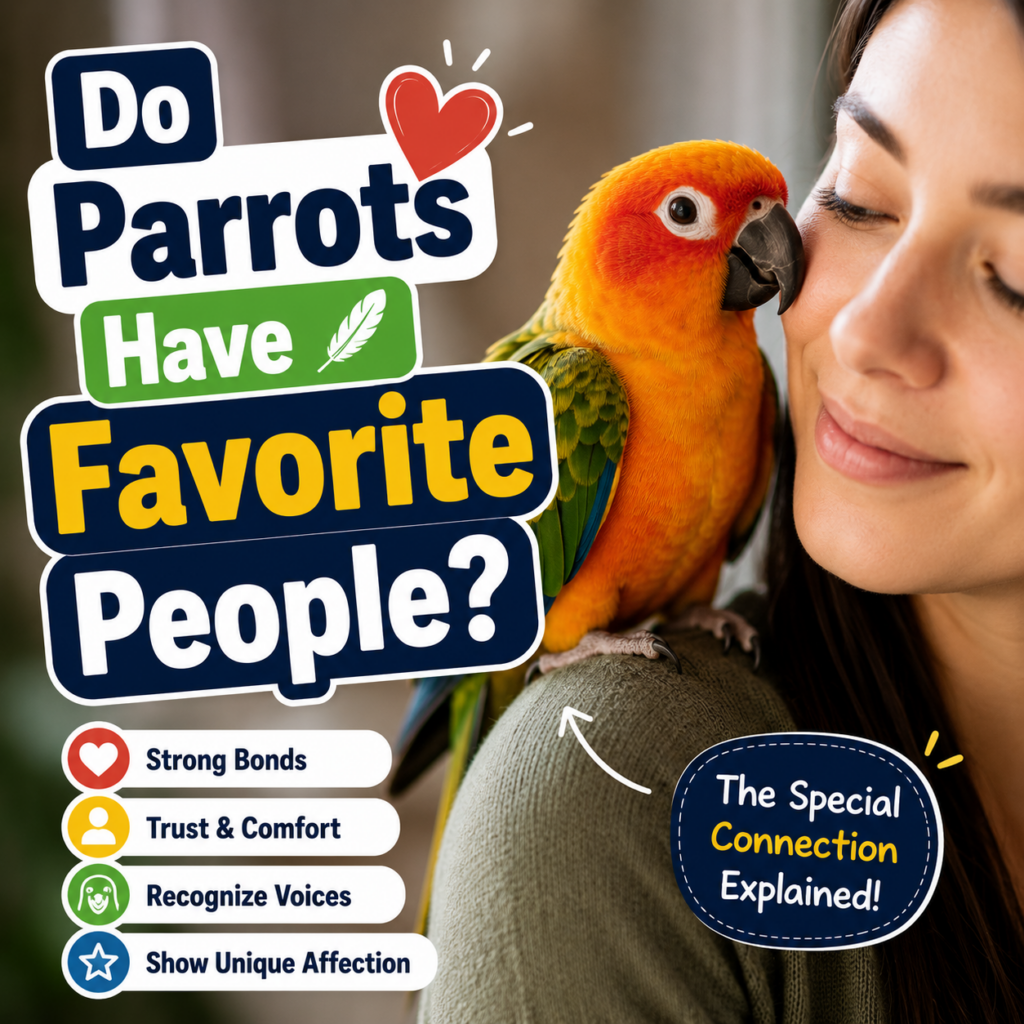
The Short Answer: Yes, Parrots Frequently Choose a “Favorite”
In the avian world, this behavior is commonly known as becoming “one-person birds.”
In the wild, the vast majority of parrot species are monogamous. They choose a single mate with whom they travel, forage, groom, and raise chicks—often for life. When kept as pets, parrots do not lose this powerful evolutionary instinct.
Without a feathered flock of their own, they look to their human family to find a soulmate. They will often select one person who becomes, in their eyes, their chosen life partner.
Why Do Parrots Choose a Specific Favorite Person?
A parrot’s choice of their favorite human isn’t always random. Several factors influence who they decide to bond with:
1. Socialization During Youth
If a parrot was raised and handled by only one person during their formative years, they are much more likely to become a one-person bird. Parrots that are socialized with various people, genders, and ages when they are young tend to be more open to multiple family members later in life.
2. Personality Matching
Parrots are sensitive to human energy. Some birds, like Macaws or Cockatoos, might prefer high-energy individuals who match their playful drama. Other birds, like African Greys, are often naturally more reserved and might gravitate toward a calm, quiet, and predictable family member.
3. Who Handles the “Good Stuff”
Birds are smart. They quickly figure out who fills the food bowl, who hands out the delicious walnut treats, and who opens the cage door for out-of-cage playtime. The person associated with the highest-value rewards often wins the title of “Favorite.”
Signs Your Parrot Has Chosen You as Their Favorite
How do you know if you are the chosen one? Look out for these telltale signs of deep avian affection:
| Behavior | What It Means |
| Allopreening (Grooming) | Gently preening your hair, eyebrows, or skin. This is a top-tier bonding ritual in the wild. |
| Regurgitation | Bringing up food when looking at you. While a bit gross to humans, to a parrot, this is the ultimate romantic gesture! |
| The “Fluff and Wiggle” | Fluffing up their feathers, pinning their eyes (rapidly dilating pupils), and wiggling their tail when you enter the room. |
| Contact Calls | Making specific loud noises or screaming only when you leave the room, calling you back to the “flock.” |
The Dark Side: Territorial Aggression
While being a parrot’s favorite person feels amazing, it can sometimes lead to behavior problems like lunge-biting, screaming, or charging at other family members.
Because the parrot views their favorite person as their mate, they will instinctively try to defend you from “rivals” (your spouse, kids, or friends). If your bird screams or bites others when you are nearby, they are practicing mate-defense behavior.
⚠️ A Note on Hormonal Bonding
Be careful how you pet your bird! To keep a healthy, platonic bond, only pet your parrot on the head and neck. Stroking a parrot on their back, wings, or stomach stimulates them hormonally, making them think you are courting them. This can lead to frustration, feather plucking, and increased aggression.
How to Help a “One-Person Bird” Accept Others
If your parrot has chosen a favorite and is acting aggressively toward everyone else, you can broaden their social circle with these steps:
- Step Back Temporarily: The favorite person should step back from being the sole provider of treats and food.
- The “Good Stuff” Rule: Have other family members be the exclusive givers of high-value treats (like seeds or fruit). The bird will quickly learn that other humans mean good things happen.
- Neutral Territory Training: Have non-favorite family members interact with the parrot away from their cage. Parrots are highly territorial over their cages and their favorite person’s shoulder.
- Respect Boundaries: Never force a parrot to go to someone they are afraid of. Let the bird approach new people at their own comfortable pace.
The Bottom Line
Yes, parrots absolutely have favorite people. It is a beautiful reflection of their deeply loyal, monogamous nature. However, with patience, proper boundary setting, and positive reinforcement, you can guide your parrot to realize that the rest of the human household can be excellent flock members, too!