
Ask anyone who grew up with a dog, a cat, or even a bunny, and they will tell you the same thing: it changes you. Long after childhood pets are gone, the impact they leave on a person’s personality, empathy, and health remains.
But is this just nostalgia, or is there hard evidence behind it?
As it turns out, developmental psychologists and pediatricians agree that kids who grow up with pets are different—in the best ways possible. From boosted immune systems to superior emotional intelligence, here is the science-backed truth about how growing up alongside an animal shapes a child’s future.
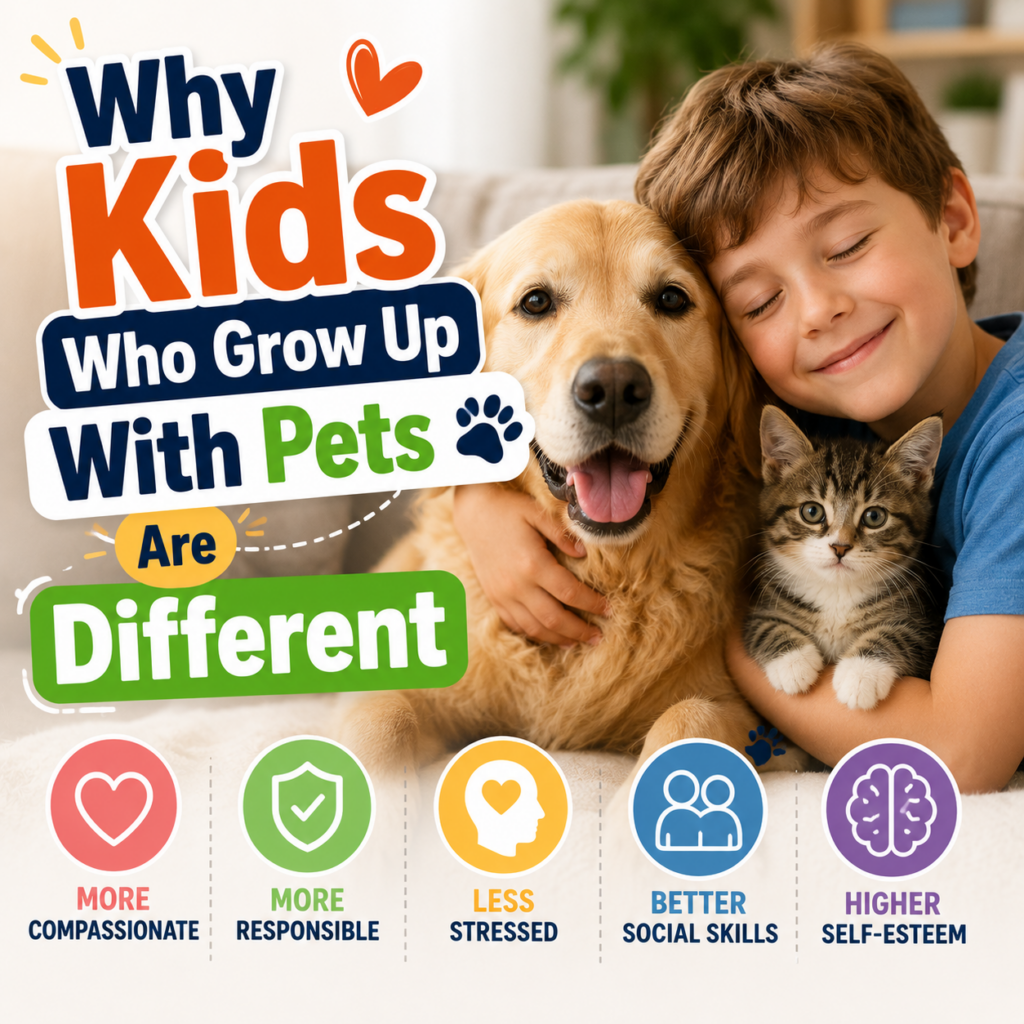
1. They Possess Higher Emotional Intelligence (EQ)
One of the most profound differences in children raised with animals is their level of empathy. Long before a child learns to read social cues from peers, they learn to read their pets.
Children quickly learn to recognize that a dog panting with a wagging tail means joy, while a cat with flattened ears means “give me space.”
The Cognitive Connection:
- Empathy Practice: By learning to care for a being that cannot speak, children develop a deep capacity for cognitive empathy—the ability to understand and share the feelings of another.
- The Anti-Bullying Effect: Studies show that children with high empathy scores are significantly less likely to engage in bullying behaviors at school.
2. They Have Stronger Immune Systems and Fewer Allergies
For decades, parents worried that bringing a pet into a home with a newborn would trigger allergies or asthma. Modern medical science has flipped this narrative completely on its head.
According to the “Hygiene Hypothesis,” a home that is too sterile doesn’t allow a child’s immune system to practice fighting off bugs.
The Science: A landmark study published in JAMA Pediatrics found that children exposed to dogs or farm animals during their first year of life had a 13% to 15% lower risk of developing asthma later in childhood. The microscopic dust and microbes tracked in by pets actually train a child’s immune system to be resilient rather than hyper-reactive.
At a Glance: How Pets Modify Child Development
| Area of Growth | The “Pet Effect” on Kids | Long-Term Benefit |
| Physical Health | Exposure to pet dander and outdoor microbes. | Lower rates of asthma, allergies, and obesity. |
| Social Skills | Constant companionship and non-judgmental listening. | Higher self-esteem and smoother peer interactions. |
| Cognitive Growth | Talking to pets, reading aloud to them. | Accelerated language acquisition and reading skills. |
| Emotional Security | Secret-keeping and emotional regulation with a loyal friend. | Lower anxiety and better stress management. |
3. They Learn Accountability and Responsibility Early
It’s a classic parenting negotiation: “If we get a puppy, you have to walk it!” While a young child shouldn’t be solely responsible for an animal’s life, involving them in age-appropriate pet care builds incredible character.
Whether it is a toddler pouring kibble into a bowl or a pre-teen walking the dog after school, these daily rituals instill a core life lesson: other living things depend on your actions. This early taste of responsibility translates directly into better organizational skills and accountability in their schoolwork and future careers.
4. They Have a Natural Shield Against Loneliness and Stress
Childhood isn’t always easy. Facing academic pressure, moving to a new town, or experiencing schoolyard exclusion can cause genuine anxiety in young minds.
This is where a childhood pet becomes an emotional anchor.
- The Non-Judgmental Confidant: Animals offer unconditional love. A pet doesn’t care if a child failed a math test or didn’t make the sports team. Kids frequently confide secrets and fears to their pets that they might feel too embarrassed to tell an adult.
- The Science of a Hug: Stroking a cat’s fur or hugging a dog has been proven to lower cortisol (the stress hormone) levels and stimulate the release of oxytocin, immediately calming a child’s nervous system.
5. They Are More Active and Less Attached to Screens
In an era dominated by tablets, smartphones, and video games, getting kids moving is a major hurdle for modern parents.
Children who grow up with dogs have a built-in, screen-free entertainment system. Whether it’s playing fetch in the backyard, chasing a laser pointer with a kitten, or walking around the block, pet-owning children naturally accumulate more daily physical activity. This active lifestyle establishes healthy physical habits that drastically lower the risk of childhood obesity.
6. They Become Better Communicators and Readers
Did you know that dogs are the ultimate reading tutors? Many libraries and schools now implement “Read to a Dog” programs for a simple reason: animals don’t judge.
When a child struggles with reading, practicing in front of a parent or teacher can induce performance anxiety. But reading aloud to a dog or cat? There is no fear of being corrected or laughed at. This judgment-free environment allows hesitant readers to build vocal confidence, fluency, and a genuine love for language.
The Bottom Line
Growing up with a pet gives children a distinct developmental edge. They enter adulthood with a more resilient immune system, a highly tuned radar for empathy, and a deeply ingrained sense of responsibility.
While raising a child and a pet simultaneously requires extra patience and vacuuming, the emotional and physical rewards your child carries into the rest of their life make every bit of effort entirely worth it!