
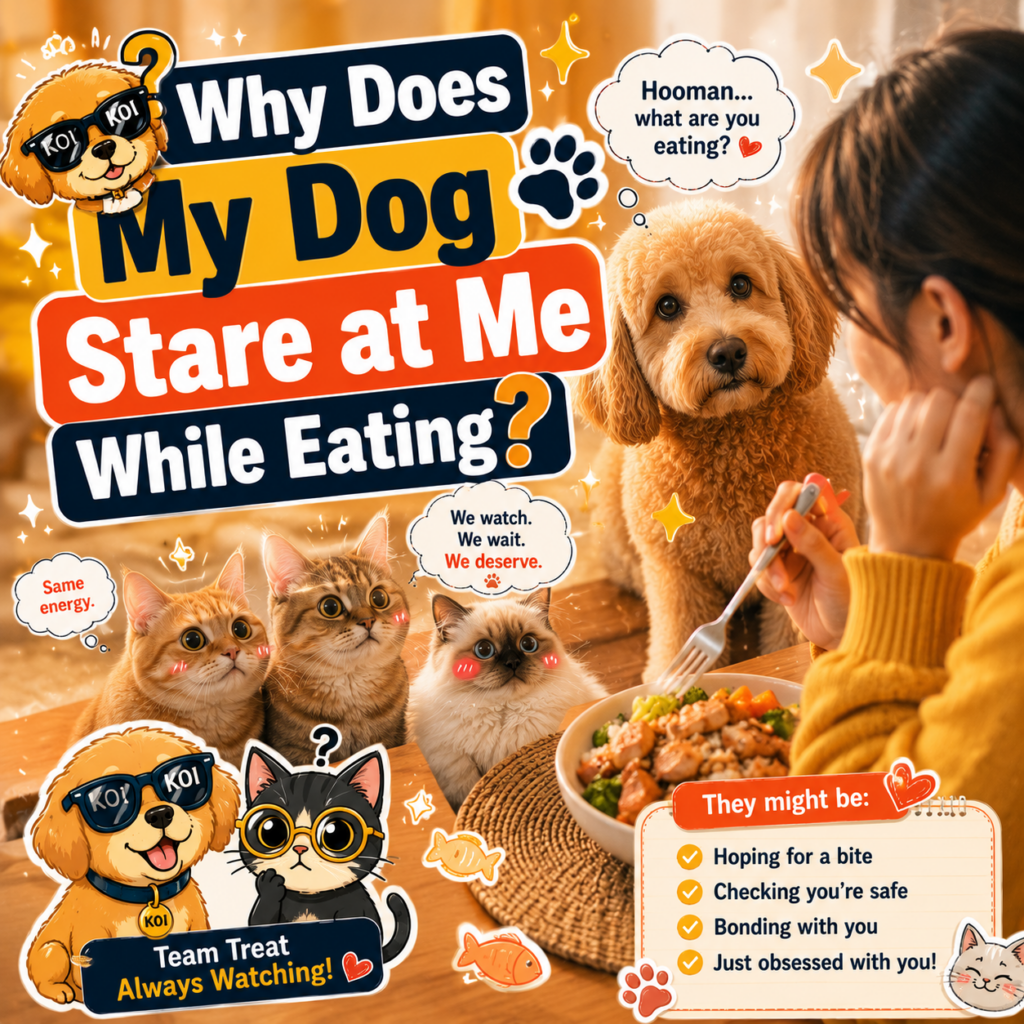
You sit down at the dining table with a delicious meal, pick up your fork, and suddenly feel a heavy wave of intense concentration burning into the side of your face. You look down, and there they are: your dog is sitting perfectly still, eyes wide, tracking every single bite moving from your plate to your mouth.
It can make any pet parent feel a bit guilty, amused, or slightly uncomfortable.
Why does my dog stare at me while eating? Is it pure, unadulterated begging, or is there a deeper evolutionary explanation hidden behind that unblinking canine gaze? Let’s dive into the fascinating world of canine psychology and pack dynamics to uncover the truth.
1. The Ancestral Pack Instinct: Waiting for the Leftovers
To understand why your pup turns into a statue during dinner time, we have to look back at their wild ancestors. In a wolf pack, resources are strictly regulated by social hierarchy. The pack leaders (alphas) always eat first, consuming the prime cuts of a hunt.
The lower-ranking members of the pack do not fight the leaders for the food. Instead, they stand nearby and watch intently.
They are monitoring the meal to see when the leaders are finished, hoping to swoop in the exact second the leftovers become available. When your dog stares at you while you eat, they are applying this identical ancestral blueprint to your household. They recognize you as the fair pack leader, respect your access to the food, and are politely waiting for their turn to clear the scraps.
2. Master Pattern-Recognizers: Tracking the “Reward Drop”
Dogs are incredible observers of human behavior. They don’t just see you eating; they log every micro-movement you make into a permanent mental database.
If you have ever slipped your dog a piece of chicken under the table, dropped a crumb of cheese by accident, or let them lick your empty plate when you were finished, your dog remembers.
In animal psychology, this is called intermittent reinforcement. Because a reward dropped from the table sometimes, your dog treats every single meal like a potential lottery win. They stare at you because they are waiting for the exact pattern—a hand moving downward or a plate tilting—that signals a high-value treat is about to hit the floor.
Decoding the Dinner Stare: What Is Your Dog Telling You?
How your dog behaves while they watch you eat can tell you exactly what emotional state they are experiencing.
| Dog’s Posture While Staring | The Root Motivation | What You Should Do |
| Sitting calmly, occasional tail-wag, soft eyes. | Polite Expectation: They are respecting your boundaries but hoping for a leftover drop. | Maintain your boundaries; do not feed them directly from your plate. |
| Whining, pacing, nudging your knee with their snout. | Demand Begging: They have learned that making noise forces you to share. | Ignore the behavior completely or send them to a designated “place” away from the table. |
| Staring intensely right next to an empty dog bowl. | Strict Routine Cue: Their internal clock says it is officially their dinner time. | Stick to a predictable schedule so they know when their resources arrive. |
3. Pure Affection and “Emotional Sponging”
Dogs are intensely social creatures that experience a massive surge of oxytocin (the bonding hormone) whenever they lock eyes with their favorite human.
When you sit down to eat, you are stationary, relaxed, and fully present in the room. To your dog, this is prime bonding time. They stare at you simply because they love your presence, enjoy analyzing your facial expressions, and find deep comfort in being close to their primary source of security.
💡 The Visual Superpower of the Canine Gaze
Why can they stare for so long without blinking? A dog’s eyes possess a higher density of rod cells than human eyes, which makes them incredibly sensitive to motion. They can track the slightest twitch of your hand or a change in your chewing rhythm from across the room, making your dinner routine an absolutely fascinating visual show for them.
4. They Are Confused by Your Food Routine
Sometimes, the stare is driven by simple cognitive curiosity. Dogs have a highly tuned internal circadian rhythm and thrive on structure. If you usually feed your dog at 6:00 PM but you sit down to eat your own dinner at 5:30 PM, your dog might stare out of sheer confusion. They are looking at you to decode the schedule, wondering: “If the human is eating, does that mean it’s time for my bowl to be filled too?”
How to Stop the Intense Table Stare
If your pup’s constant dining surveillance is ruining your peaceful meals, you can gently reshape their behavior using these expert training tips:
- Establish a Strict “Place” Command: Train your dog to lie down on a specific mat, bed, or inside their crate whenever human food is on the table. Reward them with a long-lasting chew toy (like a frozen KONG stuffed with peanut butter) only when they stay in their designated zone.
- Ditch the Table Scrap Habit: The fastest way to break a staring habit is to eliminate the reward. Ensure everyone in the family adheres to a strict rule: never feed the dog from the table. If there is a 0% chance of a food drop, the table eventually loses its psychological appeal.
- Sync Their Meals: Try feeding your dog their own puzzle feeder or snuffle mat in another room at the exact same time you sit down to eat. Occupying their brain with their own “hunt” perfectly diverts their focus away from your plate.
The Bottom Line
When your dog stares at you while you eat, it isn’t an act of defiance or a sign of starvation. It is a beautiful, ancient mixture of pack instincts, respect for your leadership, and a learned hope for a delicious reward. By understanding the psychology behind their intense gaze and setting clear, loving boundaries around your dining space, you can enjoy your meals in peace while keeping your furbaby completely calm, secure, and content right beside you!


