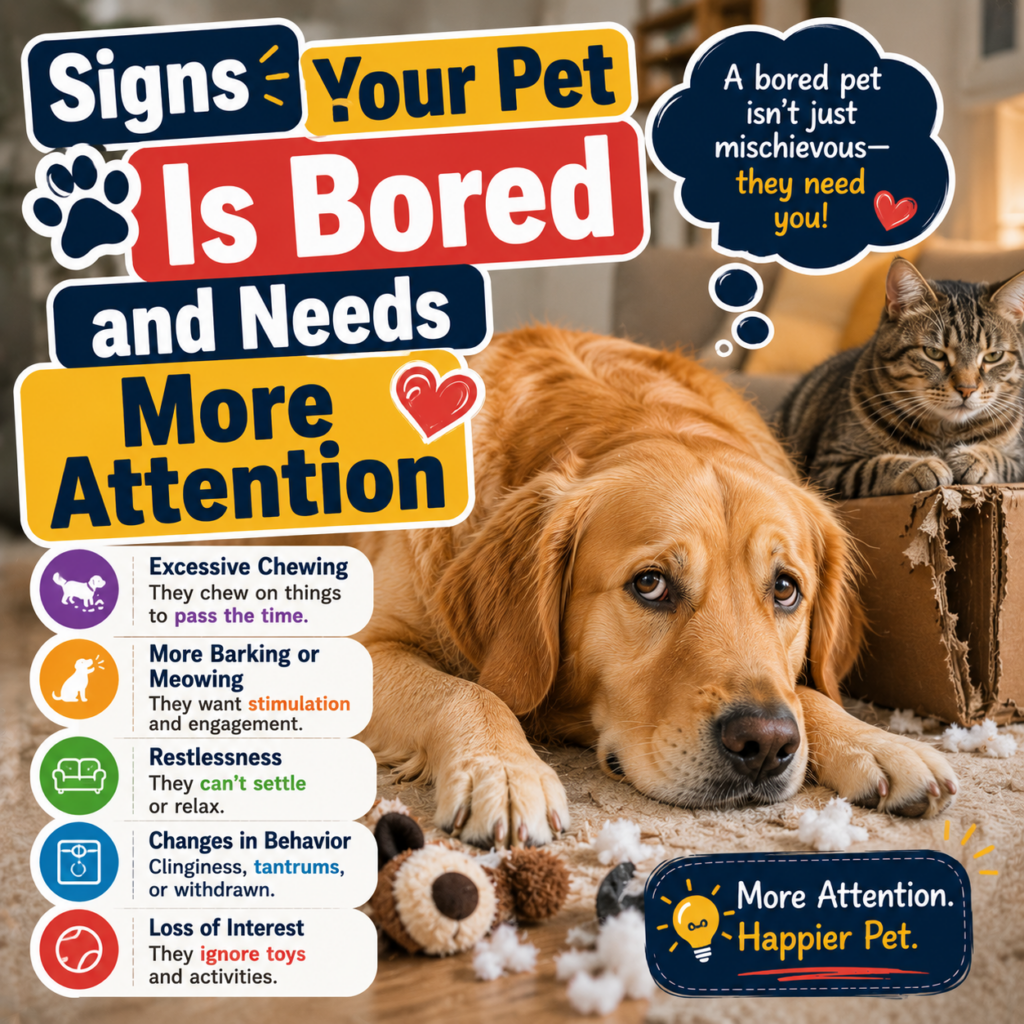
It is a domestic showdown that every single dog parent has experienced at least once. You turn the key in the front door, step across the threshold, and find an absolute disaster zone in your kitchen: a knocked-over trash can, shredded sofa cushions across the rug range, or a missing slice of chicken from the countertop.
Before you even utter a single word, your dog walks into the frame executing a highly distinct performance.
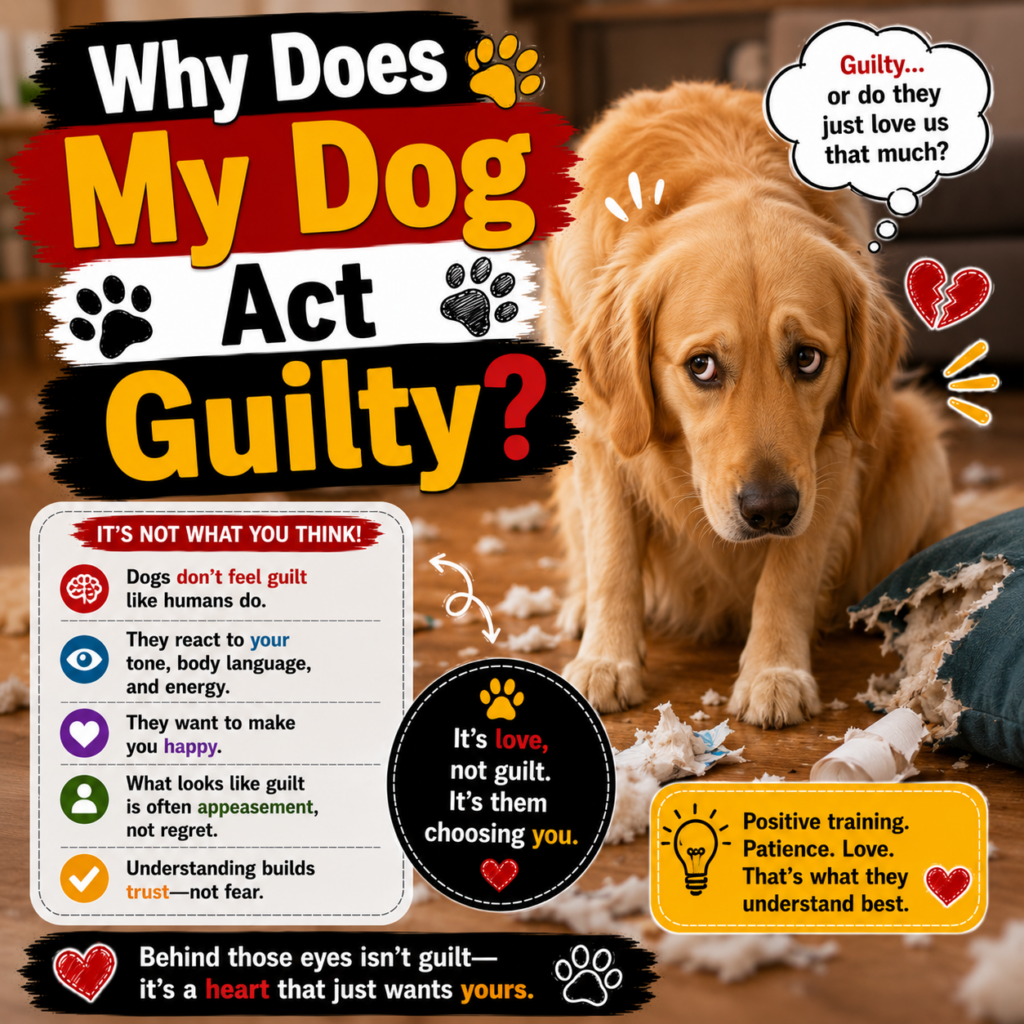
Their head is ducked low to the floor planks, their ears are pinned flat against their skull, their tail is tucked tightly between their hind legs, and they are avoiding direct eye contact, occasionally offering a slow, tentative blink.
As humans, our immediate psychological instinct is to assign a moral narrative to this posture: “Aha! They look incredibly guilty. They obviously know they broke the household rules while I was away at work!”
But why does my dog act guilty?
Is it a genuine manifestation of a complex moral conscience, or is there a fascinating cognitive, evolutionary, and neurochemical explanation behind this classic look? Let’s dive into the cutting-edge science of canine cognitive psychology to uncover the truth.
1. The Cognitive Disconnect: Primary vs. Secondary Emotions
To decode what your dog is truly thinking during a household confrontation, we first have to dismantle a massive human bias: anthropomorphism (projecting human moral scripts onto non-human entities).
In cognitive psychology, emotions are categorized into two distinct structural layers:
Secondary emotions like guilt require an incredibly advanced, abstract cognitive architecture. To feel true guilt, an individual must understand a complex social rule, realize they voluntarily chose to violate that rule in the past, and experience a internal moral crisis over their choice.
While domestic dogs possess a hyper-developed emotional processing center, brain-imaging data confirms they operate almost entirely within primary emotional baselines.
Your dog does not possess an abstract mental directory of “right vs. wrong.” When they tear up a cushion, they aren’t thinking about breaking a moral law; they are simply interacting with a fun, high-density sensory object to burn off separation anxiety or satisfy their chewing instincts!
2. The Landmark Study: Proving the “Guilty Look” is an Illusion
If dogs don’t experience moral guilt, then why do they look so profoundly ashamed when caught in the act? This exact question was solved by leading canine cognition scientist Dr. Alexandra Horowitz in a landmark behavioral study.
Dr. Horowitz engineered a clever psychological experiment where dog owners ordered their dogs not to eat a high-value treat left in the room. The owners then left the room range. While the owners were away, the researchers either fed the dog the forbidden treat or removed it safely.
Crucially, before the owners walked back into the room, the researchers lied to the owners about whether their specific dog had misbehaved:
The results were absolute and undeniable. The intensity of the dog’s “guilty look” had zero correlation with whether the dog had actually eaten the treat. Instead, the look was a direct, real-time mirror of the owner’s body language and vocal frequency.
The exact microsecond you tense your jaw, lower your tone, or look at your dog with an air of disappointment, their superpowered pattern-recognition software fires an immediate alert. The “guilty look” is actually a state of acute primary fear and social anxiety triggered by a shift in their human anchor’s energy!
At a Glance: Translating Your Dog’s Confrontation Body Language
What humans mistake for moral shame is actually a beautiful, ancient survival dialect designed to de-escalate tension within the family pack.
| The “Guilty” Posture | Accompanying Body Language | The True Emotional Catalyst | What It Means in Dog Language |
| The Pinned Ears | Ears pressed flat and backward against the skull; brow furrowed tightly. | Primary Fear / High Cortisol: Reacting to an unpredictable or angry human baseline. | “Your vocal frequency has shifted. I sense impending danger. Please don’t be angry with me.” |
| The Tucked Tail | Tail lowered beneath the flank or pressed tightly against the groin range. | Vulnerability Shielding: Protecting high-risk anatomical zones from structural threats. | “I am dropping my social rank entirely. I submit to your authority as the pack leader.” |
| The Whale Eye / Aversion | Turning the muzzle away while flashing the whites of their eyes (whale eye); lip-licking. | Social Appeasement Loop: Attempting to diffuse aggression within the household perimeter. | “I am avoiding direct eye contact to show I am peaceful and non-threatening. Let’s de-escalate this tension.” |
3. The Evolutionary Echo: The Mechanics of Pacification
Why did dogs evolve this elaborate behavioral performance if it isn’t driven by actual guilt? The answer is written directly into their ancestral pack dynamics.
Domestic dogs are the proud descendants of cooperative hunters. In a wild pack framework, maintaining social cohesion and harmony within the group is a vital matter of life and death. If an individual wolf or early dog angers the dominant leader, sparking a physical battle, it risks a painful injury that compromises the survival metrics of the entire unit.
To prevent internal warfare, canines evolved a sophisticated directory of appeasement or pacification gestures.
When your dog ducks their head, tucks their tail, and licks their lips in front of a ruined trash can, their primitive brain pathways are running a survival script: “The primary human protector is projecting high-alert, aggressive energy. I must immediately execute my submissive appeasement sequence to diffuse their anger and realign the pack safety metrics.”
It is a highly successful tool for conflict resolution. The second you look at their cute, pathetic face, your heart melts, your tone softens, and their pacification goal is achieved!
💡 The Scent-Tracking Trap: The Mystery of “Preemptive Guilt”
Many pet parents claim: “But my dog displays the guilty look BEFORE I even discover the mess! How can that be fear?” In animal behavioral psychology, this is explained by contextual associative conditioning. Your dog’s brilliant brain maps environmental patterns with extreme precision. They remember that the last time you came home and a trash can was knocked over, a highly stressful, loud confrontation loop occurred. They aren’t acting guilty because they feel bad about their actions; they are displaying preemptive anxiety because the physical layout of the room mimics a past scenario where you became angry.
How to Correctly Respond to a Household Mess
To permanently protect your human-animal bond and keep your pup’s emotional baseline balanced, avoid long-term scolding and adjust your routine using these science-backed animal psychology guidelines:
- Skip the Delayed Punishment: If you return home to a mess that happened hours ago, do not yell at or punish your dog. Because dogs navigate life through present-moment associative learning, they cannot link your current anger to an action they completed hours in the past. Punishing them will only teach them that your arrival home is an unpredictable, terrifying event, causing their baseline cortisol (stress hormone) levels to skyrocket.
- Neutralize the Scene In Silence: Calmly and quietly guide your dog into a separate room range or out into the yard with a monotone voice. Clean up the shredded items completely out of their line of sight. By removing the emotion from the equation, you prevent the creation of an anxious, fear-based domestic environment.
- Invest in Sensory Enrichment: A dog that tears up household assets is almost always a dog whose brilliant brain is starving for cognitive stimulation. Prior to departing for your workspace, turn your home into a safe sanctuary by introducing complex treat-dispensing puzzle toys, frozen lick mats, or hidden foraging boxes to channel their energy productively!
The Bottom Line
When your favorite canine shadow looks up at you with pinned ears and an adoringly pathetic “guilty” grin, science shows you are witnessing a magnificent display of evolutionary intelligence and empathy. They aren’t plotting behavioral defiance or feeling bad about breaking your social rules out of malice. They are simply using their superpowered sensory filters to read your facial micro-expressions, running an ancestral pack script to diffuse household conflict, and using tactile body language to restore an atmosphere of absolute safety and love under your roof. Smile, clean up the mess, and embrace the gaze—it is just another beautiful reminder that your dog cares deeply about staying perfectly in sync with the center of their universe: you!