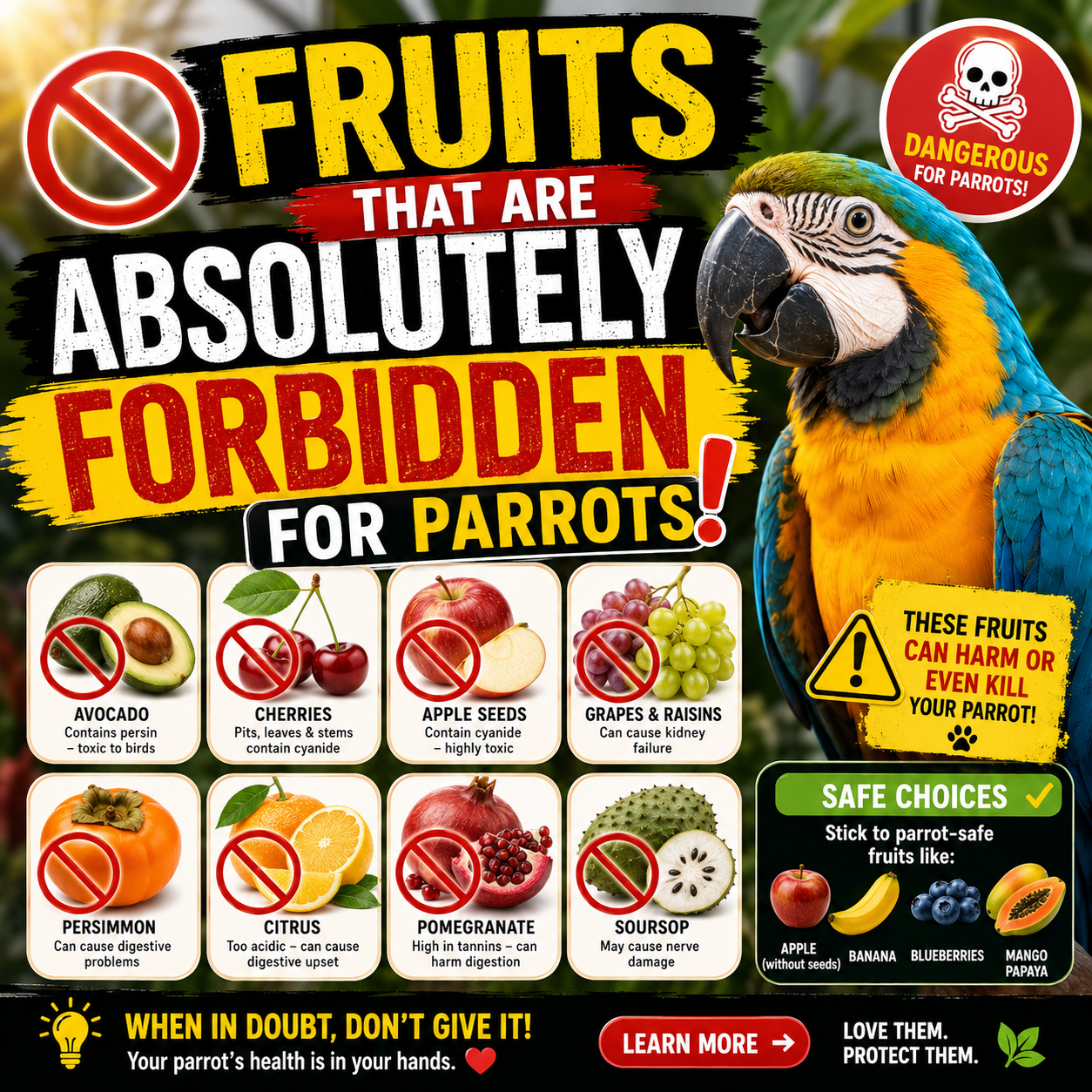
Parrots are curious, intelligent, and love to mimic our eating habits. It is natural to want to share a healthy snack with your feathered friend, but it is critical to remember that their metabolism is vastly different from ours. While many fruits are safe and beneficial, some are toxic and can be life-threatening.
Before you share your next fruit salad with your bird, read this guide on which fruits—and parts of fruits—you must keep away from your parrot at all costs.
1. Avocado: The Most Dangerous Fruit
The most well-known “forbidden” food for parrots is the avocado. It contains a fungicidal toxin called persin.
- Why it’s toxic: Persin is present in the fruit’s flesh, skin, and even the leaves of the plant. In parrots, it can cause severe respiratory distress, heart failure, and death.
- The Verdict: Even a small amount can be fatal. Never feed any part of an avocado to your parrot.
2. Apple Seeds and Fruit Pits
While the fleshy part of an apple is perfectly safe, the seeds are a different story. The same rule applies to the pits of various stone fruits.
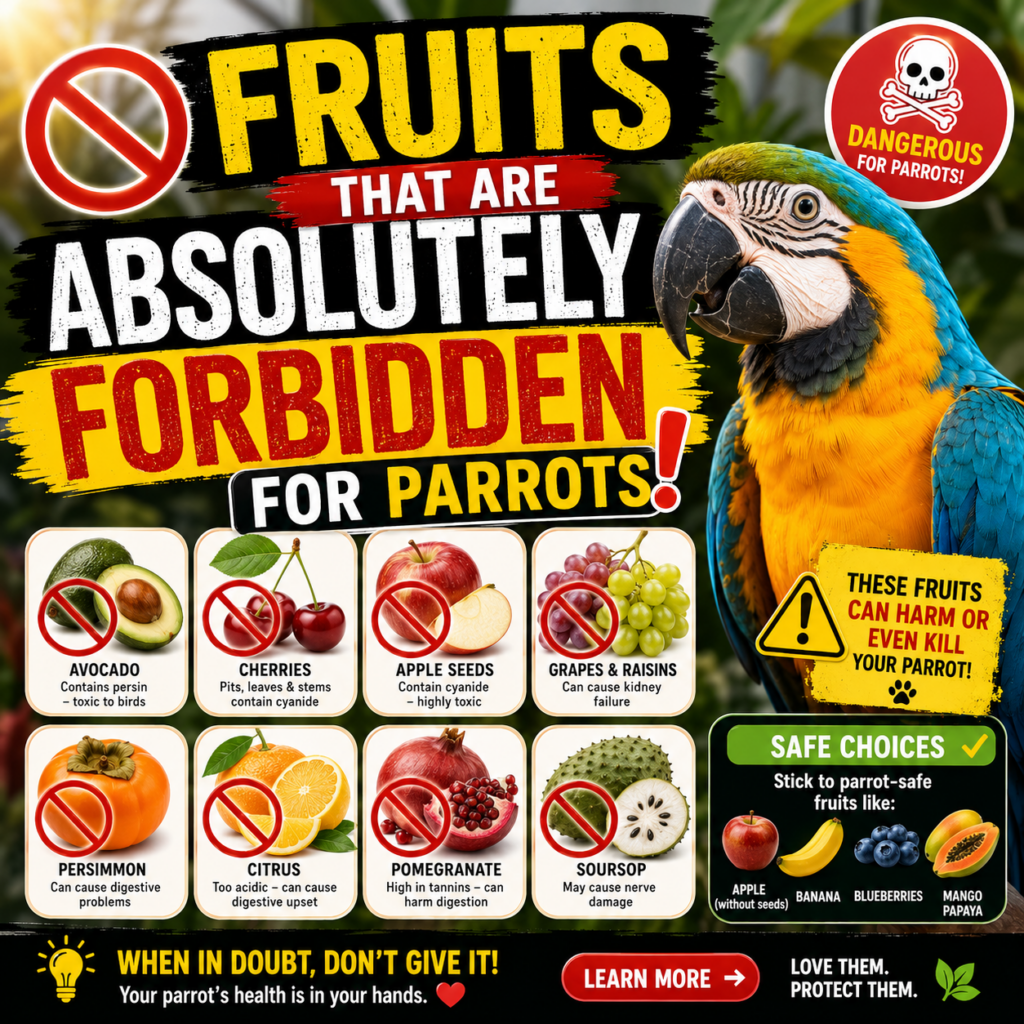
- The Danger: Apple seeds, as well as the pits of cherries, plums, apricots, peaches, and nectarines, contain trace amounts of cyanide.
- The Precaution: If you want to share an apple with your parrot, you must remove the core and all seeds thoroughly. For stone fruits, always remove the pit entirely before offering the fruit.
3. Rhubarb (The Leaves and Stalks)
Often grouped with fruits in culinary settings, rhubarb is a major “no” for avian companions.
- The Danger: Rhubarb contains high levels of oxalates. These compounds bind with calcium in the bird’s body, preventing proper calcium absorption and potentially leading to kidney failure and bone issues.
- The Verdict: Keep your parrot away from all parts of the rhubarb plant, whether raw or cooked.
4. Persimmons
Certain varieties of persimmons, particularly the Fuyu and Hachiya types, can be dangerous if not fully ripe.
- The Danger: The skin of an unripe persimmon contains soluble tannins. When these mix with stomach acid, they can form a solid mass (bezoar) in the bird’s digestive tract, leading to blockages and severe gastrointestinal distress.
- The Verdict: It is best to avoid persimmons altogether to err on the side of caution.
Important Safety Tips for Fruit Consumption
Even with safe fruits, there are “best practices” to ensure your parrot stays healthy:
- Wash Thoroughly: Always wash fruits to remove pesticides, herbicides, and wax coatings, which can be toxic to a bird’s sensitive system.
- Size and Preparation: Always chop fruits into bite-sized pieces appropriate for your specific species of parrot.
- Moderation is Key: Fruits contain high levels of fructose (natural sugar). Too much fruit can lead to obesity and fatty liver disease. Fruit should be treated as a treat, not a meal staple.
- Remove Spoiled Fruit: Never leave fresh fruit in the cage for more than a few hours. Moist fruit spoils quickly in warm environments, becoming a breeding ground for bacteria and mold, which can cause severe fungal infections like Aspergillosis.
When in Doubt, Leave it Out
If you are ever unsure whether a specific fruit is safe, do not feed it to your bird. Stick to bird-safe staples like blueberries, papaya, mango, and melon (always removing seeds and pits first).
Your parrot’s health depends on your careful selection of their diet. When you provide fresh, safe produce, you contribute to a longer, more vibrant life for your companion.