If you live in a multi-person household, you’ve likely noticed a distinct social hierarchy among your animals. Your dog might greet everyone happily, but collapses into total bliss only when one specific person sits down. Your cat might completely ignore the family member who cleans the litter box, choosing instead to snooze exclusively on someone else’s lap. And if you own a parrot, they might adore you while offering a sharp nip to anyone else who gets too close.
It leaves many pet parents asking: How do pets choose their favorite human?
Is it purely about who hands out the food, or is there a deeper psychological blueprint at play? Let’s look at how dogs, cats, and birds select their ultimate “number one.”
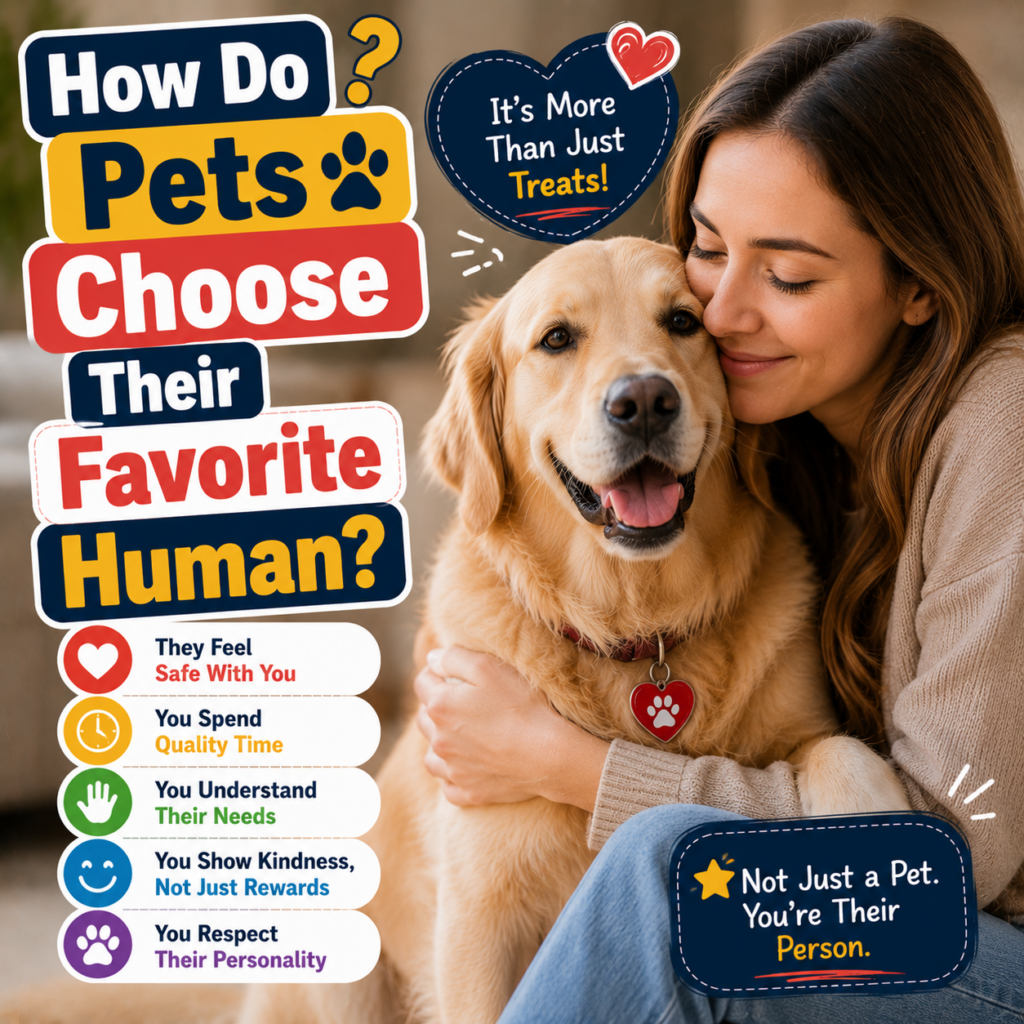
How Dogs Choose Their Favorite Person: The Security Match
Dogs are pack animals, but their choice of a favorite human isn’t always about who provides dinner. According to canine behaviorists, a dog’s bond is forged through communication, energy, and early life experiences.
1. The Early Socialization Window
A dog’s brain is incredibly spongy between birth and six months of age. Whomever handles, feeds, and comforts a puppy most during this critical developmental window often becomes their default favorite for life.
2. Quality of Attention over Quantity
You could be in the same room as your dog all day, but if you are staring at a screen, your dog registers that as passive time. A dog will choose the human who gives them active engagement—the person who plays fetch, takes them on stimulating walks, and uses positive reinforcement training.
3. Personality and Energy Matching
Dogs are master observers of human energy. A high-energy, boisterous dog will often latch onto the most active member of the family. Conversely, a shy or anxious dog will naturally gravitate toward the calmest, quietest person in the house because that individual’s presence lowers their cortisol (stress) levels.
How Cats Choose Their Favorite Person: The Respect Factor
Cats are notorious for being selective. While a dog loves to be part of a pack, a cat operates on an individual partnership model. Earning a cat’s favoritism requires a completely different approach.
1. The Power of Body Language Translation
Cats prefer humans who understand feline boundaries. If one person constantly picks the cat up against its will or makes loud noises, the cat will retreat. The person who sits quietly, lets the cat approach them first, and recognizes signs of overstimulation (like a twitching tail) will easily win the crown of “favorite.”
2. Scent Association
Cats rely heavily on scent to map out their safe zones. When a cat rubs their face against a human (a behavior called “bunting”), they are depositing their pheromones to claim that person. They choose to sleep on the human whose natural scent makes them feel the most psychologically secure.
At a Glance: Favoritism Clues Across Different Pets
Every animal has a unique way of announcing that you have been chosen as the favorite.
| Pet Type | Their Selection Style | Unmistakable Favoritism Sign |
| Dogs | The Pack Anchor: Chooses the person who provides the most engaging and predictable security. | Full-body leans, intense tail-wagging, and carrying your dirty laundry around. |
| Cats | The Boundary Match: Chooses the person who respects their independence and safe space. | The slow-blink “cat kiss,” kneading (“making biscuits”) on your lap, and head-bunting. |
| Birds | The Lifelong Soulmate: Driven by a monogamous flock instinct to find a single partner. | Allopreening (grooming your hair), beak grinding when near you, and defensive lunging at others. |
How Birds (Parrots) Choose Their Favorite Person: The Soulmate Instinct
If you own a highly intelligent bird like an African Grey, Macaw, or Cockatoo, you are likely dealing with a “one-person bird.”
In the wild, the vast majority of parrot species are strictly monogamous. They select a single mate with whom they travel, preen, and share resources for life. When kept as household pets, they project this powerful evolutionary instinct onto the human family.
A parrot will look at the household and choose a single human to be their chosen life partner. They base this decision on who respects their intelligence, who provides high-value treats (like walnuts or fruit), and whose vocal tones match their mood. Once a parrot chooses you, they will showcase absolute devotion, often accompanied by soft beak grinding when it is time to sleep.
⚠️ The Danger of Over-Bonding with Birds
While being a parrot’s favorite feels incredible, it can lead to behavioral issues like territorial aggression or mate-defense biting toward other family members. To keep a healthy, platonic bond, only scratch your parrot on their head and neck. Stroking a bird on their back or wings stimulates them hormonally, making them think you are courting them, which can trigger frustration and severe anxiety.
Can You Change a Pet’s Mind?
If you currently aren’t the favorite, don’t take it personally! You can actively upgrade your status in your pet’s eyes by shifting your daily routine:
- Be the Sole Provider of the “Good Stuff”: For the next few weeks, make sure you are the exclusive giver of their meals and highest-value treats. Animals quickly bond with the source of premium rewards.
- Initiate 15 Minutes of Undivided Play: Dedicate a block of time every day to focused interaction—whether it’s training a new trick with your dog, using a wand toy with your cat, or offering a foraging puzzle to your bird.
- Match Their Vibe: Lower your voice, move slowly, and let the pet come to you. Respecting their physical space is the fastest shortcut to earning their ultimate trust.
The Bottom Line
When a pet chooses their favorite human, it is a beautiful reflection of biological instinct, a desire for safety, and an emotional match. Whether it is a dog’s warm lean, a cat’s gentle slow blink, or a parrot’s loyal chatter, being an animal’s “number one” is a profound privilege. Pay attention to their unique body language, respect their boundaries, and you’ll find that building an unbreakable, loving connection is entirely within your reach!