Koi are prized for their beauty, but they are also sensitive to their environment. As temperatures soar during a heatwave, the oxygen levels in your pond drop, and the stress on your fish increases significantly. Maintaining a stable, healthy environment is vital to preventing heat-related illnesses and ensuring your Koi survive the summer.
Here is your essential guide to managing your Koi pond temperature during extreme heat.
1. The Dangers of High Temperatures
When pond water gets too hot, two major problems occur:
- Reduced Oxygen: Warmer water cannot hold as much dissolved oxygen as cooler water. This can lead to suffocation if your aeration isn’t sufficient.
- Increased Metabolism: Koi are cold-blooded. As the water warms, their metabolism speeds up, causing them to need more oxygen and producing more waste, which can quickly lead to an ammonia spike.
2. Practical Ways to Cool Your Pond
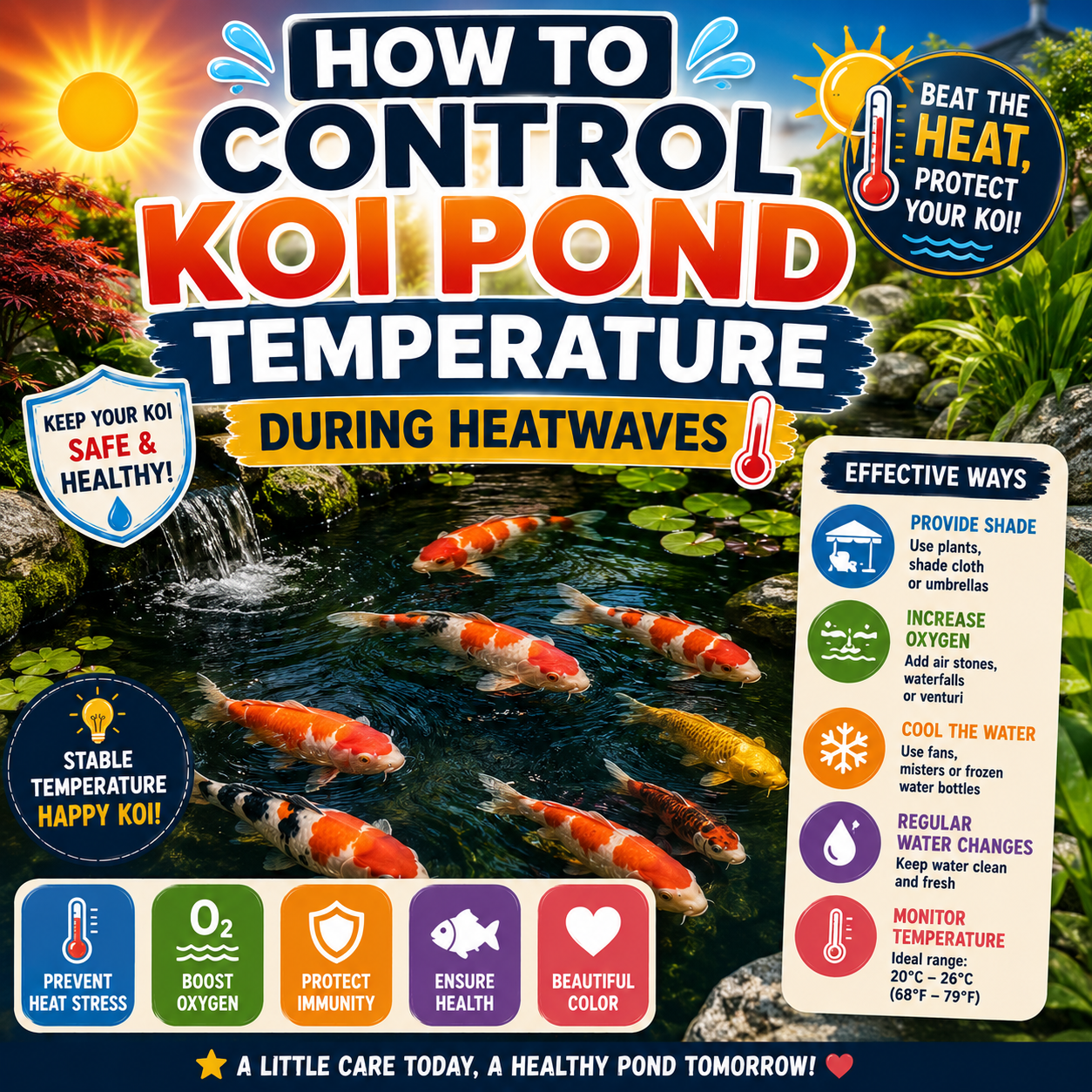
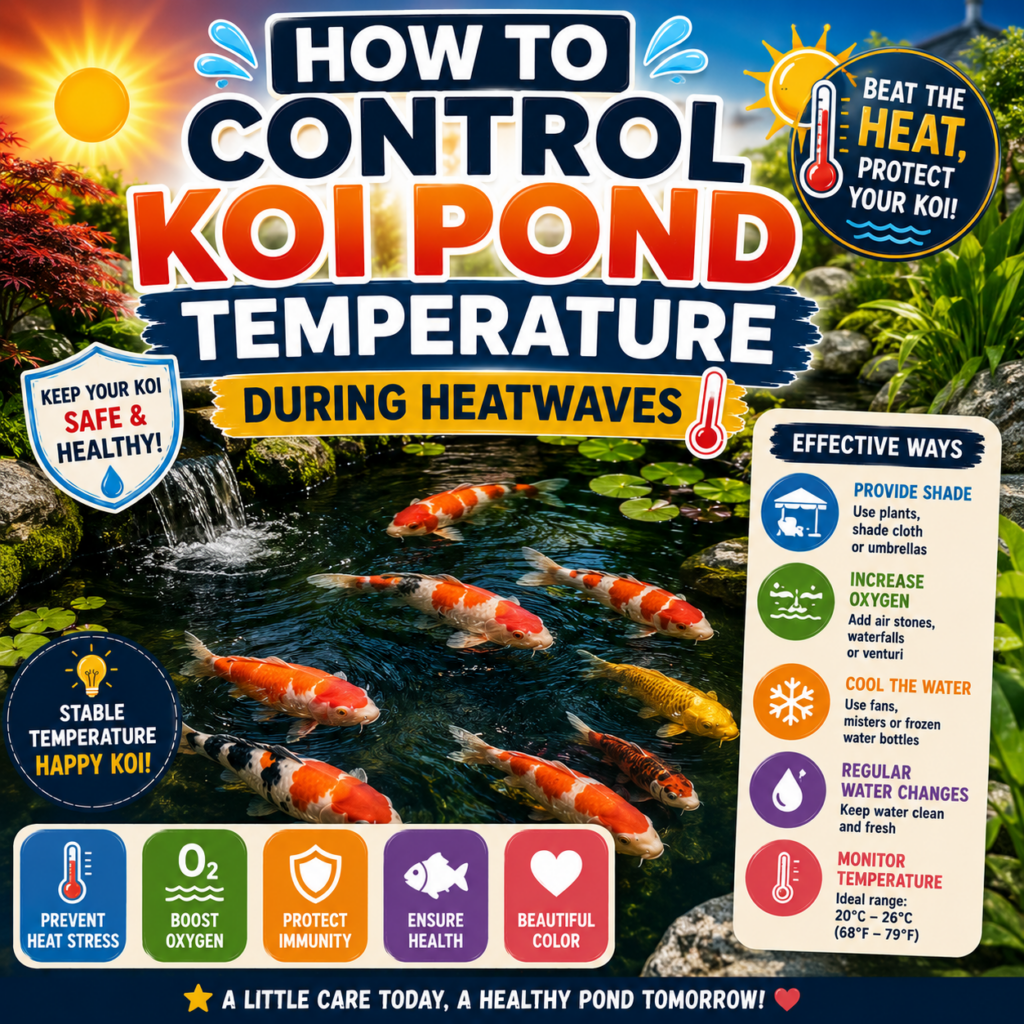
You don’t need a professional chiller to keep your pond safe. These simple, budget-friendly methods are highly effective:
- Provide Shade: The sun is the primary culprit. Use a shade cloth, a patio umbrella, or even floating plants like water lilies and water hyacinths to cover 30–50% of the pond surface. This reduces direct solar heating.
- Increase Aeration: More oxygen is essential. Add extra air stones, a waterfall, or a fountain. The movement of the water helps increase oxygenation and provides evaporative cooling.
- Strategic Water Changes: Perform small, frequent water changes (5–10% of the pond volume) using cool (dechlorinated) tap water. Caution: Do not perform large water changes, as drastic temperature shifts can shock your fish.
- Use Ice Carefully: In emergency situations, you can float large blocks of frozen, dechlorinated water in the pond. Never dump ice directly into the water, and ensure the blocks are large enough that they don’t melt too quickly and cause a massive temperature swing.
3. Feeding and Water Quality During Heatwaves
- Reduce Feeding: Because Koi metabolism is high, they produce more waste. During a heatwave, reduce feeding by 50% or skip it entirely if the temperature exceeds 85°F (30°C). This helps prevent ammonia spikes.
- Test Ammonia and Nitrites: Heatwaves make it harder for your biological filter to keep up. Test your water daily to ensure your waste-processing bacteria are still doing their job effectively.
- Remove Debris: Decomposing organic matter (dead leaves, excess food) uses up precious oxygen. Keep your skimmers and bottom drains clean during the summer.
4. Monitoring Your Koi
Keep a close eye on your fish. Signs that your Koi are heat-stressed include:
- Gasping at the surface.
- Lethargy or sitting at the bottom of the pond.
- Flicking or flashing against surfaces.
If you see these signs, increase your aeration immediately and provide additional shade.
Conclusion
Managing pond temperature is about stability, not perfection. By providing shade, boosting oxygen levels, and being mindful of feeding, you can help your Koi navigate the hottest days of the year with minimal stress. With a little extra care, your pond will remain a beautiful, healthy oasis throughout the summer.