
As bird parents, it is incredibly difficult to resist buying every colorful toy, unique perch, and shiny accessory we see at the pet store. When we welcome a magnificent large parrot—like a Macaw, Cockatoo, or Amazon—into our home, creating their living space feels like a wonderful act of love. However, before you randomly hang toys inside the enclosure or rush to place the enclosure in the busiest room of your house, you must exercise extreme caution.
A large parrot’s intelligence, powerful beak, and long lifespan are fundamentally different from smaller bird species. A poorly configured enclosure can quickly lead to severe behavioral issues, chronic stress, feather plucking, and even physical injuries.
In this vital environmental safety guide, we will reveal exactly how to set up the perfect cage for large parrots to ensure their home remains a stimulating, secure, and stress-free sanctuary.
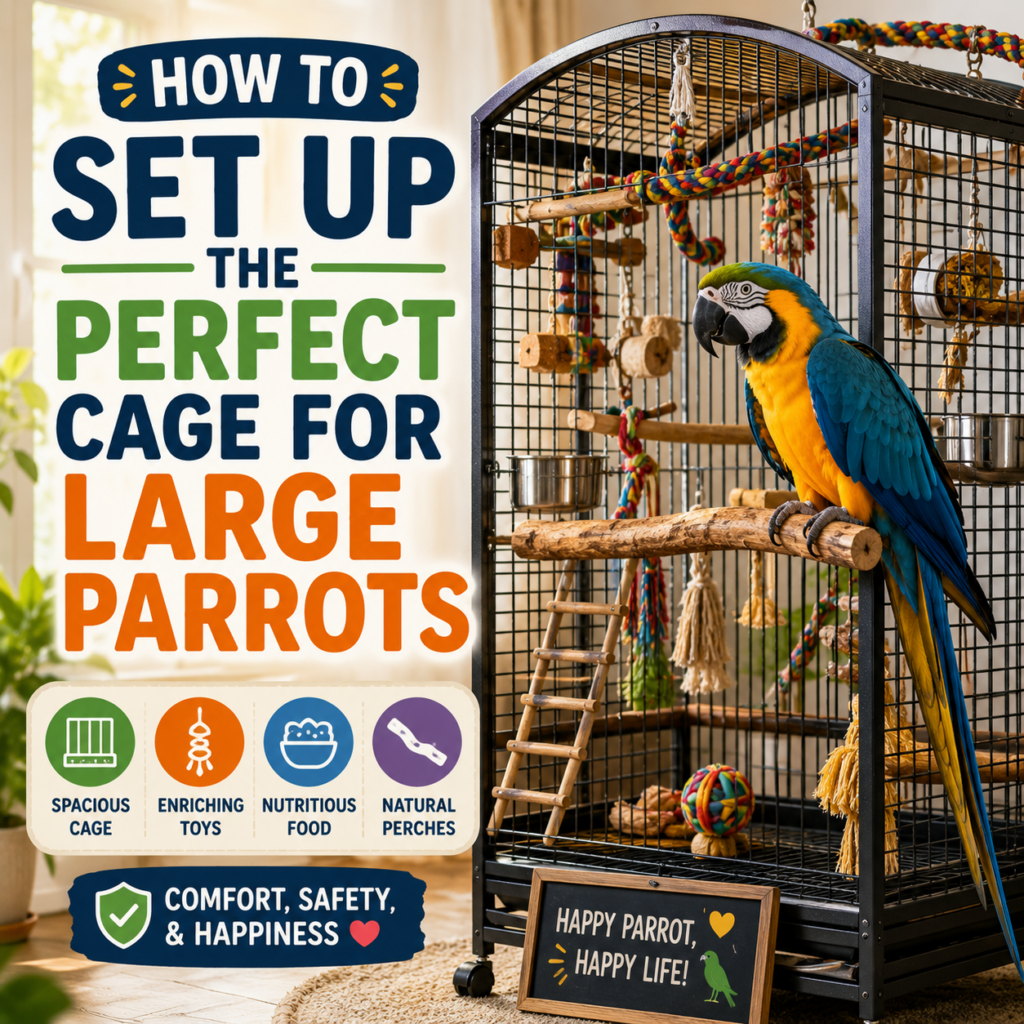
The Layout Zone: Essential Requirements for a Large Parrot Home
To keep your large parrot physically healthy and emotionally secure, you must build an environment that accommodates their impressive wingspan and active mind:
- The Size Rule: When it comes to large parrots, a cage can never be too big. At an absolute minimum, the enclosure must be wide and deep enough for your bird to fully expand its wings and flap vigorously without hitting the bars, perches, or toys. For massive birds like Macaws, look for heavy-duty wrought iron or stainless steel enclosures with a bar spacing of 1 to 1.5 inches to prevent escape or head trapping.
- Perch Variation and Placement: Parrots spend almost 24 hours a day on their feet, making perch selection critical. Avoid uniform, smooth plastic or dowel perches, which cause painful pressure sores. Instead, provide a variety of natural wood perches (like manzanita, java, or dragonwood) with varying diameters to naturally exercise their feet. Place the main perches at opposite ends of the enclosure to encourage movement, but make sure they do not sit directly over food and water bowls to avoid contamination.
- The Foraging and Toy Station: Large parrots have the cognitive ability of a human toddler and require intense mental stimulation. Equip the enclosure with a mix of destructible wood toys for chewing, metal puzzle toys for problem-solving, and foot toys. To prevent boredom without overcrowding the space, keep 4 to 5 toys inside and rotate them with fresh ones every week.
The Danger Zone: Common Cage Setup Mistakes to Avoid
A single hazardous item or poor placement choice can turn a parrot’s sanctuary into a highly dangerous environment. Memorize these warning signs so everyone in your household knows the safety boundaries:
- 1. Toxic Metal Bars and Toy Parts: Never purchase cheap enclosures or toys made with zinc or lead coatings. Parrots use their powerful beaks to climb and chew constantly; ingesting even a tiny flake of these heavy metals causes fatal toxicity. Always opt for bird-safe stainless steel, powder-coated wrought iron, and nickel-plated toy hardware.
- 2. Hazardous Toy Materials: Avoid toys featuring long, loose cotton ropes or small jingle bells with open slots. Parrots can easily shred cotton rope, leading to accidental toe strangulation or fatal crop impaction if swallowed. Small bells can be crushed by large beaks, causing sharp metal shards to be ingested.
- 3. Dangerous Enclosure Placement: Never place a parrot’s home in or directly next to the kitchen. Cooking fumes, especially from overheated non-stick teflon pans, release odorless toxic gases that can instantly kill a bird’s sensitive respiratory system. Additionally, avoid placing the enclosure right in front of a drafty air vent or in a dark, isolated basement away from family life.
Quick Action Guide: Perfecting the Setup and Daily Maintenance
To maximize your parrot’s comfort and keep the environment pristine, follow these expert preparation steps:
- Secure the Ideal Location: Position the enclosure in a lively living area where your parrot feels like part of the family, but place it against a solid wall. Having at least one or two solid walls behind the enclosure gives the bird a sense of security from predators, lowering their anxiety levels.
- Implement the Daily Sanitation Routine: Line the bottom tray with plain newspaper or butcher paper instead of wood shavings or corn cob bedding, which easily trap moisture and breed hazardous mold spores. Roll up and replace the paper daily so you can easily monitor your bird’s droppings for health changes.
- Establish a 12-Hour Light Cycle: Parrots require 10 to 12 hours of uninterrupted, dark sleep every night to regulate their hormones and prevent chronic grumpiness or feather plucking. Use a breathable, dark cage cover and maintain a strict sleep schedule.
The Takeaway: Prevention is Your Best Weapon
The easiest way to keep your intelligent, large parrot thriving is to design an environment that respects their wild instincts. Invest in a premium, heavy-duty stainless steel enclosure, prioritize natural wood textures, and change their toys frequently to challenge their sharp minds. Stick to this structured guide, and you will enjoy a beautifully balanced, talkative, and blissfully happy lifetime journey together with your majestic winged companion!