
When we bring an animal into our lives, we don’t just call them “pets”—we proudly introduce them as family members. We buy them gifts, celebrate their birthdays, and comfort them when they are scared. But have you ever paused to look at the relationship from their perspective?
Does your animal companion think you are just a convenient food provider, or do they truly view you as kin?
Animals don’t understand human genealogy or the legal concept of adoption. However, in animal psychology, they possess an incredibly sophisticated system for classifying social bonds. Whether it is a dog anchoring to a human pack leader, a cat claiming a trusted companion, or a parrot choosing a lifelong soulmate, their behavior speaks volumes.
Here are the unmistakable, science-backed signs your pet sees you as family.
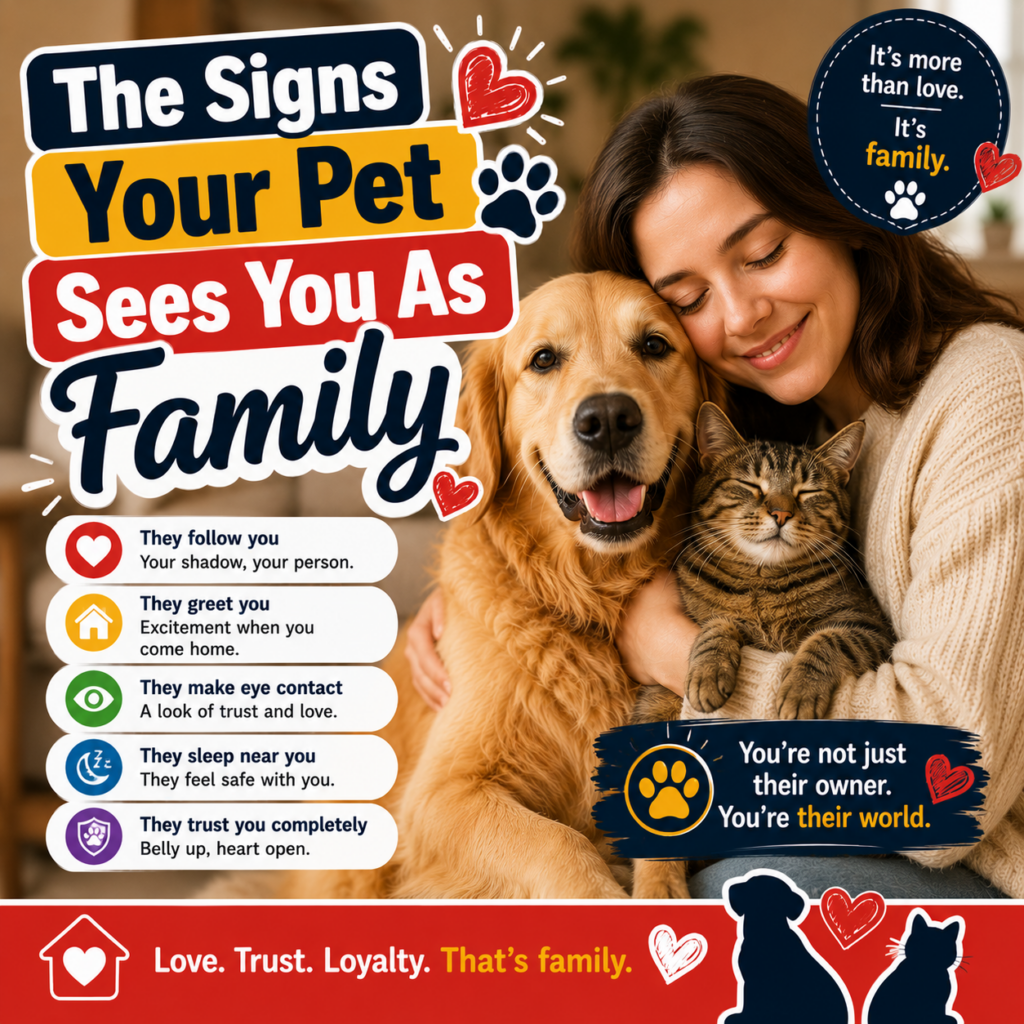
1. The Ultimate Vulnerability: Exposed Sleeping Postures
In the animal kingdom, sleep is the most dangerous time of the day. Prey and predator species alike are hardwired to protect their vital organs while resting.
If your pet falls asleep near you in a completely exposed position, they are giving you the ultimate biological compliment.
- Dogs: Sleeping flat on their back with their legs sprawling in the air (the “belly-up” pose) shows absolute security. They are exposing their most vulnerable areas because they know with 100% certainty that you will protect them from any danger.
- Cats: If your cat curls up right next to your body with their back completely turned toward your face, or sleeps soundly on your chest, it shows deep kinship. In cat language, turning their back to you means: “I trust you completely to watch my blind spot.”
At a Glance: Family Cues Across Different Pets
Every animal has a unique way of announcing that you are officially a permanent part of their inner circle.
| Pet Type | Their View of Family | Unmistakable Kinship Sign |
| Dogs | The Chosen Pack: You are their trusted protector, provider, and emotional anchor. | The full-body “noodle wiggle” greeting and leaning their full weight against your legs. |
| Cats | The Elite Peer: You are a safe, giant companion who respects their independent boundaries. | The slow-blink “cat kiss,” head-bunting, and grooming your skin. |
| Birds (Parrots) | The Lifelong Flock Mate: You are their chosen flock partner or monogamous soulmate. | Allopreening (nibbling your hair), soft beak grinding, and happy head-bobbing. |
2. Allobreening and Grooming (Merging Scents)
Does your cat lick your hand after you pet them? Does your dog obsessively lick your face when you sit on the floor? Or does your parrot gently nip at your hair or eyebrows?
In animal biology, this mutual grooming is called allogrooming (or allopreening in birds).
In the wild, social animals only groom creatures that belong to their immediate family unit or flock. It serves two vital psychological purposes:
- It lowers stress levels across the entire group by releasing oxytocin.
- It creates a unified “family scent,” making it easy for members to identify who belongs to the safe inner circle and who is an outsider.
When your pet grooms you, they aren’t just trying to clean you—they are actively writing you into their family database.
3. Seeking You Out for Emotional Comfort (The Safe Harbor)
The true test of any family bond is where you run when the world gets terrifying. When a thunderstorm rolls in, fireworks go off, or a scary new appliance (like a vacuum cleaner) turns on, where does your pet go?
If your pet’s immediate reflex is to bolt directly to you, hide between your legs, or bury their head under your arm, they see you as their parent and protector.
They aren’t just looking for physical shelter; they are seeking out your specific calm energy, familiar scent, and reassuring voice to lower their elevated cortisol (stress) levels.
💡 The Gift of a Slobbery Toy
When a dog brings you a torn, slobbery tennis ball or their favorite squeaky toy, it isn’t always an invitation to play fetch. In canine psychology, sharing a high-value resource is a major sign of trust. They are presenting you with their prized possession as a family gift, showcasing that they view you as a respected, fair pack leader.
4. Mimicking Your Energy and “Emotional Sponging”
Animals are incredibly intuitive decoders of human emotion. Because they see you as family, they don’t just coexist beside you—they actively absorb your emotional state.
If you are having a stressful, anxious day, you might notice your dog pacing nearby or your cat staying exceptionally close to your lap. Conversely, when you are happy and relaxed, your parrot might start dancing to music or your pup might initiate a playful game.
This behavioral mirroring happens because your pet is so deeply attuned to your vocal inflections, micro-expressions, and chemical stress markers. They care about the emotional balance of their human pack because your emotional well-being directly impacts theirs.
The Bottom Line
Our pets may not understand the words “I love you,” but their daily actions show that they view us as far more than just food-dispensing machines. From the quiet vulnerability of a belly-up sleep to the loving gesture of an allogrooming session, your furbaby or feathered companion is constantly broadcasting their devotion. Look closely at your pet’s subtle body language today—you’ll quickly realize that in their eyes, you are their protector, their comfort, and their entire family.