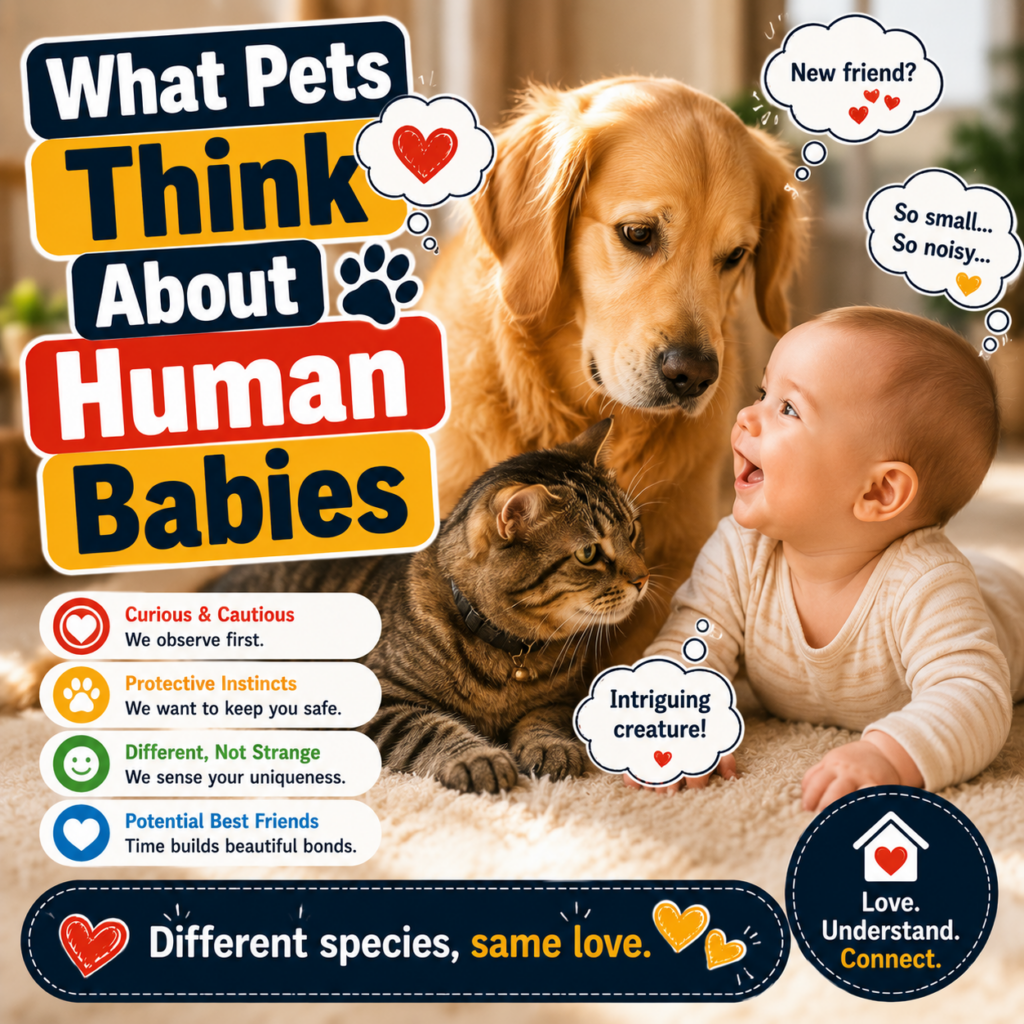
Welcoming a newborn baby into your home is an incredible, life-altering milestone. As a human parent, your heart is full of joy, anticipation, and perhaps a bit of exhaustion. But if you look down at the floor, you might see another family member looking up at the new bundle of joy with a look of pure confusion, curiosity, or absolute protectiveness.
It leaves many parents wondering: What do pets think about human babies?
Do dogs instantly recognize them as tiny masters? Do cats view them as weird, noisy intruders? And do exotic pets like parrots see them as new members of the flock? Let’s dive into the fascinating world of animal biology and psychology to decode exactly how your pet views the newest, smallest member of your household.
1. Dogs: The “Baffling, High-Value” Pack Addition
Dogs are master observers of human behavior and chemistry. When a newborn arrives, a dog’s entire understanding of their “home pack” is turned upside down. They don’t look at a baby and think, “Ah, a tiny human.” Instead, they view a baby through a unique biological lens.
The Ultimate Sensory Paradox
To a dog, a baby is a walking, crying sensory puzzle. Babies don’t smell like regular human adults—their pheromones are different, and they are constantly covered in scents like milk, lotion, and powder. Furthermore, a baby’s erratic movements and high-pitched cries mimic the biological sounds of small prey animals or distressed puppies.
Why They Get Protective
Despite the confusion, dogs are highly attuned to how you treat the baby. They notice that you hold this tiny creature constantly, protect it fiercely, and speak to it in a gentle, high-pitched voice. Because your dog respects you as the fair pack leader, they automatically categorize the baby as a high-value, highly vulnerable member of the family. This is why many dogs transform into a “velvet shadow,” standing guard outside the nursery door.
2. Cats: The unpredictable “Space Invaders”
Cats are creatures of strict habit, territory, and quiet boundaries. When a human baby enters their kingdom, a cat’s initial reaction is usually centered around environmental disruption rather than immediate affection.
The Lack of Predictability
Cats dislike things they cannot control or predict. A human baby moves randomly, flails their limbs, sleeps at odd hours, and screams at a volume that can easily overstimulate a cat’s sensitive ears. Initially, a cat thinks a baby is a loud, warm, and highly unpredictable creature that has hijacked their favorite sleeping spots.
Seeking out the “Giant Heating Pad”
However, once the initial shock wears off, a cat’s view shifts. Cats are natural heat-seekers. They quickly realize that a stationary baby wrapped in a fuzzy blanket is essentially a giant, cozy heating pad. If left unsupervised, a cat will often try to curl up right next to a sleeping baby simply because it is the warmest, most secure spot in the room!
At a Glance: How Different Pets Perceive Your Newborn
Every animal species processes the arrival of a tiny human through a completely distinct evolutionary blueprint.
| Pet Type | Their Psychological View of a Baby | Unmistakable Sign of Acceptance |
| Dogs | The Vulnerable Pup: A fragile, high-value asset belonging to the pack leaders that requires protection. | Sleeping belly-up near the crib, gentle tail-wags when the baby moves, or sitting on your feet while you nurse. |
| Cats | The Warm Interrupter: A loud, unpredictable creature that occupies prime furniture but offers great warmth. | The slow-blink “cat kiss” from across the nursery, rubbing their cheeks against baby gear, or sleeping nearby. |
| Birds (Parrots) | The Noisy Rival: A loud, attention-stealing entity that disrupts their quiet flock dynamics and sleep cycles. | Mimicking baby cries, happy head-bobs when the baby settles, or whistling to match their vocal pitch. |
3. Birds (Parrots): The “Flock Attention” Rivals
If you share a home with a highly intelligent exotic pet bird like an African Grey, Amazon, or Cockatoo, their reaction to a baby is deeply tied to their flock-bonding and monogamous instincts.
Parrots crave undivided attention and thrive on strict daily routines. When a baby arrives, the household routine often shatters. The parrot notices that their favorite human is no longer available for 15 minutes of focused daily play or gentle head scratches.
Initially, a parrot might view a baby as a vocal rival for flock resources. Because they are world-class vocal mimics, don’t be surprised if your parrot starts perfectly replicating the sound of a crying baby or a squeaking nursery door—they are using their voice to insert themselves back into your busy line of sight!
⚠️ The Golden Safety Rule for All Pets
No matter how loving, gentle, or protective your dog or cat seems around your newborn, never leave an infant unsupervised with an animal for even a single second. Animals operate on survival instincts and can react unpredictably to a sudden scratch, a sharp pull of their tail, or a startling baby cry. Always prioritize absolute physical boundaries to ensure a safe, beautiful transition for everyone.
How to Help Your Pet Fall in Love with the Baby
You can easily guide your pet’s psychological transition from confusion to loving kinship by using these expert tips:
- Introduce Baby Scents Before Day One: Bring a blanket or a onesie that the baby wore at the hospital home a few days before your official discharge. Let your dog or cat sniff it intensely while offering them high-value treats. This teaches their brain that the baby’s unique scent footprint equals good things.
- Preserve Their Core Routines: Animals find immense safety in structure. Try your best to keep feeding times, walk schedules, and a bird’s 10-to-12 hours of uninterrupted sleep completely consistent.
- Ignore the Jealous Outbursts: If your dog barks or your parrot screams when you pick up the baby, do not give them attention. Instead, praise and reward them with treats only when they lie down calmly and quietly while you tend to your little one.
The Bottom Line
When a new baby arrives, your pets experience a profound mental shift. They move from initial sensory confusion to a deep realization that this tiny human is a permanent, treasured part of their home territory. By understanding their underlying evolutionary instincts, respecting their space, and maintaining a comforting structure, you can help your furbaby or feathered friend transition smoothly into their new favorite role: the loyal, lifelong guardian of your growing family.