
We use words, hugs, and gifts to show our family how much we care about them. But our pets live in a completely silent world when it comes to human language. They cannot wrap their arms around us or say the words “I love you.”
Yet, any pet parent will tell you that their animal’s love is incredibly deep, undeniable, and constant.
So, how do pets say “I love you” without words?
Animals are master communicators, but they express their devotion through a fascinating language of subtle physical gestures, eye movements, and behavioral quirks. Let’s look at the science-backed signs that your favorite furbaby or feathered friend is completely smitten with you.
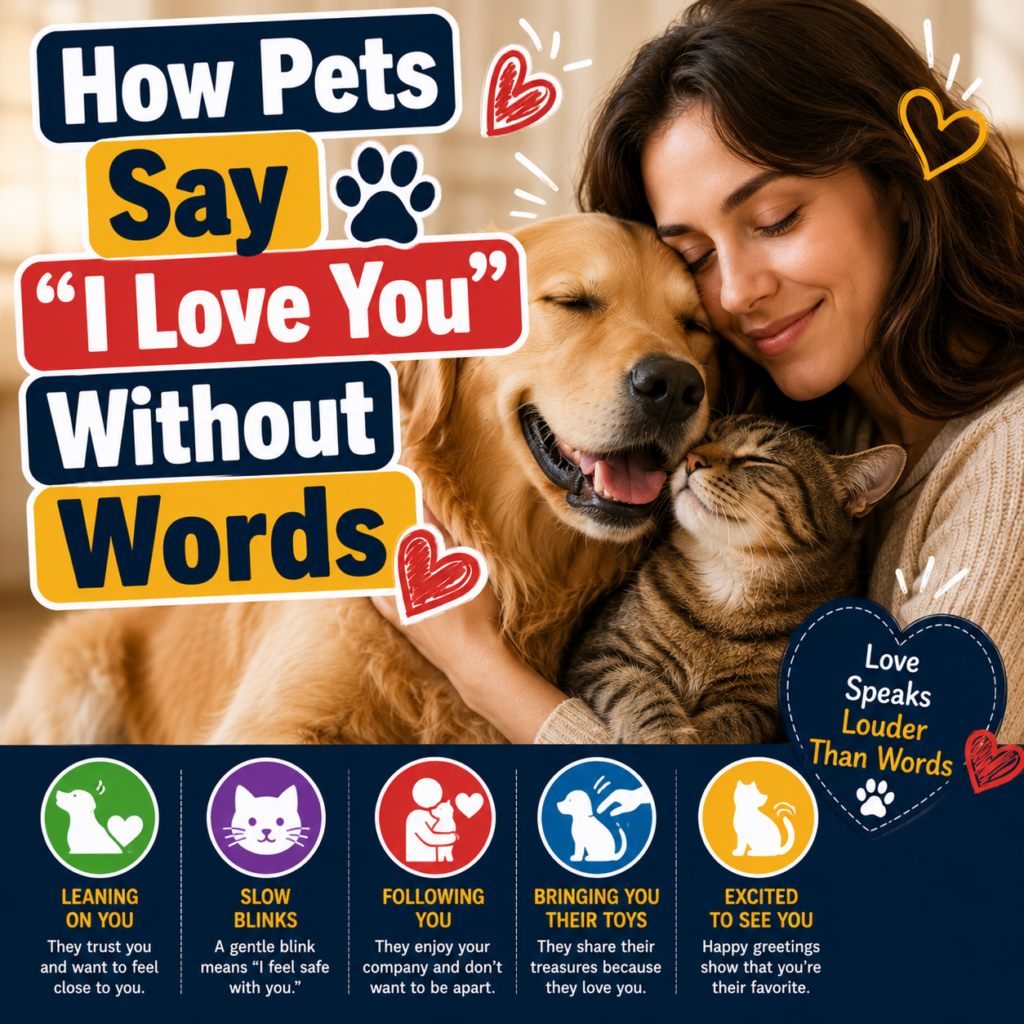
How Dogs Say “I Love You”: The Full-Body Devotion
Dogs are transparent, high-energy pack animals. When they love you, they don’t just show it with their tails—they show it with their entire bodies.
1. The Full-Body “Wiggle”
A simple tail wag doesn’t always mean happiness; sometimes it just means alert concentration. However, when your dog greets you and their entire body—from their shoulders to their hips—is loose, relaxed, and wiggling like a noodle, that is pure, unadulterated love.
2. The Cozy “Lean”
Have you ever been standing in the kitchen or sitting on the sofa, and your dog walks over and presses their full physical weight against your legs? In canine psychology, this is known as the “canine lean.” Since dogs don’t have arms to hug you, pressing their body against yours is their biological equivalent of a warm, full-body embrace. It triggers a rush of oxytocin (the bonding hormone) in both of your brains.
3. Delivering Their Prized Possessions
When a dog brings you their favorite, slobbery squeaky toy or a torn tennis ball and drops it in your lap, it isn’t always a demand to play fetch. Often, it is a genuine display of resource sharing. They are presenting you with their most valuable asset as a gift to show that you are the most respected leader of their pack.
How Cats Say “I Love You”: The Subtleties of Feline Bliss
Cats have a reputation for being independent and aloof, but feline behaviorists have proven that cats love their humans just as much as dogs do—they just speak in a much quieter, more exclusive dialect.
1. The Slow Blink (The “Cat Kiss”)
In the feline world, closing your eyes around another creature is an incredibly vulnerable act because it drops your defense mechanism against predators. When your cat looks at you from across the room, narrows their eyes, and slowly closes and opens their eyelids, they are giving you a slow blink. This is the ultimate sign of absolute safety, trust, and deep affection.
2. Making Biscuits (Kneading)
When a cat curls up on your lap and begins rhythmically kneading their paws against your jeans or a soft blanket, they are mimicking a comforting behavior from kittenhood. Kittens knead their mothers to stimulate milk flow, releasing feel-good hormones. When an adult cat does this to you, they are channeling that exact childhood comfort, declaring you as their ultimate safe harbor.
3. Head-Bunting and Cheek Rubs
When a cat rubs their forehead or cheeks firmly against your hands, face, or ankles, they are practicing a behavior called bunting. Cats have hidden scent glands on their faces that deposit invisible pheromones. By rubbing against you, they are marking you with their scent, claiming you proudly as their family.
Affection Cues at a Glance: Decoding Your Pet’s Love Language
Every animal species has a completely unique way of announcing that you are their favorite person in the world.
| Pet Type | Their Signature Love Language | What the Behavior Looks Like |
| Dogs | The Pack Embrace | Full-body leans, greeting you with a toy, soft eye contact, and sleeping belly-up near you. |
| Cats | The Silent Vulnerability | The slow-blink “cat kiss,” kneading your lap, head-bunting, and purring at a low frequency. |
| Birds (Parrots) | The Lifelong Soulmate | Gently preening your hair, clicking or grinding their beak, and bobbing their head when you sing. |
How Birds (Parrots) Say “I Love You”: The Elite Flock Bond
If you own a highly intelligent exotic bird like a Cockatoo, Macaw, or African Grey, their love language is deeply rooted in their wild, monogamous mating instincts.
- Allopreening (Grooming): If your parrot gently nips at your hair, eyebrows, or ears with their beak, they are trying to groom you. In the wild, this is a bonding ritual reserved exclusively for their chosen mate or closest flock companion.
- Soft Beak Grinding: If your bird sits on their perch in the evening softly scraping their upper and lower beak together to create a crunching sound, it means they are completely relaxed, content, and feel entirely safe falling asleep in your presence.
- Regurgitation: While a bit shocking to humans, if your adult parrot bobs their head and brings up food when looking at you, it is the highest biological compliment in the avian world. They view you as their life partner and are attempting to feed you!
💡 The Universal Sign of Pet Love: The “Back-Turned” Sleep
Across almost all mammal and avian species, the truest indicator of secure attachment is how your pet sleeps near you. If your dog or cat happily curries up right next to your body with their back turned toward your face, it shows absolute trust. They are secure in the knowledge that you will watch over them while they are vulnerable in dreamland.
The Bottom Line
Our pets don’t need human speech to tell us how much we mean to them. Their love is written clearly in the way they lean against our legs, look at us with soft, half-closed eyes, or mark us with their scent. By learning to tune into their subtle body language, you can easily translate their silent cues. Look closely at your furbaby or feathered friend today—chances are, they are saying “I love you” in dozens of beautiful ways without making a single sound!