
If you share your home with a highly intelligent exotic bird like an African Grey, an Amazon, a Macaw, or a Cockatoo, you know that hearing them speak is one of the most rewarding parts of bird ownership. But there is a specific, magical milestone that stands out completely from the rest: the day your parrot looks directly at you and clearly articulates your actual name.
It can leave many pet parents feeling deeply touched, amused, or even a little stunned.
Why does my parrot call my name? Are they just blindly copying a sound they hear frequently in the house, or do they understand who you are? Let’s dive into the fascinating evolutionary science and avian psychology behind why your bird uses your specific name.
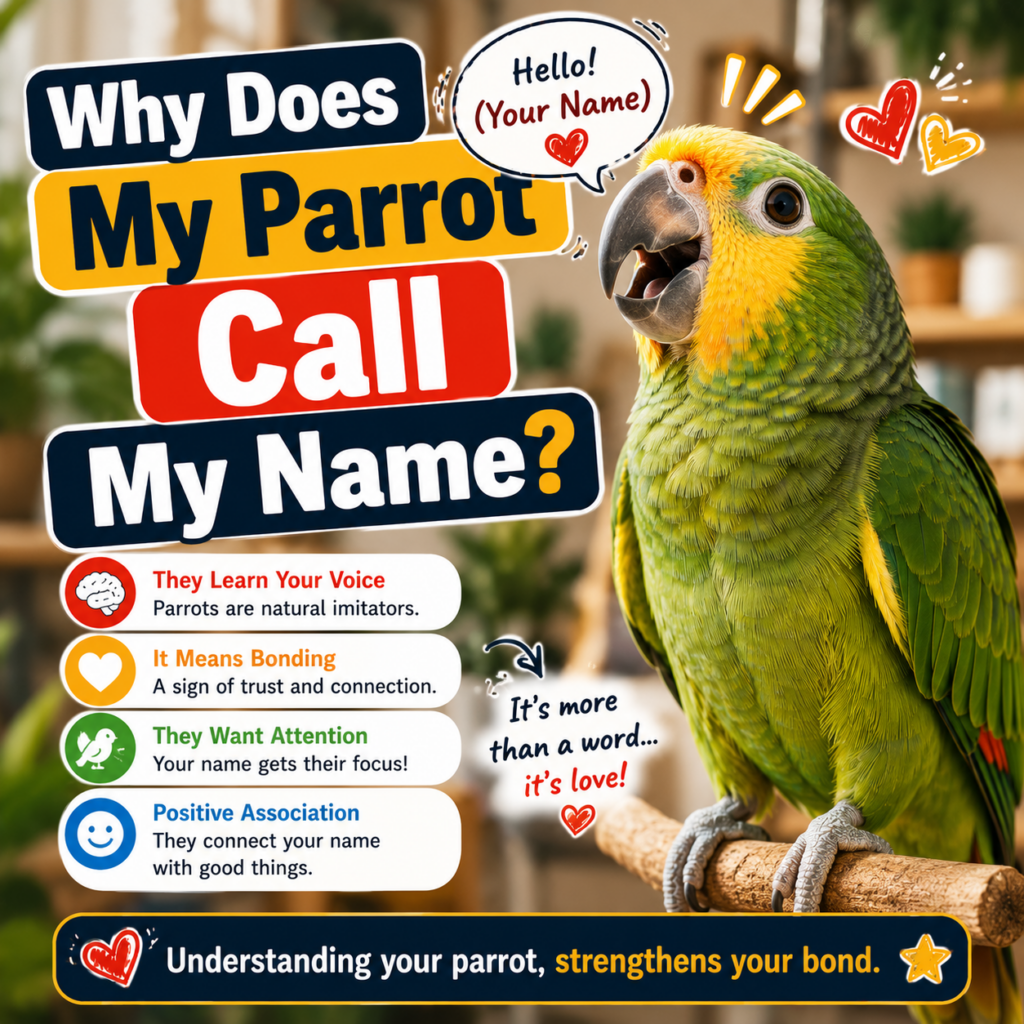
1. The Ultimate “Flock Call” (Seeking Connection)
In the wild, parrots are intensely social, flock-oriented creatures. Because they travel through dense, vast jungle canopies where visibility is low, they rely heavily on sound to stay connected. To prevent getting lost, wild birds use what biologists call a flock call—a unique vocal signature that acts like an audio GPS tracker for the group.
When you bring a parrot into your home, your human family becomes their default flock.
Your bird notices that whenever someone yells your name across the house, you instantly answer or walk into the room. Your name is the most powerful “flock call” in the house! When your parrot screams or says your name when you leave the room, they aren’t just making noise—they are actively checking your coordinates to ensure their favorite flock leader is safe and nearby.
2. Advanced Cognitive Labeling (They Know Who You Are)
For decades, critics dismissed bird speech as simple, robotic mimicry—the classic “Polly wants a cracker” reflex. However, landmark studies in avian intelligence (most notably Dr. Irene Pepperberg’s work with an African Grey named Alex) completely rewrote the science books.
Parrots don’t just mimic; they possess the capacity for cognitive labeling.
Your parrot watches you intently using their rapid visual processing system. They notice that you are the specific individual who opens their cage, hands them premium treats like walnuts, cleans their dishes, and scratches their neck. They quickly realize that your name belongs exclusively to your face and body. When they look at you and say your name, they are intentionally addressing you.
At a Glance: Decoding Your Parrot’s Name-Calling
How your parrot behaves while they use your name can tell you exactly what resource or emotional state they are looking for.
| Vocal Delivery style | Accompanying Body Language | The True Avian Meaning | What You Should Do |
| Loud, repetitive screaming of your name. | Pacing the perch anxiously, looking out the window or door. | The Urgent Contact Call: They panicked because you left their sight. | Reply back from the other room with a consistent phrase to reassure them. |
| Soft, low-pitched mumbling of your name. | Beak grinding, fluffed up head feathers, half-closed eyes. | Absolute Contentment: They feel 100% safe, relaxed, and loving toward you. | Speak softly back or offer a gentle head scratch behind their crest. |
| Enthusiastic name-calling with head bobs. | Eye pinning (rapidly dilating pupils), slight wing flares. | Excited Engagement: They want to initiate play, dance, or get a high-value treat. | Reward the positive communication with a structured 15-minute play session. |
3. The Dopamine Rush of Human Reactions
Let’s be completely honest: humans have a massive, joyful reaction when a bird speaks their name. The first time your parrot said it, you likely gasped, smiled, ran over to their cage, used a high-pitched happy voice, and handed them an elite treat.
To an animal as emotionally intuitive as a parrot, your massive happy reaction is a psychological jackpot.
Listening to you celebrate triggers a rush of dopamine (the feel-good hormone) in their avian brain. Because parrots are natural-born performers who love to manipulate their environment, they will file your name away under their “highly profitable behaviors” category. They call your name because they know it is the ultimate shortcut to getting your undivided attention and rewards.
⚠️ The Danger of Over-Bonding and Scream Triggers
While hearing a parrot call your name is beautiful, it can easily morph into severe separation anxiety or chronic screaming if boundaries aren’t set. If you sprint to their cage every single time they scream your name, you are training them to become a loud alarm system. To keep a healthy flock dynamic, only reward them when they use your name in a calm, spoken tone. Ignore the ear-piercing shrieks completely so they learn that quiet speech is the only way to invite you over.
4. True Platonic and Monogamous Affection
Across many large parrot species, birds form strict, lifelong monogamous pairs in the wild. When kept as household exotic pets, they often select a single member of the family to be their chosen life partner.
If you are that lucky person, your parrot calling your name is an explicit declaration of love. They use your name to initiate mutual bonding rituals like allopreening (grooming your hair or eyebrows). It is their way of telling you that out of everyone in the entire world, you are their ultimate human companion and safe harbor.
The Bottom Line
When your parrot calls your name, you are witnessing an extraordinary mixture of advanced neurobiology, ancestral flock communication, and genuine emotional attachment. They aren’t just copying background noise; they recognize your unique identity and are using their voice to bridge the gap between human and avian languages. Respect their boundaries, reward their quiet vocals, and enjoy the wonderful privilege of being your bird’s favorite flock member!