
Few things hurt more—both physically and emotionally—than when your cute, fluffy hamster suddenly turns on you and nips your finger. If your hamster is biting you, it can be incredibly discouraging, especially if you’ve been trying your best to be a good pet parent.
The good news? Hamsters rarely bite out of pure malice. In most cases, a bite is simply their way of communicating a specific need, fear, or misunderstanding.
So, why does your hamster bite you? Let’s dive into the psychology behind this defensive behavior and learn how you can build a safe, bite-free relationship with your pocket pet.
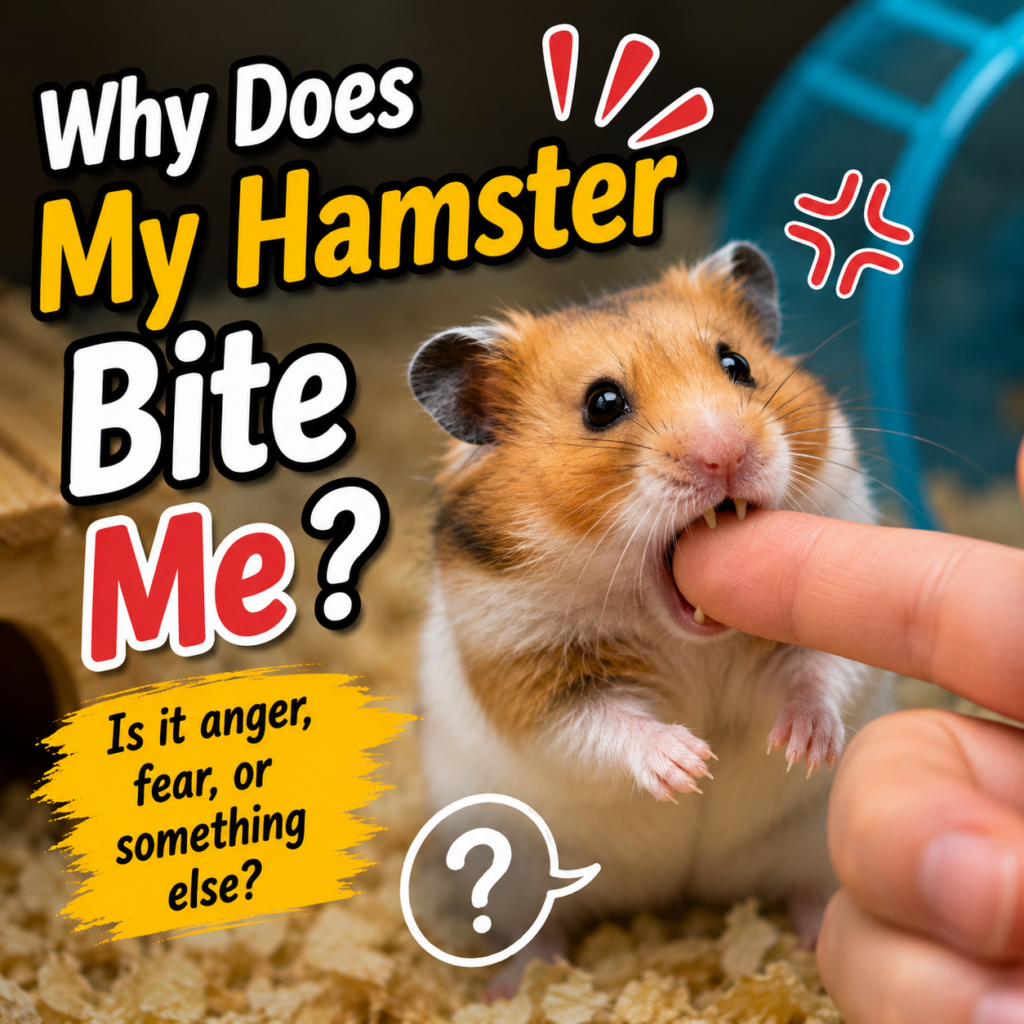
1. Fear and Defense (The “Scared Prey” Reflex)
The most common reason for hamster bites is fear.
In the wild, hamsters are prey animals. Because they are tiny, their natural instinct when faced with a giant human hand reaching into their territory is to protect themselves. If you wake your hamster up suddenly, corner them in their cage, or move your hand too quickly, they view you as a predator. A bite is their ultimate line of defense.
2. Your Hands Smell Like Food
Hamsters have incredibly poor eyesight, but they make up for it with an extraordinarily keen sense of smell.
If you just ate a sandwich, handled fruit, or even used a heavily scented soap before reaching into the cage, your hamster’s nose will detect food. Because they can’t see well enough to distinguish your finger from a treat, they will take an experimental nibble. Unfortunately, an “experimental nibble” from a hamster can still be quite sharp!
3. Territorial Behavior (Cage Aggression)
A hamster’s cage is its castle. They spend hours building the perfect nest, hoarding food in specific corners, and mapping out their territory.
When you stick your hand directly into their enclosure, some hamsters experience what is known as cage aggression. They see your hand as an intruder invading their safe space. Interestingly, many hamsters that bite inside their cage are completely gentle and docile once you handle them outside of it.
4. Stress, Illness, or Pain
Just like humans, hamsters can be grumpy when they aren’t feeling well. If your hamster is usually sweet but suddenly starts biting, they might be in pain or suffering from an underlying illness.
Furthermore, environmental stressors—such as a cage that is too small, a noisy room, or lack of a proper running wheel—can cause chronic stress, making your hamster much more prone to lashing out.
5. Improper Taming and Handling
If you recently brought your hamster home from the pet store, they are likely overwhelmed by their new surroundings. Jumping straight into holding them without a proper “taming period” is a recipe for getting nipped. They need time to get used to the sounds, smells, and sights of their new home before they are ready to be handled.
How to Stop Your Hamster from Biting
Reversing this behavior takes patience, but it is entirely possible. Follow these steps to earn your hamster’s trust:
- Wash Your Hands First: Always wash your hands with unscented soap before handling your hamster to remove any food odors.
- Let Them Wake Up Naturally: Never startle a sleeping hamster. Wait until they are awake, alert, and grooming themselves before trying to interact.
- The Scent Trick: Place a piece of tissue paper that smells like you (tuck it in your sleeve for an hour) into their cage. This helps them associate your scent with safety.
- Use the “Scoop” Method: Instead of grabbing your hamster from above (which mimics a predatory bird), scoop them up gently using a mug or a small box to transport them out of the cage.
- Bribery Works: Offer high-value treats (like a sunflower seed or a piece of apple) from your fingertips. Let them come to you on their own terms.
Conclusion: Patience Leads to Trust
Getting bitten by a hamster is a clear sign that your little friend is feeling overwhelmed, confused, or protective. By slowing down your approach, respecting their boundaries, and using positive reinforcement, you can show your hamster that your hands bring treats and safety—not danger.
Give it time, stay consistent, and soon those painful nips will turn into gentle climbs up your sleeve!