Turtles are famously hardy pets, often outliving many other domestic animals. However, because they are reptiles, they possess a natural instinct to hide signs of illness or vulnerability. By the time a turtle looks obviously sick, an underlying health issue may have been developing for weeks.
As a responsible reptile keeper, knowing how to read your pet’s subtle cues is essential.
So, how do you know if your turtle is healthy? Let’s break down the 6 vital health signs you should check regularly to ensure your shelled friend is thriving.
1. Clear, Bright, and Alert Eyes
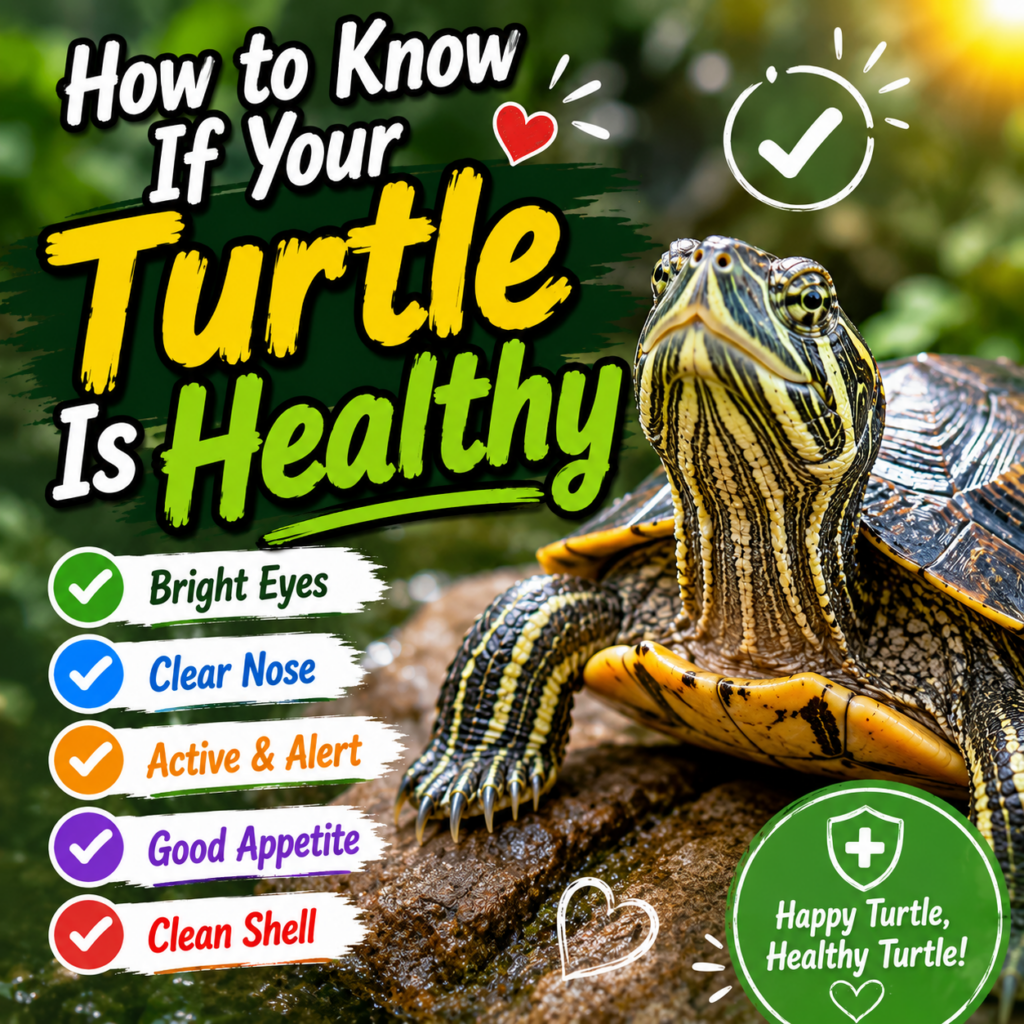
A healthy turtle’s eyes are its window to wellness. Look for eyes that are wide open, clear, glossy, and alert to your presence.
If your turtle actively watches you walk across the room or focuses intently on its food, its neurological and visual health is on track.
Red Flags to Watch For: Swollen, puffy eyelids, eyes glued shut, or any discharge or cloudiness. These are classic symptoms of Vitamin A deficiency or an acute bacterial infection.
2. A Hard, Smooth, and Intact Shell
Your turtle’s shell is an extension of its skeleton, and its condition tells you everything you need to know about its diet and lighting setup. A healthy adult turtle should have a firm, solid shell (both the top carapace and the bottom plastron). It should be free of cracks, chips, or pitting.
(Note: Baby turtles naturally have slightly soft shells, but they should stiffen as they grow.)
- Healthy Shedding: It is completely normal for aquatic turtles to shed translucent, paper-thin layers of their shell (scutes) as they grow.
- Unhealthy Shells: Soft spots, a foul odor, or white, chalky patches indicate a dangerous condition called shell rot, which requires immediate veterinary treatment.
3. Smooth, Effortless Breathing
Observe your turtle while it is resting or basking. Healthy turtles breathe silently and effortlessly through their noses.
When swimming, a healthy aquatic turtle moves smoothly and maintains a perfectly horizontal equilibrium in the water.
- Signs of Respiratory Distress: If you hear wheezing, clicking, or gasping sounds when your turtle breathes, it is a major warning sign.
- Lopsided Swimming: If your turtle swims tilted to one side or struggles to submerge, it likely has fluid in its lungs—a primary indicator of a respiratory infection (RI), which is an emergency for reptiles.
4. A Robust Appetite and High Energy Levels
Healthy turtles are opportunistic feeders that rarely turn down a meal. If your turtle eagerly swims to the glass when the food container rattles or enthusiastically hunts down its pellets and greens, its metabolism is functioning perfectly.
In tandem with a good appetite, a healthy turtle is active. It will spend its day swimming, exploring its enclosure, pushing tank decorations around, and climbing onto its basking platform under the heat lamp.
5. Clear Nostrils and Clean Skin
Take a close look at your turtle’s face and limbs. The nostrils should be completely clear and dry. The skin on their neck and legs should be smooth, taut, and free of unusual lumps, open sores, or fuzzy white patches (which indicate fungal infections).
6. Regular Basking and Normal Waste Production
A healthy turtle understands its own thermoregulation needs. It should spend a balanced amount of time swimming in the water and drying off completely under its UVB and heat lamps.
Additionally, check the tank for normal waste. While not the most glamorous task, regular, solid bowel movements are a direct sign that your turtle’s digestive tract is processing food correctly.
The Healthy Turtle Checklist: Daily vs. Weekly
To make monitoring your pet easier, use this quick checklist:
| Frequency | What to Check | What to Look For |
| Daily | Behavior & Appetite | Alertness, active swimming, eager feeding. |
| Daily | Breathing | Silent respiration, perfectly level swimming. |
| Weekly | Shell Inspection | Check for firmness, look for any soft spots or foul odor. |
| Weekly | Eyes & Nose | Ensure no swelling, puffiness, or discharge. |
Conclusion: Prevention is the Best Medicine
Ultimately, a healthy turtle is the result of an optimized environment. If you provide a spacious tank, a powerful water filtration system, a balanced diet, and—most importantly—high-quality UVB and heat lighting, your turtle will naturally reward you with a long, vibrant life.
Perform these basic health checks weekly, stay consistent with tank maintenance, and enjoy the companionship of your thriving reptile friend!