Feeding your koi fish isn’t as simple as tossing a handful of pellets into the water whenever you walk past the pond. Because koi are ectothermic (cold-blooded) creatures, their digestive system relies entirely on the surrounding water temperature to function.
If you feed them too much during a summer heatwave, you risk ruining your water quality. If you feed them the wrong food—or feed them at all—during the freezing winter, it can actually be fatal to their health.
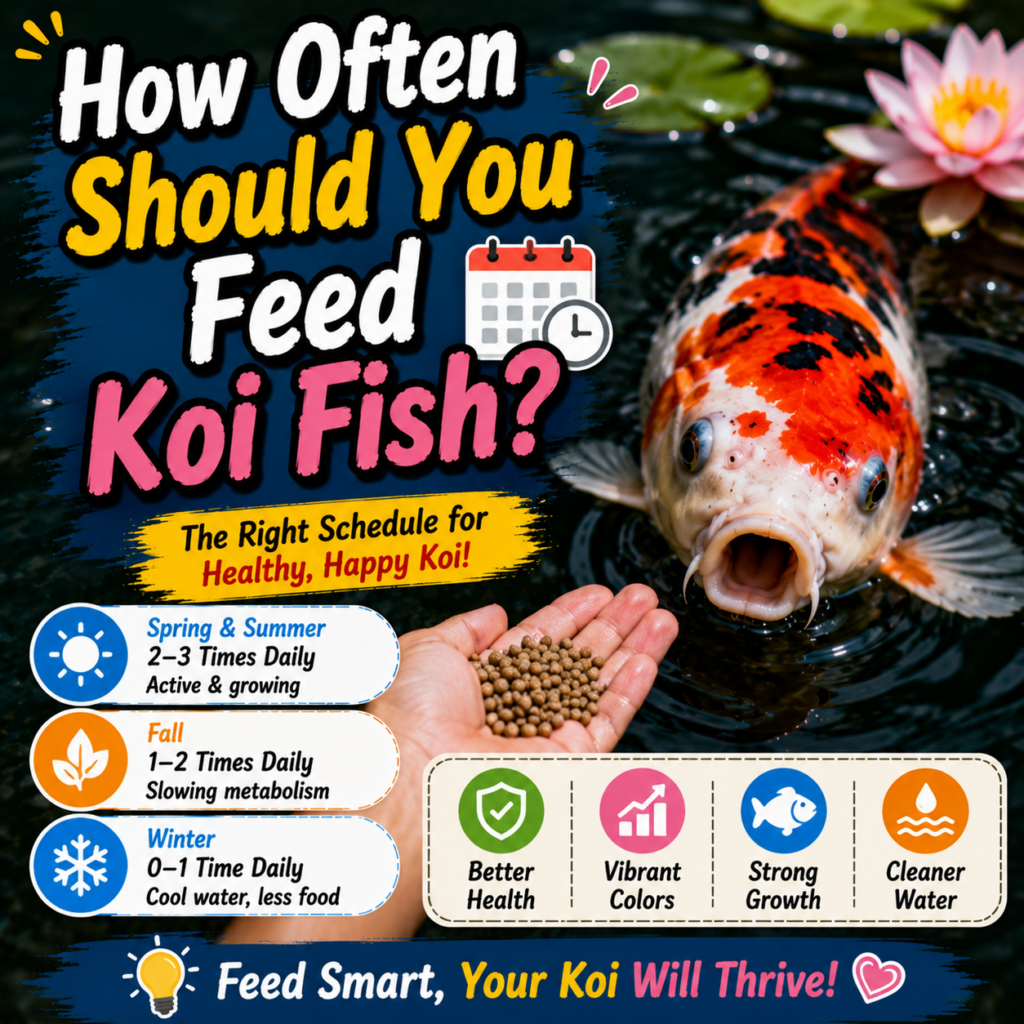
So, how often should you feed koi fish? The answer changes completely throughout the year. Let’s break down the perfect seasonal feeding schedule to keep your “living jewels” vibrant, healthy, and thriving.
The Core Rule: Follow the Water Thermometer 🌡️
To manage a successful koi pond, you must stop looking at the calendar and start looking at a pond water thermometer.
Unlike humans, koi do not have a traditional stomach; instead, they have a long intestinal tract. As water temperatures drop, their metabolism slows down, and their ability to produce digestive enzymes disappears completely.
The Koi Feeding Schedule by Water Temperature
Use this definitive temperature matrix to adjust your daily and weekly feeding frequency:
1. Above 70°F (21°C) — Peak Summer: Feed 2 to 4 Times Daily
This is your koi’s peak growing and breeding season. Their metabolism is firing on all cylinders, and they require high amounts of energy.
- Frequency: 2 to 4 times per day.
- Portion: Only feed what they can completely clean up within 5 minutes.
- Diet: High-protein growth pellets, supplemented with treats like silkworm pupae, fresh watermelon, or orange slices.
2. 60°F to 69°F (15°C to 20°C) — Spring & Autumn: Feed 1 to 2 Times Daily
As the seasons change, their activity levels begin to balance out.
- Frequency: 1 to 2 times per day, during the warmest hours of the afternoon.
- Diet: Standard staple koi pellets or a transition mix.
3. 50°F to 59°F (10°C to 14°C) — Early Winter / Late Spring: Feed 2 to 3 Times a Week
The water is getting chilly, and your fish will start swimming much slower, spending more time near the bottom of the pond.
- Frequency: Reduce feeding drastically to only 2 to 3 times per week.
- Diet: Switch entirely to easily digestible, low-protein wheatgerm pellets. Standard high-protein pellets will sit in their gut and rot, causing fatal bacterial infections.
4. Below 50°F (10°C) — Deep Winter: STOP Feeding Completely ❌
When the pond water drops below this threshold, your koi enter a state of semi-hibernation called torpor. Their digestive system completely shuts down for the season.
- Frequency: Zero. Do not feed them at all.
- The Reality: Your koi will survive the winter perfectly fine by resting at the bottom of the pond and living off their stored fat reserves. Feeding them during this time will pollute the water and kill your fish.
Summarized Seasonal Matrix
| Water Temperature | Season Equivalent | Feeding Frequency | Recommended Diet Type |
| 70°F+ (21°C+) | Summer | 2–4 times per day | High-protein & Fresh treats |
| 60°F–69°F (15°C–20°C) | Spring / Autumn | 1–2 times per day | Standard Staple pellets |
| 50°F–59°F (10°C–14°C) | Late Autumn / Early Winter | 2–3 times per week | Wheatgerm-based pellets |
| Below 50°F (10°C) | Winter | STOP completely | None (Torpor phase) |
The 5-Minute Rule: How Much Food is Too Much?
No matter the season, overfeeding is the easiest way to crash a pond ecosystem. Uneaten pellets dissolve and create toxic spikes in ammonia and nitrites, while also triggering massive green algae blooms.
Whenever you feed your koi, utilize the 5-Minute Rule:
- Toss a small handful of pellets into the water.
- Set a timer and watch your fish eat.
- If they consume everything within 3 to 5 minutes, you can offer a tiny bit more.
- If pellets are still floating after 5 minutes, use a pool skimmer or fish net to scoop them out immediately.
Conclusion: A Consistent Routine for a Pristine Pond
Managing your koi’s diet is all about adapting to the elements. By investing in a reliable pond thermometer, matching your pellet type to the temperature, and skimming away any leftover food, you will protect your filtration system and keep your fish safe.
Keep your summer feedings active, respect their winter rest, and enjoy the beautiful, lifelong bond of a healthy koi pond!