
Every koi keeper dreams of owning majestic, giant koi that glide through the water like living submarines. In Japan, these massive beauties are known as “Jumbo Koi,” often stretching past 30 inches in length.
While genetics play a foundational role in determining a fish’s ultimate size potential, environment and nutrition are the keys that unlock that growth. If you feed your fish low-quality filler pellets, they will remain stunted. However, by introducing the right balance of natural proteins, healthy lipids, and nutrient-dense whole foods, you can accelerate their growth curve safely and beautifully.
So, what are the best foods to help koi grow bigger naturally? Let’s dive into the ultimate jumbo growth diet matrix.
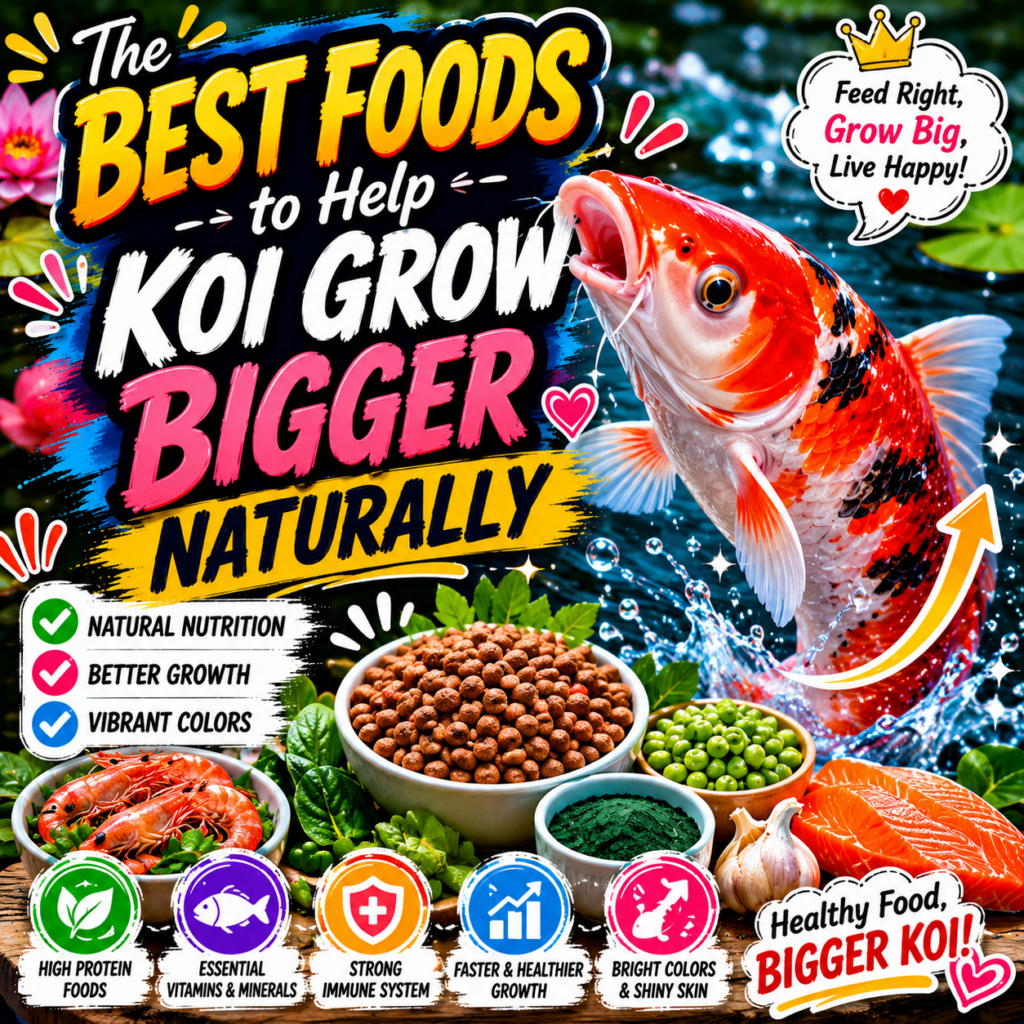
1. High-Protein Staples: The Foundation of Growth
To build muscle tissue and length, koi require a diet heavily weighted in high-quality protein. Look for commercial pellets where the crude protein content is between 40% and 45%.
However, the source of the protein matters immensely. Avoid foods where “soybean meal” or “wheat gluten” are listed as the first ingredients. Koi cannot process plant proteins as efficiently as marine animal proteins.
- What to Look For: Ensure the first ingredient is White Fish Meal, Krill Meal, or Herring Meal. These premium marine sources provide the essential amino acid profiles that koi require to stack on healthy mass.
2. Silkworm Pupae: The Japanese Secret to Jumbo Koi
If you want to grow your koi like the master breeders in Niigata, Japan, you need to introduce silkworm pupae (Kaiko) into their menu.
Silkworm pupae are a natural nutritional powerhouse, containing over 50% protein and a rich concentration of silk-oil fats. This specific lipid profile triggers rapid muscle development and naturally enhances the glossy sheen of their scales.
- How to Feed: Silkworm pupae are incredibly rich, so treat them like a heavy muscle-building supplement. Only feed them during peak summer when water temperatures are consistently above 70°F (21°C), as cold water makes this heavy protein difficult to digest.
3. Earthworms and Nightcrawlers: Nature’s Fresh Protein
You don’t have to rely entirely on dried store-bought foods. Fresh, live foods trigger a koi’s natural foraging instincts and provide completely pure, unprocessed nutrition.
Live earthworms and nightcrawlers are arguably the best natural growth boosters available. They are packed with moisture, clean proteins, and essential minerals that are easily broken down by a koi’s intestinal tract.
- Pro Tip: If you harvest worms from your garden, ensure your soil is completely free of chemical fertilizers, pesticides, or weed killers before tossing them into the pond.
4. Fresh Fruits and Vegetables: The Vitamin Boosters
To grow big, a koi must also be incredibly healthy. A weak immune system slows down growth. Supplementing their diet with fresh fruits and vegetables provides vital antioxidants and vitamins that commercial pellets can lose during heat processing.
- Watermelon: A universal koi favorite! It is packed with Vitamin C and highly hydrating. Simply slice a wedge, leave the rind on, and let it float. Your koi will eagerly tear it apart.
- Oranges and Grapefruit: Cut them in half and drop them in. The citric acid and heavy load of Vitamin C help boost their immune system, reduce stress levels, and naturally brighten their skin tones.
- Steamed Broccoli and Peas: Highly digestible sources of natural fiber that keep their long digestive tracts running smoothly, preventing bloating.
🌟 Quick Treat Matrix for Maximum Growth:
[ Silkworm Pupae ] ──► Muscle Mass & Scale Luster
[ Earthworms ]     ──► Pure Protein & Foraging Activity
[ Watermelon ]     ──► Vitamin C & Metabolic Hydration
The Growth Window: Timing is Everything
You cannot force a koi to grow big all year round. Because koi are cold-blooded, their ability to process food is completely tied to the temperature of the water.
- Peak Growth Window (Water above 70°F / 21°C): Feed high-protein pellets and silkworm pupae 3 to 4 times a day. This is when 90% of their annual growth occurs.
- Cooling Window (Water 50°F to 60°F / 10°C to 15°C): Stop the growth foods immediately. Switch to easily digestible wheatgerm pellets fed only once a day or a few times a week.
- Winter Window (Water below 50°F / 10°C): Stop feeding completely. Their digestive system shuts down, and trying to feed them will kill them.
The Ultimate Growth Checklist (Beyond Food)
Feeding premium food won’t work if your pond setup is holding them back. To get your koi to jumbo status, ensure you meet these environmental standards:
- Spacious Water Volume: Koi need room to move. A general rule for jumbo growth is at least 250 to 500 gallons of water per adult koi.
- Heavy-Duty Filtration: High-protein diets create massive amounts of waste. Your mechanical and biological filters must be robust enough to keep Ammonia and Nitrites at a strict 0 ppm.
- High Oxygen Levels: Digesting heavy meals requires an immense amount of metabolic oxygen. Keep your waterfalls cascading and run heavy-duty air pumps 24/7 during the summer growth phase.
Conclusion: Patience Breeds Giants
Naturally growing jumbo koi is a deeply rewarding marathon, not a sprint. By anchoring their diet in premium marine-based fish meal, supplementing with silkworm pupae and fresh earthworms during the peak of summer, and maintaining pristine, oxygen-rich water, you will give your finned family the absolute best environment to reach their full, breathtaking potential.