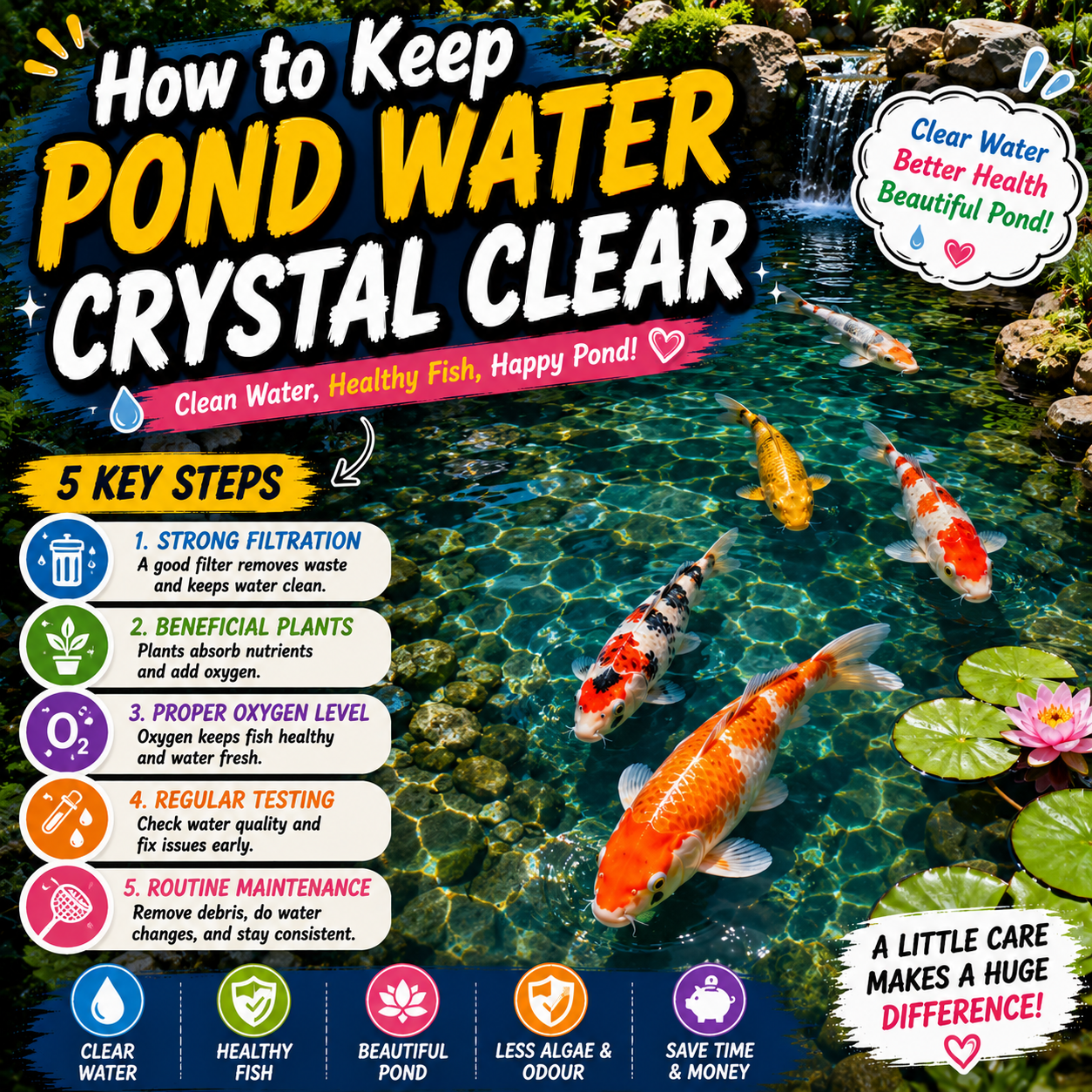
There is nothing quite like the peaceful view of vibrant koi or goldfish gliding gracefully through perfectly transparent, crystal-clear water. However, for many pond owners, maintaining that pristine clarity feels like an endless battle against murky brown water, toxic debris, and the dreaded “green pea soup” algae blooms.
Achieving crystal-clear pond water isn’t about dumping harsh chemicals into your pond every week. Instead, it’s about understanding pond biology and balancing your ecosystem naturally.
So, how do you keep pond water crystal clear? Let’s break down the 5 essential, proven steps to transform your murky pond into a transparent aquatic oasis.
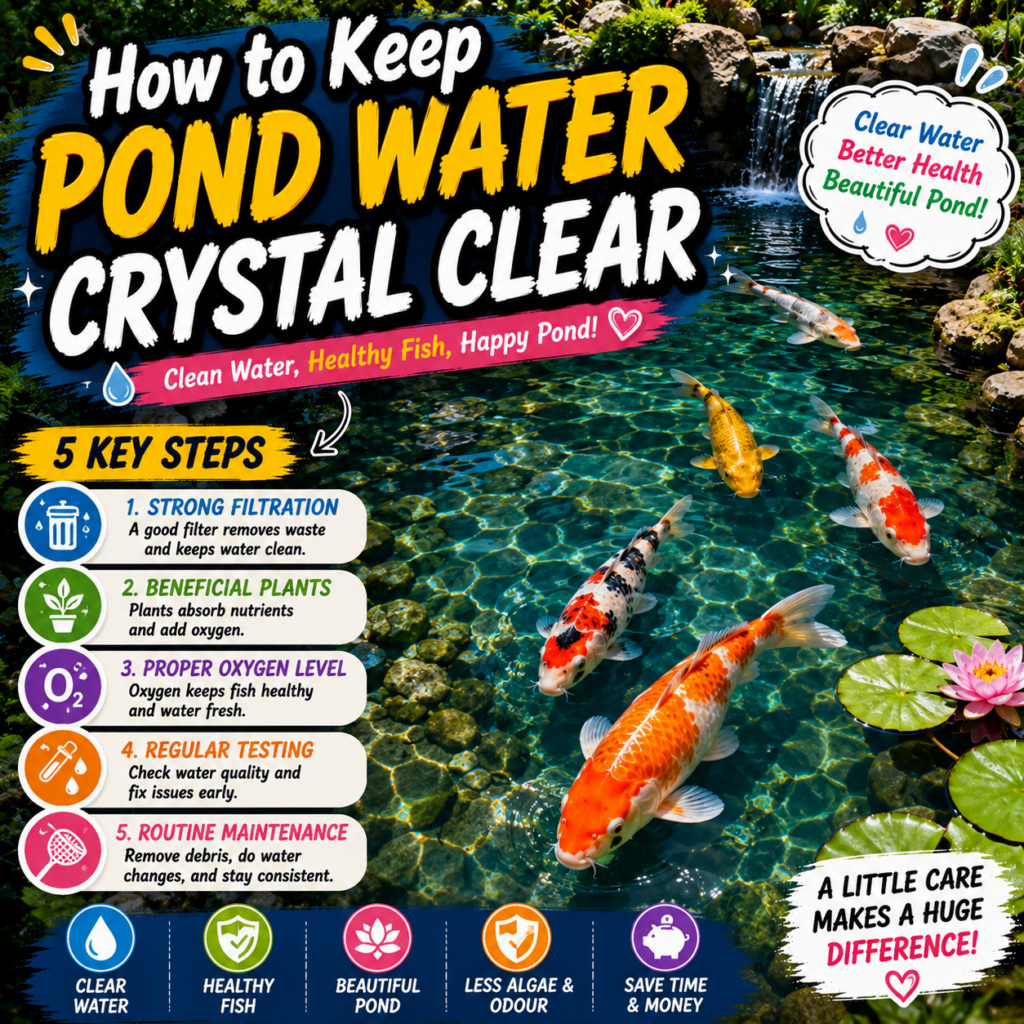
1. Upgrade to a Robust, Three-Stage Filtration System
Think of your pond filter as the heart and lungs of your ecosystem. If your filter is too small or missing essential components, clear water is physically impossible. A truly effective pond filter must utilize three distinct styles of filtration:
- Mechanical Filtration: This physically traps floating debris, fish waste, and leaves. Examples include filter mats, skimmer baskets, and sponge layers.
- Biological Filtration: This is the most critical stage. It houses colonies of beneficial bacteria that convert toxic ammonia (from fish waste) into nitrites, and then into harmless nitrates.
- Ultraviolet (UV) Clarifier: If you struggle with green water, a UV clarifier is your ultimate secret weapon. As pond water passes through the UV chamber, the specialized light rays alter the DNA of microscopic single-celled algae, causing them to clump together so your mechanical filter can easily strain them out.
The Golden Rule: Always choose a filtration system rated for twice the actual volume of your pond, especially if you keep heavy waste-producing fish like koi.
2. Leverage the Power of Aquatic Plants
Mother Nature’s best filtration system is live flora. Aquatic plants act as natural nutrient sponges. They directly compete with algae by consuming the nitrates and phosphates that algae need to grow.
To optimize your pond’s natural filtration, introduce a balanced mix of these three plant types:
- Floating Plants (Water Hyacinth, Water Lettuce): Their roots hang directly in the water column, absorbing waste while their leaves provide vital shade, lowering water temperatures to slow down summer algae growth.
- Submerged Oxygenators (Anacharis, Hornwort): These sit completely underwater, absorbing nutrients directly through their stems and releasing massive amounts of dissolved oxygen into the water.
- Marginal Plants (Iris, Cattails): Planted along the shallow shelves, they add beautiful structure and absorb nutrients running off the pond edges.
🌟 Aim for Balance:
Try to cover roughly 40% to 50% of your pond's surface area with floating plants or lily pads to block excess sunlight and starve out green algae.
3. Master the 5-Minute Feeding Rule (Avoid Overfeeding)
One of the most common causes of murky, brown, or green pond water is overfeeding. When you toss too many pellets into the water, your fish won’t eat them all. The uneaten food sinks to the bottom, dissolves, and releases a massive spike of organic nutrients that instantly fuels algae explosions and clouds the water.
Whenever you feed your fish, utilize the 5-Minute Rule:
- Toss a small handful of pellets into the water.
- Watch your fish eat. If they consume everything within 3 to 5 minutes, you can offer a tiny bit more.
- If pellets are still floating after 5 minutes, use a fish net to scoop them out immediately.
4. Keep the Bottom Clean (Control the Sludge)
Over time, a layer of organic muck—composed of decaying leaves, fish poop, dead algae, and windblown dust—will accumulate at the bottom of your pond. This layer is known as pond sludge. As this sludge decomposes anaerobically (without oxygen), it clouds the water column and releases a foul odor.
- Install a Pond Skimmer: A surface skimmer catches falling leaves and twigs before they can sink to the bottom and rot.
- Use Beneficial Bacteria Boosters: Regularly add commercial liquid or powdered beneficial bacteria treatments. These specialized enzymes actively “eat” and break down organic muck on the pond floor, naturally restoring water clarity.
- Vacuum Annually: Use a specialized pond vacuum once or twice a year (typically in early spring or autumn) to safely extract heavy sludge layers without draining the pond entirely.
5. Maintain Optimal Aeration and Water Movement
Stagnant water is a breeding ground for mosquito larvae, harmful pathogens, and heavy algae mats. Moving water, on the other hand, stays noticeably clearer.
Ramping up your aeration system achieves two major goals:
- It drives massive amounts of dissolved oxygen into the water, which your beneficial biological filter bacteria desperately need to process ammonia efficiently.
- It breaks the surface tension of the water, preventing film buildup and circulating debris toward your mechanical filters.
Ensure your waterfalls, streams, fountains, or heavy-duty sub-surface air pumps are running 24 hours a day, 7 days a week, especially during scorching summer heatwaves when oxygen levels naturally drop.
Troubleshooting Guide: What Color is Your Murky Water?
If your pond water isn’t clear right now, you can diagnose the root cause easily by looking at its specific tint:
| Water Color | Likely Diagnosis | The Immediate Fix |
| Pea-Green tint | Microscopic Single-Celled Algae Bloom | Turn on or install a UV Clarifier; add floating plants. |
| Murky Brown / Tea color | Excess Sludge, Tannins, or Soil Runoff | Vacuum the bottom muck; use activated carbon in the filter. |
| Cloudy White / Gray | Bacterial Bloom (Common in new ponds) | Do not panic. Reduce feeding and let the filter cycle stabilize. |
Conclusion: Consistency Breeds Clarity
At the end of the day, crystal-clear pond water is a direct byproduct of a healthy, balanced ecosystem. By pairing a heavy-duty filter and a UV clarifier with a beautiful canopy of aquatic plants, managing your feeding portions rigidly, and keeping aeration levels high, you can easily maintain a pristine aquarium-like view right in your backyard.
Invest in your pond’s biological balance, check your water parameters monthly, and enjoy the breathtaking beauty of a truly transparent pond!