One of the most exciting parts of building a garden pond is choosing the colorful, majestic koi that will inhabit it. However, before you rush out to the local breeder to buy a whole school of these “living jewels,” you must ask a critical question: How many koi fish can you keep in one pond safely?
Unlike standard aquarium fish, koi grow exceptionally large, live for decades, and produce a massive amount of waste. Overstocking a pond is the fastest way to crash your water quality, leading to dangerous ammonia spikes, low oxygen levels, and fatal fish illnesses.
Let’s break down the definitive rules of thumb, formulas, and environmental factors to help you calculate the perfect number of koi for your specific pond volume.
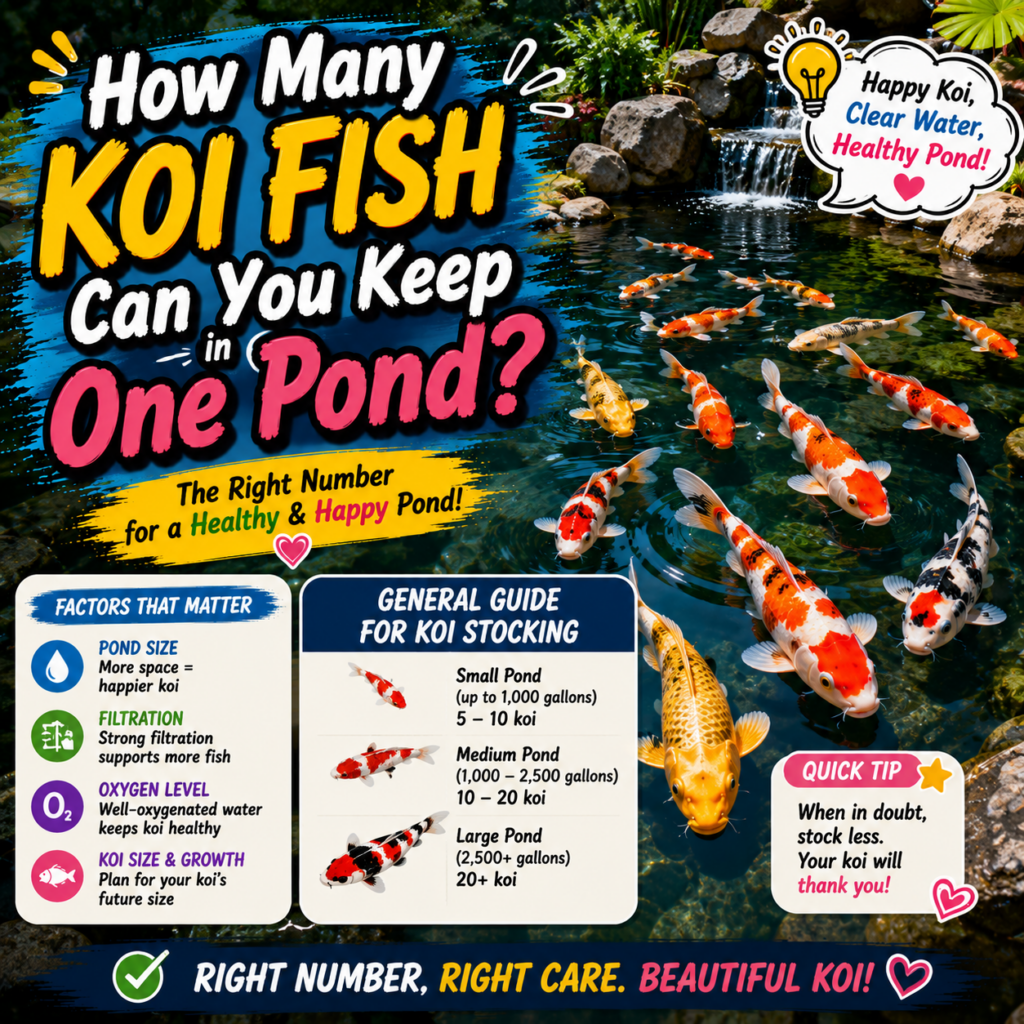
The Golden Rule: The 250-to-500 Gallon Formula
When calculating your pond’s capacity, you must always plan for the future adult size of your fish, not the size they are when you buy them as juveniles. A healthy koi can easily reach 24 to 30 inches in length within a few years.
To keep your fish healthy, use this universally accepted stocking metric:
Minimum Volume for the First Koi = 1,000 Gallons
Additional Volume per Extra Adult Koi = 250 to 500 Gallons
Why the 1,000-Gallon Baseline Matters
Koi are highly social “shoaling” fish, meaning they should never be kept entirely alone. Because the absolute bare minimum volume to comfortably house an adult koi population is 1,000 gallons, your standard starting setup should look like this:
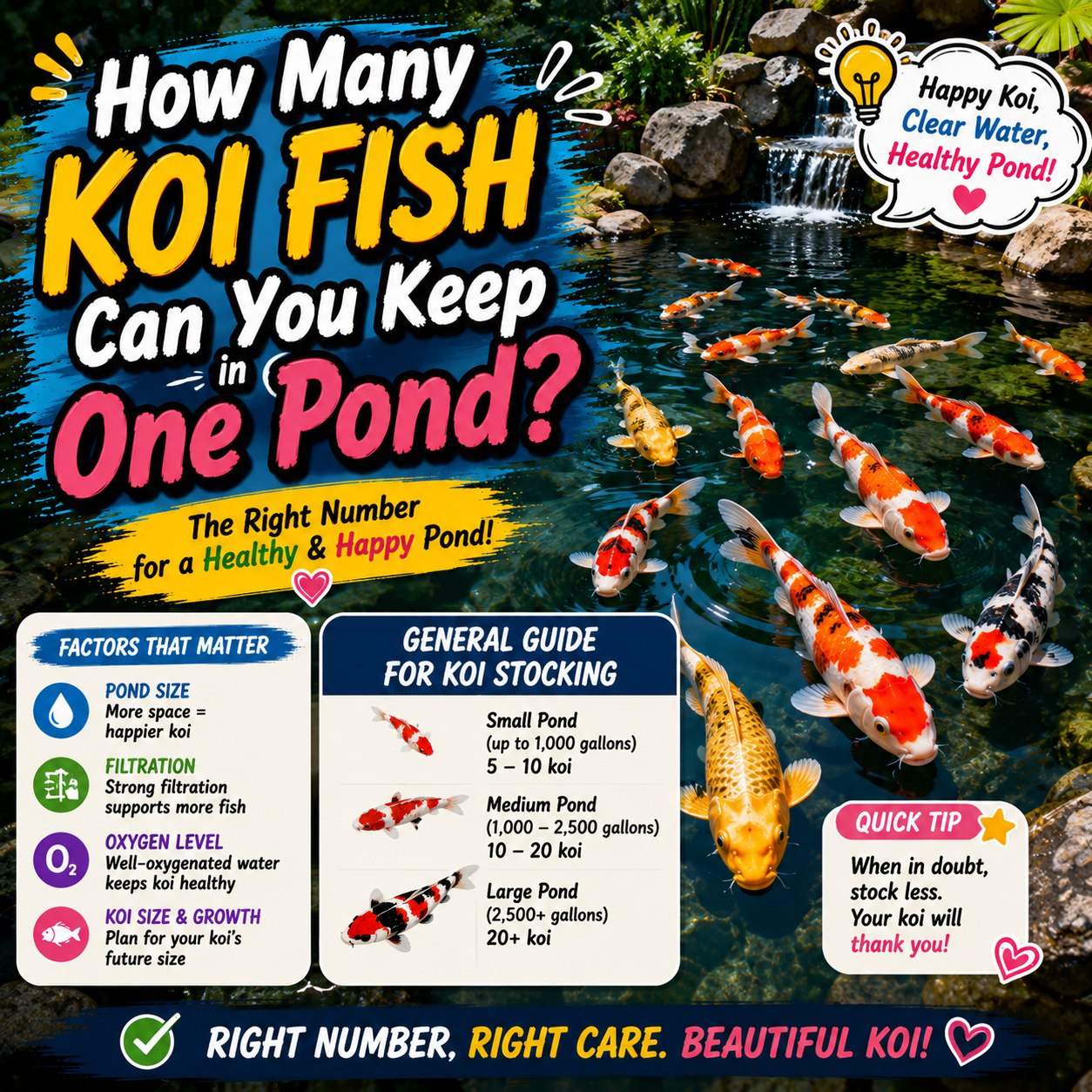
- In a 1,000-Gallon Pond: You can safely keep 2 to 3 adult koi.
- In a 2,500-Gallon Pond: You can comfortably house 5 to 7 adult koi.
- In a 5,000-Gallon Jumbo Pond: You can safely manage a thriving school of 12 to 15 adult koi.
Alternative Metric: The “Inches of Fish” Rule
Another popular calculation method used by pond builders is tracking the physical length of the fish relative to the water volume:
Safe Capacity = 10 Inches of Koi Fish per 100 Gallons of Water
For example, if you have a 1,500-gallon pond, this rule allows for a maximum total of 150 inches of fish.
- This could translate to 15 juvenile koi that are 10 inches long.
- However, as those fish grow into 25-inch adults, that same pond can suddenly only support 6 fish (150\25 = 6).
Always err on the side of caution and stock based on adult potential!
4 Crucial Factors That Affect Your Pond’s True Capacity
The formulas above assume a standard setup, but your pond’s unique engineering can shift your actual capacity numbers up or down.
1. The Power of Your Filtration System
Koi are incredibly messy eaters and produce heavy amounts of ammonia. If you possess a heavy-duty, commercial-grade external filter system paired with a robust biological matrix, your pond can process waste faster, allowing you to stay on the higher end of the stocking limits. If your filtration is minimal, you must strictly understock.
2. Dissolved Oxygen Levels
Large koi require an immense amount of oxygen to breathe and digest heavy high-protein meals. Running heavy-duty air pumps, air stones, and cascading waterfalls 24/7—especially during scorching summer heatwaves—significantly increases your pond’s carrying capacity.
3. Pond Depth and Shape
A shallow, flat pond is easily targeted by predators like herons or raccoons, and heats up too quickly in the summer. A proper koi pond should have a minimum depth of 3 to 4 feet (1 to 1.2 meters). Deep water provides stable temperatures, room to exercise vertically (which builds muscle mass), and safety from wildlife.
4. Your Maintenance Routine
Are you committed to performing a 10% to 20% water change every week and vacuuming out bottom muck? Heavy maintenance offsets a higher fish population. If you prefer a low-maintenance, hands-off ecosystem, keeping fewer fish is your safest path to success.
Warning Signs That Your Pond is Overstocked 🚨
If your pond is currently overcrowded, your fish will send clear visual distress signals. Watch out for these warning behaviors:
- Piping: Fish continuously crowding the surface gasping for air (indicates a critical lack of oxygen).
- Clamped Fins: Koi hovering sluggishly at the bottom with their fins pinned tightly against their sides (a classic sign of ammonia irritation).
- Frequent Illnesses: Frequent outbreaks of parasites (Ich or flukes) or bacterial ulcers due to a weakened immune system caused by overcrowding stress.
Conclusion: Less is Always More
When it comes to managing a pristine koi pond, understocking is the ultimate secret weapon. Keeping fewer fish means crystal-clear water, less filter maintenance, lower food costs, and significantly less stress for you. Most importantly, giving your fish plenty of swimming room allows them to naturally grow much larger, healthier, and more majestic.
Give your “living jewels” the space they deserve, invest in heavy aeration, and enjoy the peaceful serenity of a beautifully balanced pond!