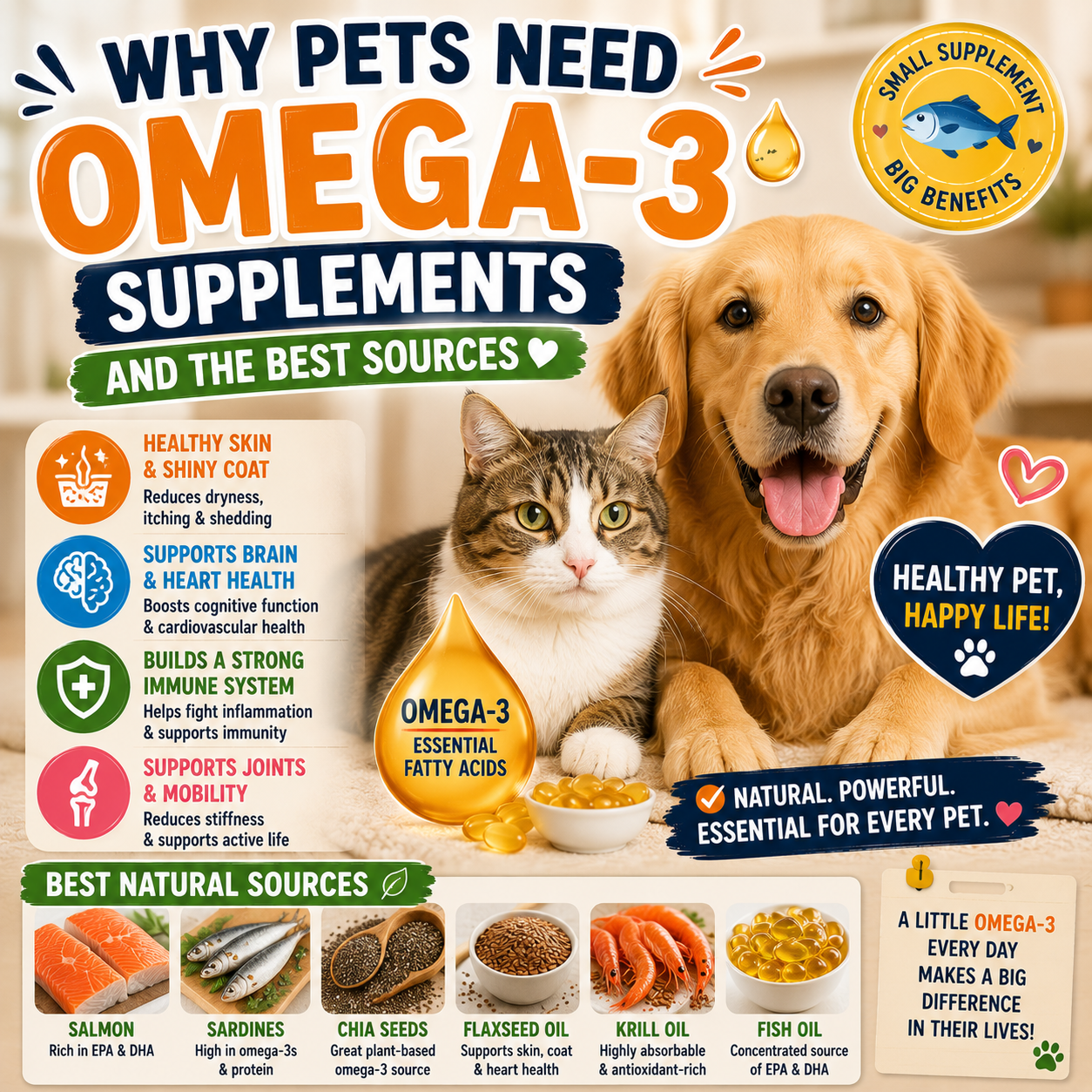
If you are looking for one simple addition to your pet’s diet that offers a wide range of health benefits, look no further than Omega-3 fatty acids. Often referred to as “essential” fats, they are critical for maintaining your dog or cat’s well-being from the inside out.
But what exactly do these fats do, and where should you get them? Here is everything you need to know about why your pet needs Omega-3s and how to choose the right sources.
1. Why Are Omega-3s Essential for Pets?
Unlike other nutrients, pets cannot produce their own Omega-3 fatty acids. They must obtain them through their diet. The three most important types are EPA (eicosapentaenoic acid), DHA (docosahexaenoic acid), and ALA (alpha-linolenic acid).
- Joint and Mobility Support: Omega-3s have natural anti-inflammatory properties. For senior pets or those with arthritis, supplementation can significantly reduce joint stiffness and improve mobility.
- Skin and Coat Health: If your pet suffers from dry, flaky skin or excessive shedding, Omega-3s help restore the skin barrier, leading to a lustrous, healthy coat and fewer allergic reactions.
- Cognitive Function: DHA is vital for brain health. It supports cognitive function in growing puppies/kittens and can help slow age-related mental decline in senior pets.
- Heart and Kidney Health: Emerging research suggests that Omega-3s support healthy blood pressure and kidney function, making them a cornerstone of geriatric pet care.
2. Best Sources of Omega-3s for Pets
Not all Omega-3 sources are created equal. When it comes to pets, marine sources are superior to plant-based ones.
The Gold Standard: Fish Oil
Fish oil provides EPA and DHA in a form that is highly bioavailable for dogs and cats.
- Wild-Caught Salmon Oil: Highly palatable and rich in EPA/DHA.
- Anchovy and Sardine Oil: These smaller fish are lower on the food chain, meaning they generally contain fewer heavy metals and contaminants than larger fish.
Krill Oil
Krill oil is another excellent marine source. It is often packed with astaxanthin, a powerful antioxidant that helps protect the fatty acids from oxidation and provides additional health benefits.
Plant-Based Sources (A Note of Caution)
You may see Flaxseed or Chia seeds on some pet food labels. While these contain ALA, pets are not efficient at converting ALA into the EPA and DHA their bodies actually need. Plant-based oils are a nice “extra,” but they should not be the sole source of Omega-3s in your pet’s diet.
3. How to Choose a High-Quality Supplement
With so many products on the market, it can be overwhelming to pick the right one. Follow these criteria:
- Look for Purity: Choose brands that test for heavy metals, PCBs, and other toxins. Third-party testing (like the NASC seal) is a great indicator of quality.
- Check the Concentration: Don’t just look at the total amount of “fish oil.” Check the label for the specific milligram amounts of EPA and DHA.
- Storage Matters: Omega-3s are fragile and can go rancid if exposed to heat, light, or air. Choose opaque, airtight bottles and keep them in a cool, dark place (or even the refrigerator).
4. Safety and Dosage
- Start Slow: Adding too much oil to a pet’s diet suddenly can cause mild digestive upset or loose stools. Start with a smaller dose and gradually work up to the recommended amount.
- Consult Your Vet: If your pet is on blood-thinning medication or has a history of pancreatitis, talk to your veterinarian before starting any new supplement.
Conclusion
Adding an Omega-3 supplement to your pet’s routine is an easy, highly effective way to support their long-term health. Whether you’re aiming to soothe itchy skin, support aging joints, or boost brain power, the right fish oil can make a world of difference. Invest in a high-quality marine-based source today—your pet’s coat and comfort will thank you!