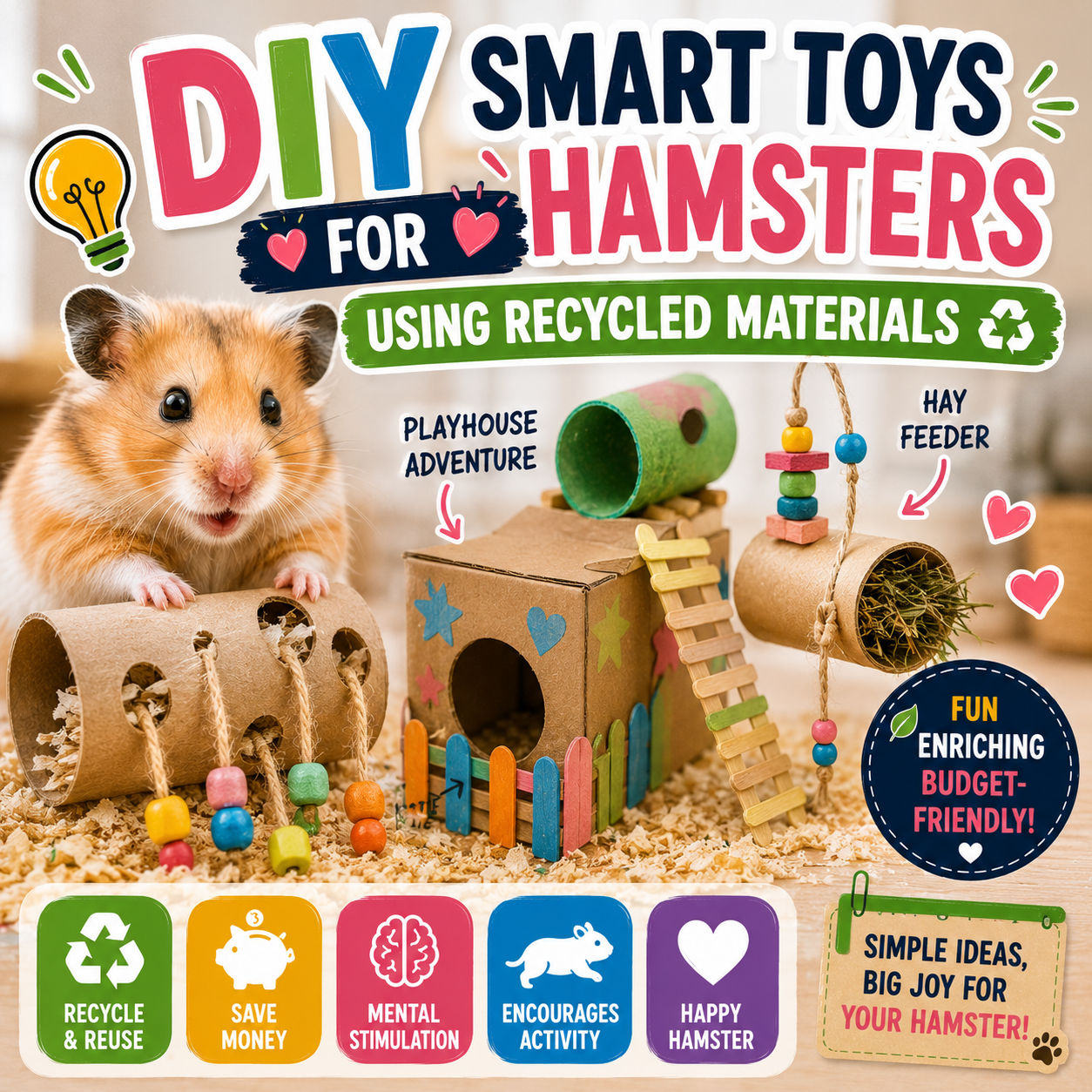
Hamsters are naturally curious, active, and intelligent creatures. In the wild, they spend most of their waking hours foraging and exploring. When kept as pets, they need consistent mental and physical stimulation to prevent boredom and stress.
The good news? You don’t need to spend a fortune at the pet store to keep your hamster entertained. With a few household items and a bit of creativity, you can craft DIY hamster toys that are safe, sustainable, and mentally engaging. Here is how to turn your recycling bin into a
playground!
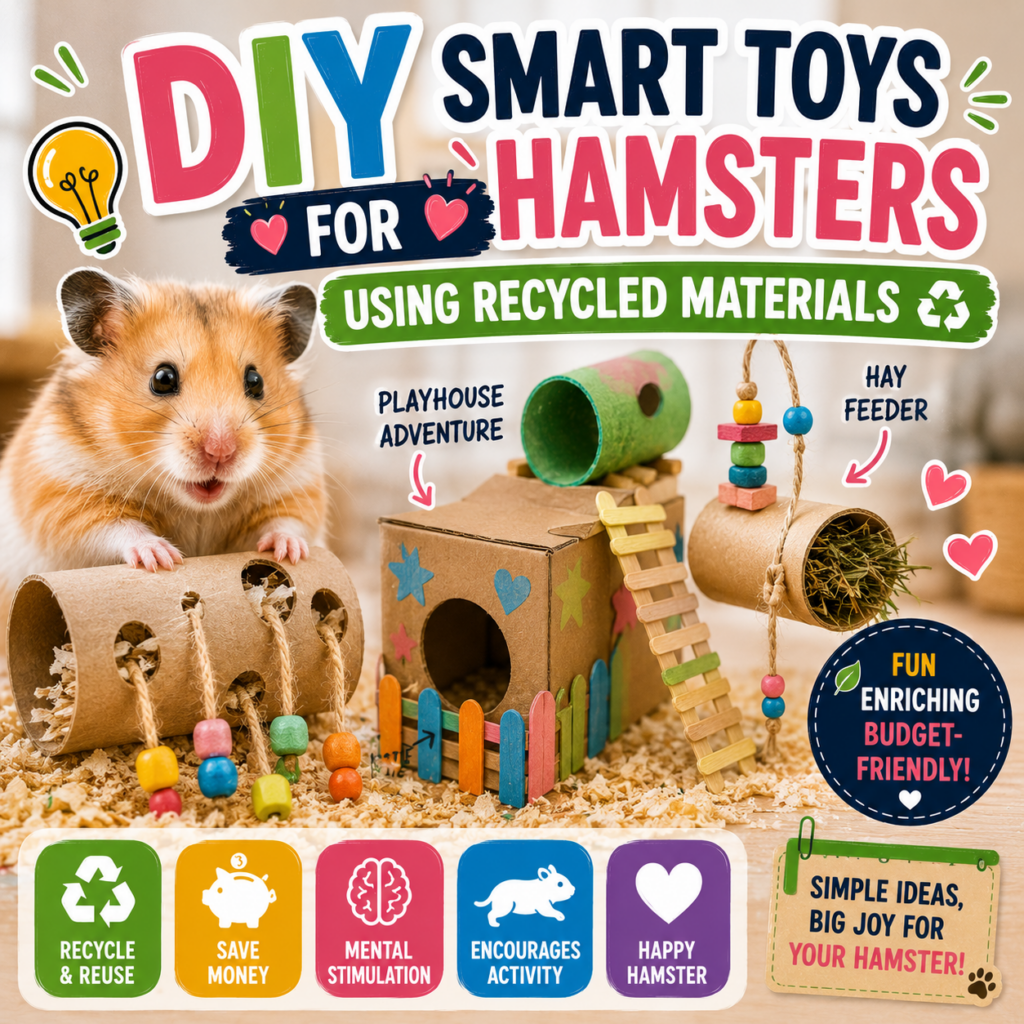
1. Safety First: The “Hamster-Approved” Checklist
Before you start building, ensure your materials are safe:
- Cardboard Only: Use plain, non-toxic cardboard (like toilet paper rolls or cereal boxes). Avoid anything with shiny coatings, plastic linings, or strong chemical glues.
- Avoid Tape: If you need to secure pieces, use a small amount of non-toxic, pet-safe glue (like homemade flour-and-water paste) rather than plastic tape, which can cause intestinal blockage if ingested.
- No Ink: Avoid heavily printed cardboard. Plain, brown cardboard is the safest choice for nibbling.
2. Top 3 DIY Hamster Toys You Can Make Today
A. The “Foraging Cube” (Mental Stimulation)
Hamsters love to “hunt” for their food. This toy turns mealtime into a game.
- Prep: Take a small, plain cardboard box (like a tissue box with the plastic removed).
- Fill: Place some bedding and a few healthy treats (like dried mealworms or sunflower seeds) inside.
- Stuff: Crumple up small pieces of plain brown paper or toilet paper rolls and stuff them into the box so the hamster has to burrow and pull them out to find the rewards.
B. The Toilet Paper Tube Maze (Physical Activity)
Hamsters are burrowers who love tunnels.
- Connect: Save several toilet paper or paper towel rolls.
- Assemble: Tape them (using the flour-and-water paste method) together to create a multi-directional tunnel system.
- Secure: Place this in your hamster’s playpen or a secure area on the floor. It mimics a natural underground burrow and encourages them to run through, climb, and hide.
C. The Cardboard “Treat Tower” (Dexterity Challenge)
Encourage your hamster to use their paws and balance.
- Cut: Cut different sized circles out of cardboard.
- Stack: Using a sturdy, plain wooden stick (ensure it is hamster-safe wood like applewood) as a base, thread the cardboard pieces on, alternating them with small pieces of wood or cardboard spacers.
- Challenge: Place a treat at the very top. Your hamster will have to climb and navigate the “tower” to reach the prize.
3. Why DIY Enrichment is Better
- Eco-Friendly: You are giving a second life to cardboard that would otherwise be thrown away.
- Customizable: Every hamster is different. If your pet prefers climbing over digging, you can quickly build a new structure that suits their unique personality.
- Cost-Effective: Let’s face it—hamsters are champion chewers. With DIY toys, you can replace them as often as you like without the guilt of spending money.
Pro-Tips for Hamster Success
- Rotate Toys: Don’t leave all the toys in the cage at once. Swap them out weekly to keep the environment “new” and exciting.
- Observe Your Pet: Watch how they interact with their new toy. If they seem stuck or struggle too much, simplify the design.
- Freshness: Because these toys are made of cardboard, they will eventually get soiled or chewed up. Always check them during spot-cleaning and remove them if they become soggy or heavily shredded.
Conclusion
Creating a stimulating environment for your hamster doesn’t require a high-tech setup. By recycling everyday materials, you are providing your hamster with the mental challenges they crave while keeping your carbon footprint low. Happy building, and watch your furry friend thrive with their new, homemade adventures!