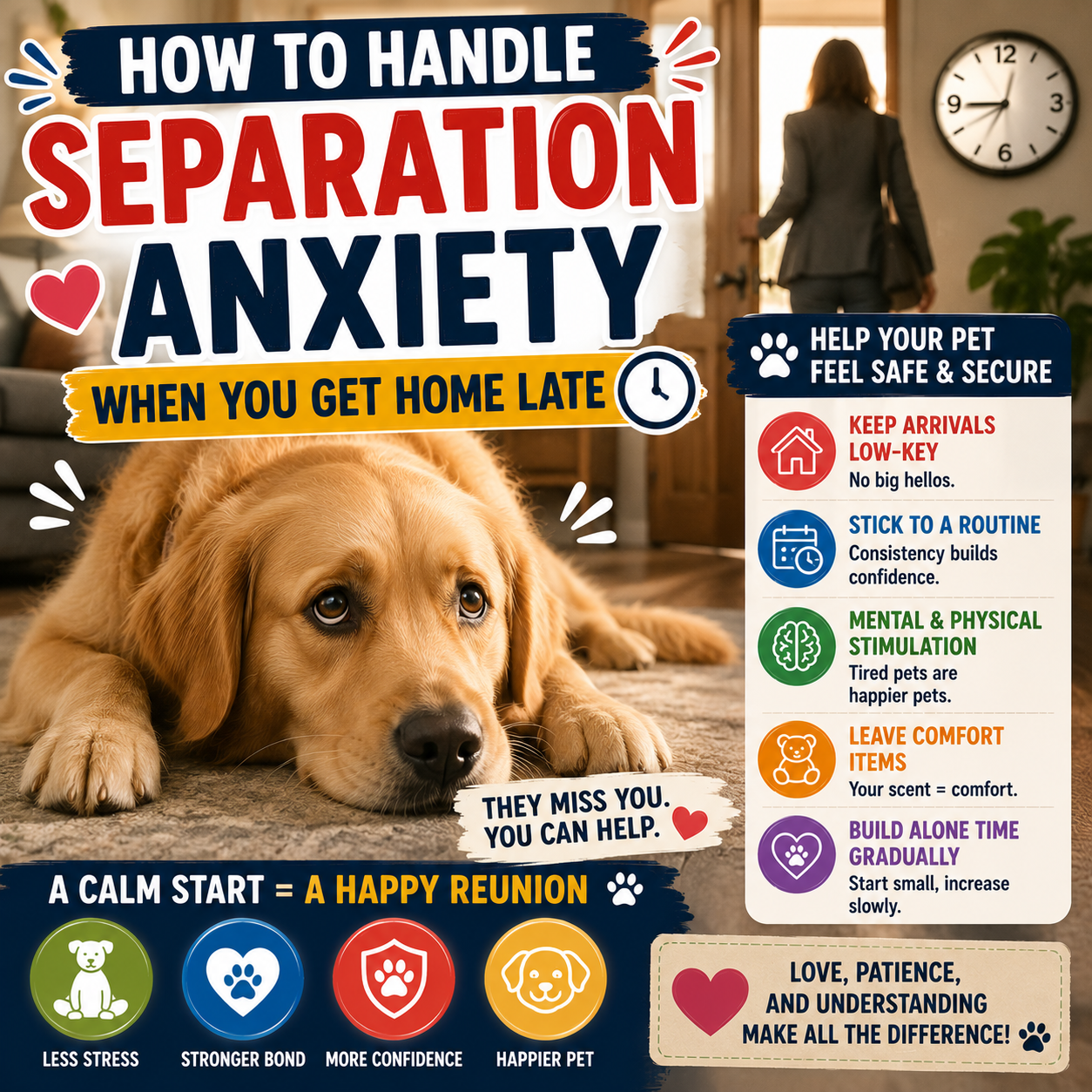
We’ve all been there: a meeting runs long, traffic is a nightmare, or an errand takes twice as long as expected. You finally unlock your front door, dreading what you might find—or hear—from your pet. If your dog or cat struggles with separation anxiety, an unexpected delay can turn their world upside down.
While you can’t always control your schedule, you can control how you manage your pet’s emotional state. Here is how to handle the “late homecoming” without triggering unnecessary stress for your furry friend.
1. Don’t Make a Big Deal of the Arrival
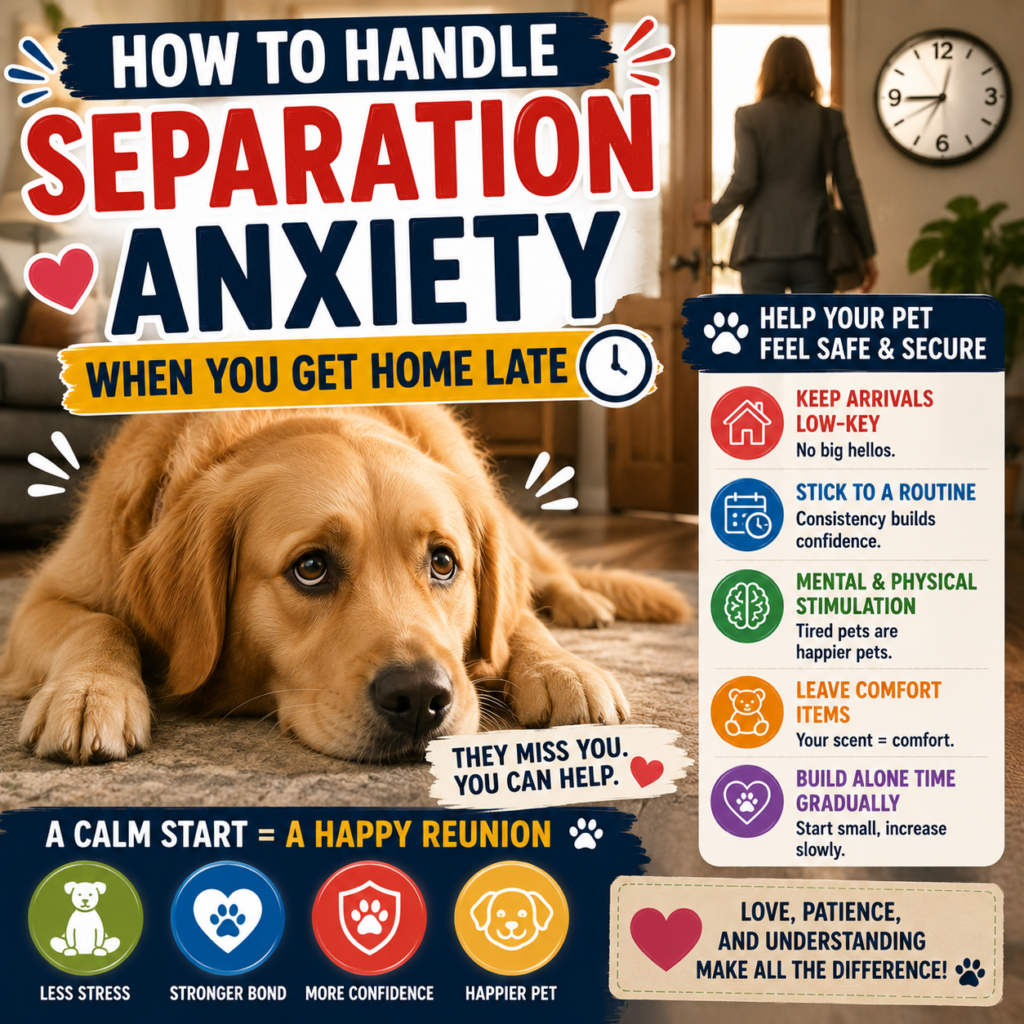
It is natural to want to shower your pet with affection the moment you walk through the door, especially if you feel guilty for being late. However, excessive excitement can reinforce their anxiety.
- The “Neutral Greeting”: When you arrive, keep your energy low and calm. Ignore the frantic jumping or pawing for a few minutes. Once your pet has settled down, then initiate a calm, quiet greeting. This teaches them that your return is a normal, non-eventful part of the day.
2. Managing the “Post-Delay” Energy
Your pet has been waiting—likely anticipating your arrival for hours. When you finally get home late, they are often overflowing with pent-up energy.
- Prioritize a “Decompression” Activity: Instead of heading straight to the couch, engage them in a low-intensity activity. For dogs, a slow-paced “sniff walk” in the backyard or a quick session with a puzzle toy can help them process the transition. For cats, a calm play session with a feather wand can help them shake off the “waiting stress.”
3. Tech-Forward Solutions for Late Nights
If you know you are going to be late, technology can bridge the gap and keep your pet feeling secure.
- Interactive Cameras: Use a pet camera with two-way audio. If you are stuck in traffic, speaking to your pet in a calm, familiar voice can disrupt their cycle of anxiety and reassure them you are still “there.”
- Automated Feeders/Treat Dispensers: A scheduled meal or a remote-triggered treat release can provide a much-needed distraction during the exact hour your pet usually expects you home.
4. Addressing the Root Cause
If “lateness” is a frequent occurrence, it is time to shift your daily strategy to build your pet’s resilience.
- The “Predictable” Routine: Anxiety thrives on unpredictability. If your schedule is erratic, try to keep your morning routine identical every single day. Consistent rituals help pets know exactly what to expect, which lowers their baseline stress level.
- White Noise and Comfort: Leaving on a white noise machine or a “calming pet playlist” can mask the outside sounds (like cars or neighbors) that often heighten a pet’s anxiety when they are left alone for long periods.
- The “Departure” Ritual: Ensure you aren’t making your leaving a big deal either. If you act anxious when you leave, they will feel it. Keep departures quick and quiet.
5. When to Seek Professional Help
If your pet exhibits signs of severe distress—such as destructive chewing, house soiling, or persistent vocalization—whenever you are late, this may be a sign of clinical separation anxiety.
- Consult a Specialist: Don’t hesitate to reach out to a professional dog trainer or a veterinary behaviorist. They can provide desensitization protocols that make “being alone” feel safe rather than terrifying.
Conclusion
Getting home late isn’t a failure; it’s a reality of modern life. By managing your own energy, leveraging technology, and maintaining a consistent routine, you can minimize the impact on your pet. Remember: your pet doesn’t need you to be perfect—they just need you to be consistent, calm, and ready to provide a little extra love once the dust has settled.