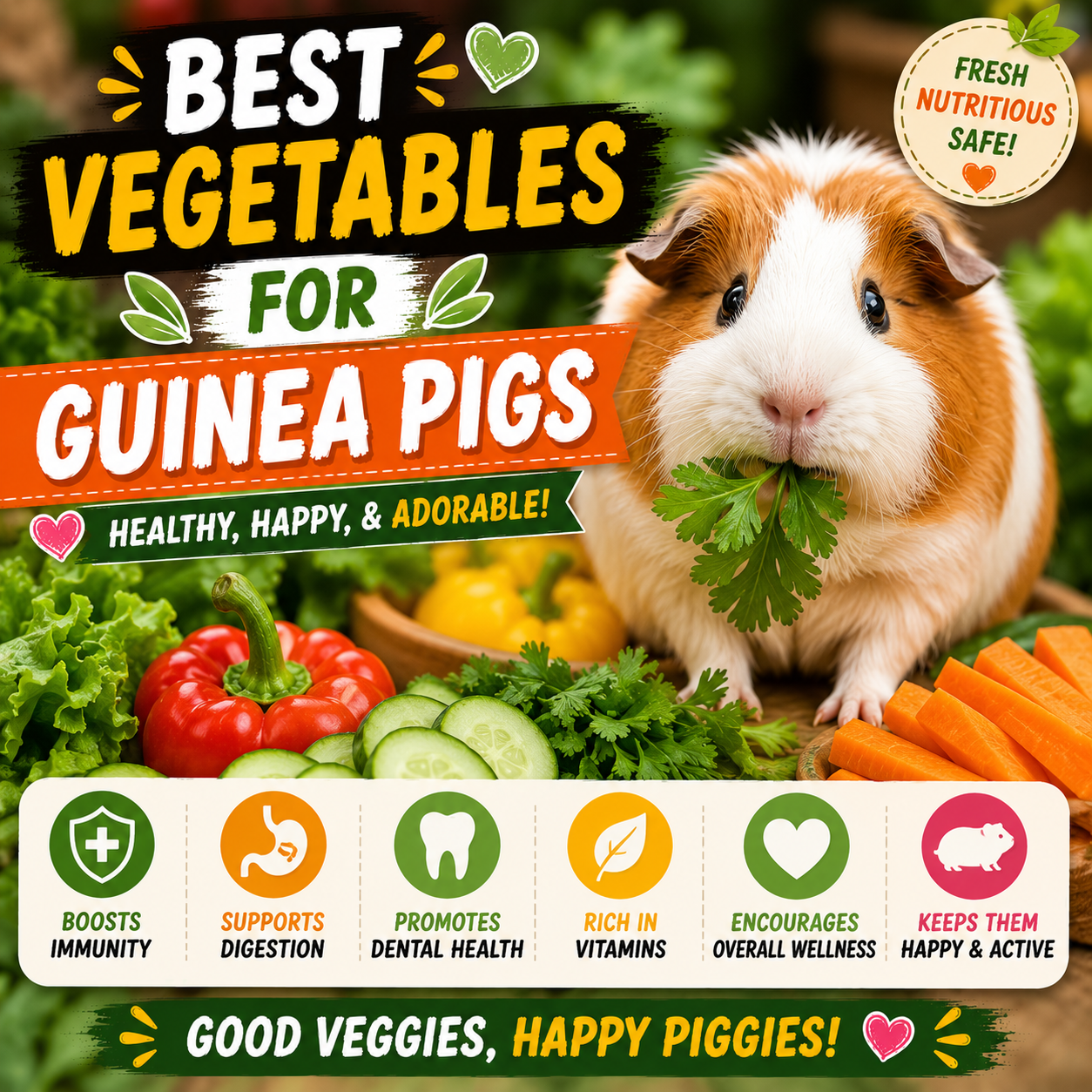
If you are a guinea pig parent, you already know the absolute joy of opening your refrigerator door. The simple crinkle of a plastic bag or the squeak of the fridge handle is usually met with a loud, enthusiastic chorus of high-pitched “wheeks!” across the house.
Guinea pigs (cavies) absolutely adore their fresh greens. In fact, while high-quality Timothy hay makes up the baseline (80%) of their daily intake, a curated handful of fresh vegetables (10% to 15%) is vital to supply essential micronutrients.
However, a guinea pig’s digestive tract is incredibly sensitive. Feeding the wrong vegetables, or over-specifying the wrong ratios, can lead to severe gas, diarrhea, painful bladder stones, or obesity.
So, what are the best vegetables for guinea pigs? Let’s break down the ultimate daily greens matrix, seasonal treats, and the dangerous items you must keep far away from their enclosures.
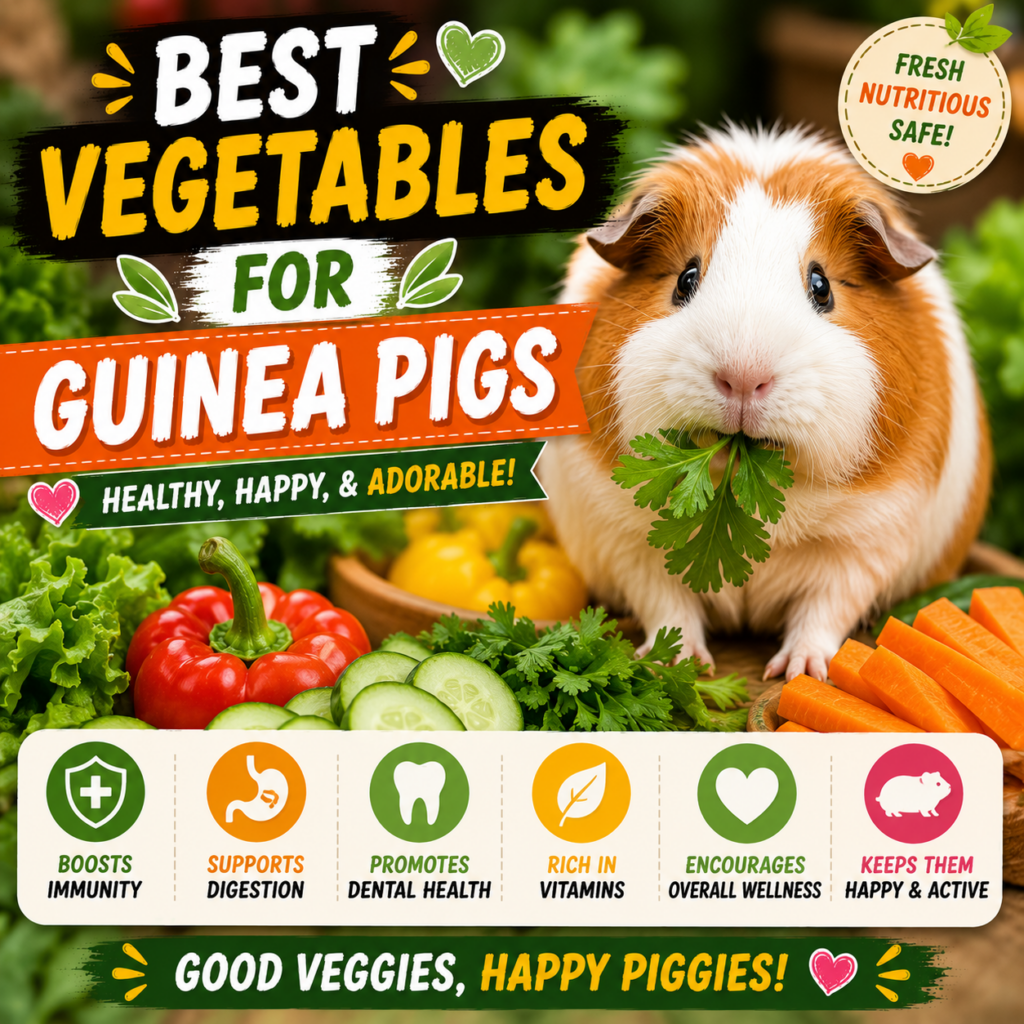
The Golden Biological Rule: The Vitamin C Mandate
Before looking at specific vegetables, it is important to understand a unique biological quirk of the cavy family: Guinea pigs cannot synthesize or manufacture their own Vitamin C.
Just like humans, they must absorb 100% of their daily Vitamin C directly from their diet. A chronic deficiency in Vitamin C leads directly to scurvy—a painful disease that causes swollen joints, bleeding gums, severe lethargy, and immune system failure.
When choosing the best fresh vegetables for your piggies, prioritizing items naturally rich in Vitamin C is your number one goal.
Safe Daily Vegetables (The Essential Green Matrix)
An adult guinea pig requires roughly 1 cup of fresh vegetables every single day. To maintain a healthy digestive system, center their daily salad bowl around these low-sugar, high-fiber staples:
1. Romaine and Green Leaf Lettuce (The Daily Foundation)
- Why It’s Great: Provides excellent hydration, structural fiber, and a satisfying crunch. Dark leafy lettuces like Romaine, Green Leaf, and Red Leaf are fantastic daily foundations.
- ⚠️ Critical Warning: Never feed your guinea pig Iceberg lettuce. Iceberg lettuce is almost entirely water and contains zero nutritional value; overfeeding it will induce severe, life-threatening diarrhea.
2. Bell Peppers (The Vitamin C Superfood)
- Why It’s Great: Bell peppers are the undisputed kings of the guinea pig menu. They are packed with natural Vitamin C. Green bell peppers are ideal for daily feeding because they have a lower sugar content than red, orange, or yellow varieties.
- The Prep: Always slice them open and remove the inner seeds and white ribs before feeding.
3. Cilantro (Coriander)
- Why It’s Great: This fragrant herb is highly prized by cavies. It is low in calcium, rich in antioxidants, and perfectly safe to feed several times a week to keep their minds stimulated.
4. Cucumbers and Zucchini
- Why It’s Great: Incredibly refreshing and hydrating, especially during hot summer days. Keep the skin on for an extra boost of healthy fiber, but slice them into small circles.
Rotational Vegetables (Feed 1 to 2 Times a Week)
Some vegetables are incredibly nutrient-dense but contain high amounts of calcium or oxalic acid. If a guinea pig absorbs too much calcium, the excess minerals clump together in their urinary tract, forming painful bladder sludge or fatal bladder stones.
Limit these vegetables to just once or twice a week as a rotational luxury:
- Kale, Spinach, and Parsley: These greens are packed with vitamins but carry an exceptionally high calcium load. Feed them sparingly like a vitamin supplement.
- Carrots: Rich in Vitamin A and highly delicious to piggies. However, carrots possess a high natural sugar content. Overfeeding carrots can trigger rapid weight gain and upset their gut flora, so treat them like candy—only feed a small, thumb-sized slice at a time.
- Broccoli (Florets and Leaves): Excellent for wearing down their continuously growing teeth, but broccoli is a cruciferous vegetable that can cause heavy internal gas and bloating if overfed.
Toxic Vegetables to Avoid Completely ❌
Some everyday kitchen staples contain chemical compounds that are completely fatal to a guinea pig’s delicate cardiovascular or gastrointestinal ecosystem:
- Onions, Garlic, Leeks, and Chives (Allium Family): These items contain compounds that destroy a guinea pig’s red blood cells, triggering acute, irreversible anemia.
- Potatoes and Potato Sprouts: Contain solanine, a highly toxic alkaloid that causes severe neurological and digestive poisoning in rodents.
- Tomato Stalks and Leaves: While the fleshy red part of a tomato is a safe, occasional fruit treat, the green stems and leaves belong to the nightshade family and are highly poisonous.
- Rhubarb: Contains dangerously high levels of oxalic acid, which can cause acute kidney failure.
Quick Nutritional At-A-Glance Reference
Use this simple breakdown to plan your weekly grocery runs:
| Vegetable Name | Feeding Frequency | Primary Benefit | Nutritional Caution |
| Green Bell Pepper | 🟢 Every Day | Extreme Vitamin C | Remove inner seeds entirely. |
| Romaine Lettuce | 🟢 Every Day | Hydration & Essential Fiber | Never substitute with Iceberg lettuce. |
| Carrots | 🟡 1–2 Times a Week | Beta-Carotene / Vitamin A | High in natural sugars (causes obesity). |
| Kale & Spinach | 🟡 1–2 Times a Week | Iron & Antioxidants | Very high calcium (risk of bladder stones). |
| Onions & Garlic | 🔴 NEVER | None (Toxic) | Causes fatal chemical anemia. |
Conclusion: Variety and Moderation Win the Day
At the end of the day, designing the best fresh vegetable menu for your guinea pigs boils down to variety, structural fiber, and strict portion control. By building a daily salad anchored around crisp Romaine lettuce and green bell peppers, treating them to occasional carrot coins, and keeping toxic traps like onions and iceberg lettuce far away, you will keep your pocket pets happily popcorning for years to come.
Keep their portions measured, introduce new greens slowly to monitor their stool quality, and enjoy the wonderful, noisy bond of feeding your thriving cavy companions!