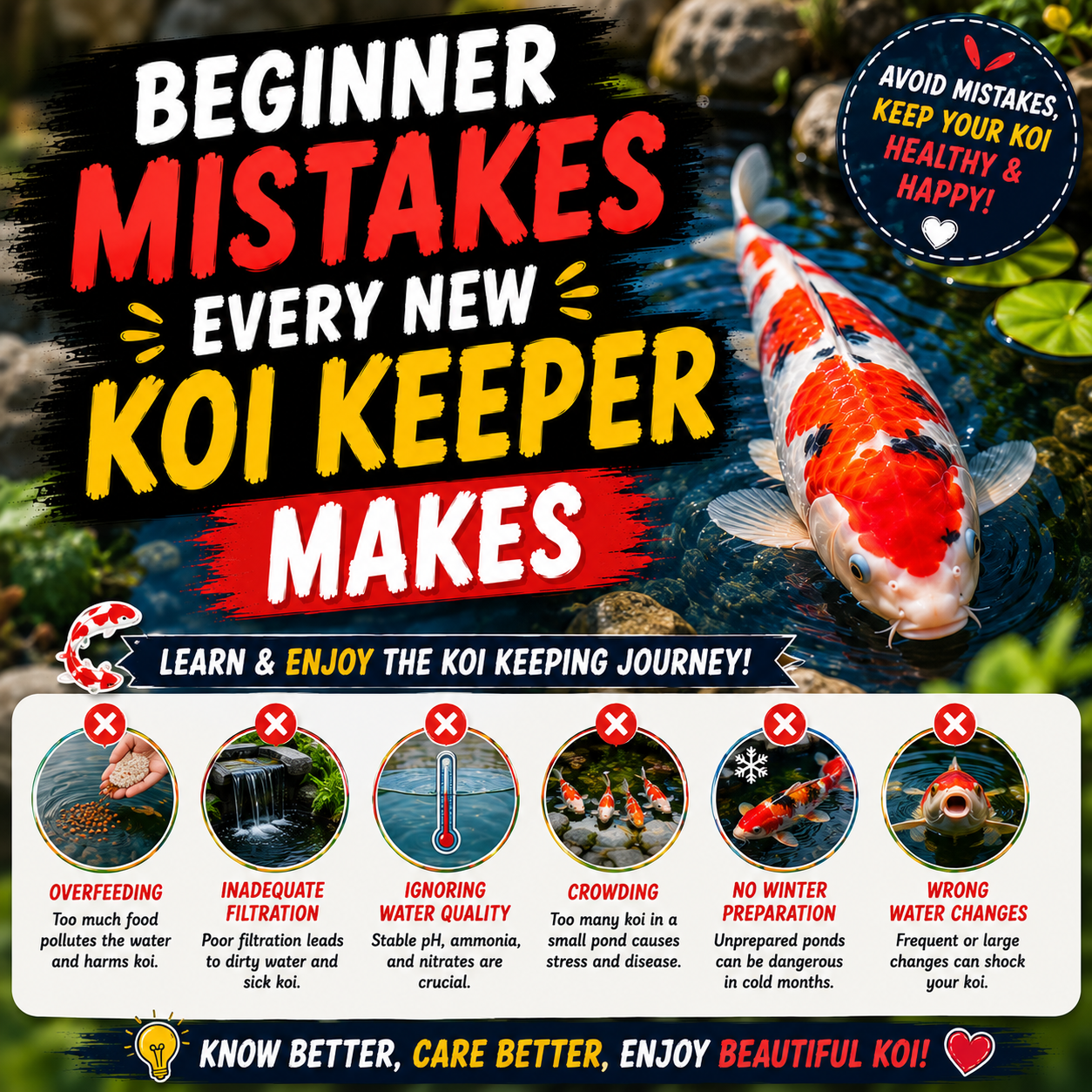
Stepping into the world of koi keeping is a deeply rewarding journey. Watching a synchronized school of vibrant Japanese Nishikigoi glide gracefully through a pristine backyard pond is the ultimate form of garden serenity.
However, because koi (Cyprinus rubrofuscus) are large, long-lived, and biologically complex fish, managing their habitat is vastly different than running a standard indoor aquarium. Many beginners approach a backyard pond with a “set-it-and-forget-it” mindset, relying on outdated advice or cutting corners during the build. Unfortunately, skipping the basic science of pond management leads to sudden water crashes, disease outbreaks, and devastating fish losses.
Let’s look at the 6 most common beginner mistakes every new koi keeper makes and learn how to engineer a safe, thriving aquatic sanctuary from day one.
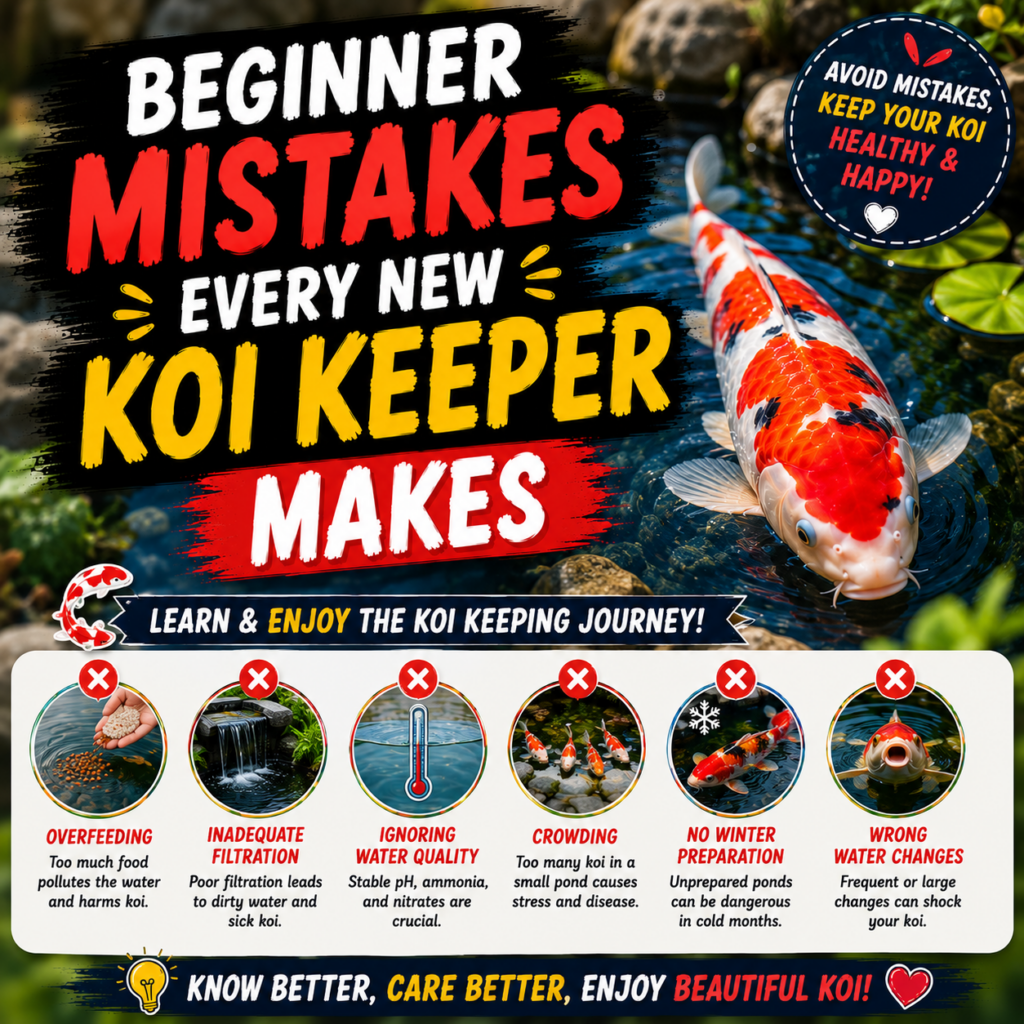
1. Building a Shallow, Cramped Pond (The Under-Sizing Trap)
The single biggest mistake new hobbyists make is building a pond that is far too small and shallow. Beginners often treat koi like oversized goldfish, installing a pre-formed plastic garden liner that maxes out at 2 feet deep and 500 gallons.
- The Biological Reality: A juvenile 4-inch koi can easily grow into a massive 24 to 36-inch adult within a few short years. Large fish produce an exceptional amount of waste and require massive horizontal swimming lanes to exercise healthy muscles.
- The Temperature Risk: Shallow ponds freeze quickly in the winter and heat up rapidly to lethal temperatures under the summer sun.
- The Modern Standard: A proper koi pond must hold a absolute minimum of 1,000 to 1,500 gallons of water volume, dropping straight down to a uniform depth of at least 3 to 4 feet (1 to 1.2 meters). This protects your fish from shifting weather and stops wading predators like herons from standing in the water to hunt them.
2. Severely Under-Filtering the Water Column
Many beginners purchase a standard, cheap garden pump-and-filter kit designed for water lilies or gold-fish. Within a month, the pond turns into a thick, murky green bowl of soup.
Koi are opportunistic heavy feeders with massive digestive tracts. They do not have stomachs; food passes through their intestines continuously, resulting in heavy, constant organic waste loads.
- The Filtration Metric: Never buy a filter that is rated exactly for your pond size. If you have a 1,500-gallon pond, you need a high-end external canister or bead filtration system rated for at least 3,000 gallons. Over-specifying your filtration ensures your bio-filter can comfortably process invisible toxins like toxic ammonia and nitrites down to absolute zero.
3. Adding Too Many Fish Too Quickly (Overstocking)
You’ve completed your pond build, filled it with conditioned water, and head to the local breeder. It is incredibly tempting to buy ten beautifully patterned varieties all at once to fill your water canvas.
This triggers a fatal aquatic phenomenon known as New Tank Syndrome.
🚨 The Overstocking Chain Reaction:
Too many new koi added ──► Ammonia floods the water ──► Young bacterial colony is overwhelmed ──► Chemical spike burns gills ❌
A newly built pond is biologically sterile. It takes 4 to 6 weeks for beneficial nitrifying bacteria to naturally colonize your filter sponges. Adding a large group of fish simultaneously completely overwhelms the young system, causing invisible ammonia and nitrite spikes that chemically burn your koi’s gills and wipe out the entire pond. Introduce just 1 or 2 hardy fish first, and wait 3 weeks before adding more.
4. Overfeeding and Using the Wrong Seasonal Food
Koi possess a legendary, puppy-like begging routine. Whenever you approach the pond edge, they will crowd the surface, gasping expectantly. Beginners mistake this natural foraging instinct for starvation and dump handfuls of pellets into the pond multiple times a day.
- The Excess Food Crisis: Uneaten pellets sink to the bottom, rot, and trigger massive algae blooms, murky brown water, and dangerous oxygen drops at night.
- The Seasonal Mistake: Koi are ectothermic (cold-blooded), meaning their digestion slows down dramatically as the climate shifts. Feeding them high-protein summer pellets when autumn water temperatures drop below 60°F (15°C) is a critical error. The food will sit and rot inside their sluggish intestines, triggering fatal internal bacterial infections. Switch to a highly digestible wheatgerm pellet in autumn, and stop feeding completely below 50°F (10°C).
5. Adding Noisy, Jagged Rockwork to the Pond Interior
We all love the look of natural mountain streams lined with stacked river stones, jagged slate, and volcanic rock. While beautiful around the upper shoreline, lining the inside walls and floor of a koi pond with rough rocks is a major husbandry hazard.
- The Waste Trap: Heavy koi feces, dead leaves, and debris drop down and lodge deep inside the tight crevices between the rocks. No filter can pull this waste out, creating an anaerobic sludge layer that breeds dangerous pathogenic bacteria like Aeromonas.
- Physical Trauma: When koi panic due to a passing predator or engage in frantic spring breeding runs, they swim at lightning speeds. Rough, jagged stones act like sandpaper, scraping away their protective slime coat and scales, leaving open wounds that instantly turn into bloody bacterial ulcers or fungal infections. Keep the inside of your pond walls completely smooth!
6. Skipping the Quarantine Protocol for New Arrivals
You have a perfectly balanced, 3-year-old pond housing five healthy, prized koi. You buy one new, stunning variety from a local shop and drop it directly into your main pond. Within a week, your entire legacy school of fish is flashing, scraping against the walls, losing scales, and dying.
This is the ultimate, heartbreaking mistake. New fish frequently carry invisible, highly contagious microscopic parasites (like Ich, Costia, or skin flukes) or lethal viral mutations (like Koi Herpesvirus – KHV).
- The Professional Standard: Always house any new fish arrival inside a separate, simple 100-gallon plastic quarantine tank equipped with its own independent filter and air pump for a strict 3 to 4 weeks. Only transfer them to your main showcase pond once they prove to be 100% symptom-free and energetic.
New Keeper Mistakes: Quick Troubleshooting Matrix
Use this quick diagnostic reference to correct mistakes before they become fatal:
| Observed Symptom | Hidden Beginner Mistake | The Immediate Upgrade |
| Koi scratching against walls (Flashing). | Parasite Outbreak or Ammonia Burn | Test water chemistry instantly; verify Ammonia is a strict 0 ppm. |
| Fish gasping at the surface at dawn. | Low Dissolved Oxygen Levels | Add a heavy-duty external air pump with air stones 24/7. |
| Thick, cloudy green water. | Under-filtration or Heavy Overfeeding | Upgrade your filter rating; cut feeding down to what they can eat in 3 mins. |
| Red streaks in fins / Huddled at bottom. | Severe Environmental Stress or Cold Shock | Perform a 20% partial water change; audit your water conditioner metrics. |
Conclusion: Patience and Biology Drive Success
At the end of the day, successfully keeping koi boils down to one foundational rule: You aren’t actually keeping fish; you are keeping water. If you build a deep, vertical-walled environment with smooth interiors, install a filtration system rated for twice your pond size, introduce new fish slow and steady through a quarantine tank, and align their diet with the seasonal thermometer, you will completely bypass the pitfalls that plague most beginner keepers.
Give your living jewels the water volume and bio-security they deserve, and enjoy nearly three decades of magnificent, stress-free serenity with your thriving backyard ecosystem!