
Turtles are often viewed as solitary, slow-moving, and somewhat emotionally distant pets. Unlike dogs that practically burst with joy when you walk through the door, or cats that weave through your legs purring, turtles don’t have obvious ways of showing affection.
However, if you’ve owned a turtle for a while, you might notice something fascinating. Maybe they rush to the glass when you enter the room, but retreat tightly into their shell when a stranger walks by.
This leaves many reptile keepers asking a classic question: Can turtles recognize their owners?
The short answer is yes, they absolutely can! Let’s dive into the fascinating science of turtle intelligence and explore exactly how these ancient reptiles perceive their human keepers.
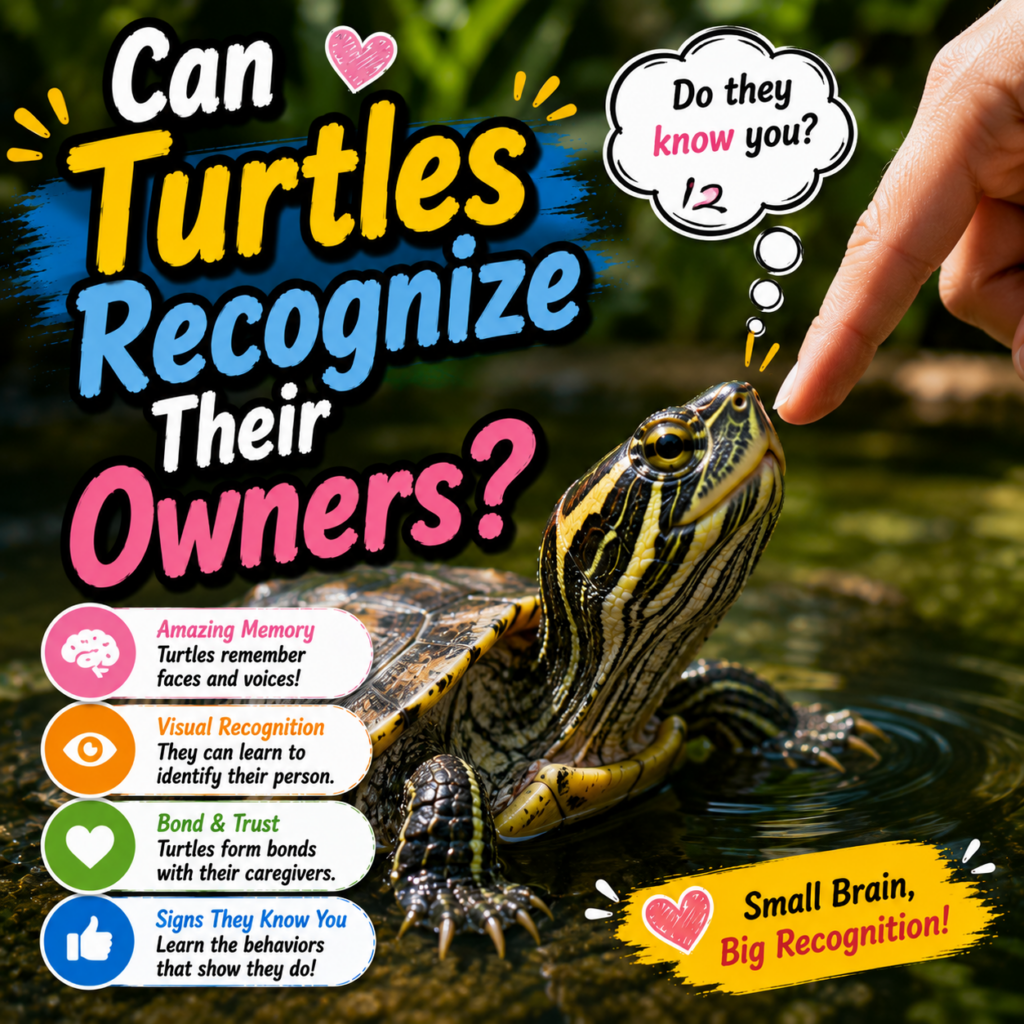
The Science of Turtle Intelligence and Recognition
For decades, people assumed reptiles operated entirely on basic survival instincts. However, modern animal behavioral studies paint a completely different picture. Turtles possess a highly developed cerebral cortex relative to their size, making them surprisingly observant, adaptive, and capable of learning complex associations.
Turtles don’t just see a generic moving shape when you walk by. They utilize a powerful combination of their primary senses to identify you as an individual:
1. Advanced Visual Face Recognition
Turtles have excellent vision, especially when it comes to detecting motion and distinguishing colors. Research suggests that over time, turtles can memorize the distinct facial features, shapes, and silhouettes of the people they interact with daily. They can easily distinguish their main caretaker from a crowd of unfamiliar faces.
2. Acute Hearing and Voice Familiarity
While turtles don’t have external ears like mammals, they have internal ear structures that are highly sensitive to low-frequency sounds and seismic vibrations.
If you talk to your turtle regularly while feeding or cleaning their tank, they will learn to recognize the unique pitch and vibration of your voice.
3. Scent Association
Turtles have an incredibly keen sense of smell, which they use to forage for food and navigate their territory. When you handle your turtle or hand-feed them, they actively register your unique scent profile, cataloging it in their memory as a safe, positive element in their environment.
Why Your Turtle Reacts to You (The Food Connection)
While it is heartwarming to know your turtle recognizes you, it is essential to look at the psychology driving this behavior. Turtles are highly opportunistic feeders.
In captivity, they experience classical conditioning. Every time you approach the enclosure, your presence is paired with a highly rewarding outcome: delicious food.
$$\text{Your Silhouette + Your Voice} = \text{Fresh Pellets or Treats}$$
Because they associate you with sustenance, safety, and comfort, their recognition behavior is a mix of survival instinct and learned trust. They swim to you because they know you are the ultimate provider of good things.
4 Clear Signs Your Turtle Recognizes and Trusts You
Because turtles can’t wag their tails, you have to read their subtle body language to see if they’ve bonded with you. Look for these 4 encouraging signs:
- They Beg for Food When You Approach: If your turtle enthusiastically swims right up to the front glass, bobs its head, or paddles its legs frantically when you walk into the room, they are happily identifying you as their feeder.
- They Do Not Retreat Into Their Shell: In the wild, a large shadow looming over a turtle means a predator is attacking. If you reach your hand into the tank to clean it or hand-feed them and they keep their head and limbs extended, it shows a massive amount of trust. They know you aren’t a threat.
- They Allow You to Gently Stroke Their Head or Neck: The neck is a turtle’s most vulnerable physical area. If your pet willingly lets you scratch the top of their head or stroke their neck without flinching or pulling back, you have achieved the ultimate level of turtle bonding.
- They Calm Down in Your Presence: A stressed or newly purchased turtle will scramble away to hide under a rock when anyone gets close. If your turtle remains perfectly relaxed, basking peacefully under their heat lamp while you sit right next to the tank, they recognize you as a source of absolute security.
Conclusion: A Trust Earned Over Time
Turtles may not be traditional, cuddly companions, but they are deeply rewarding pets capable of genuine recognition and profound trust. They won’t learn their name or fetch a ball, but through consistent daily interactions, quiet conversations, and a steady supply of their favorite shrimp or greens, your shelled companion will absolutely learn exactly who you are.
So, the next time your turtle locks eyes with you across the room, take it as a major compliment—you’ve officially won the respect of a beautifully intelligent, ancient creature!