
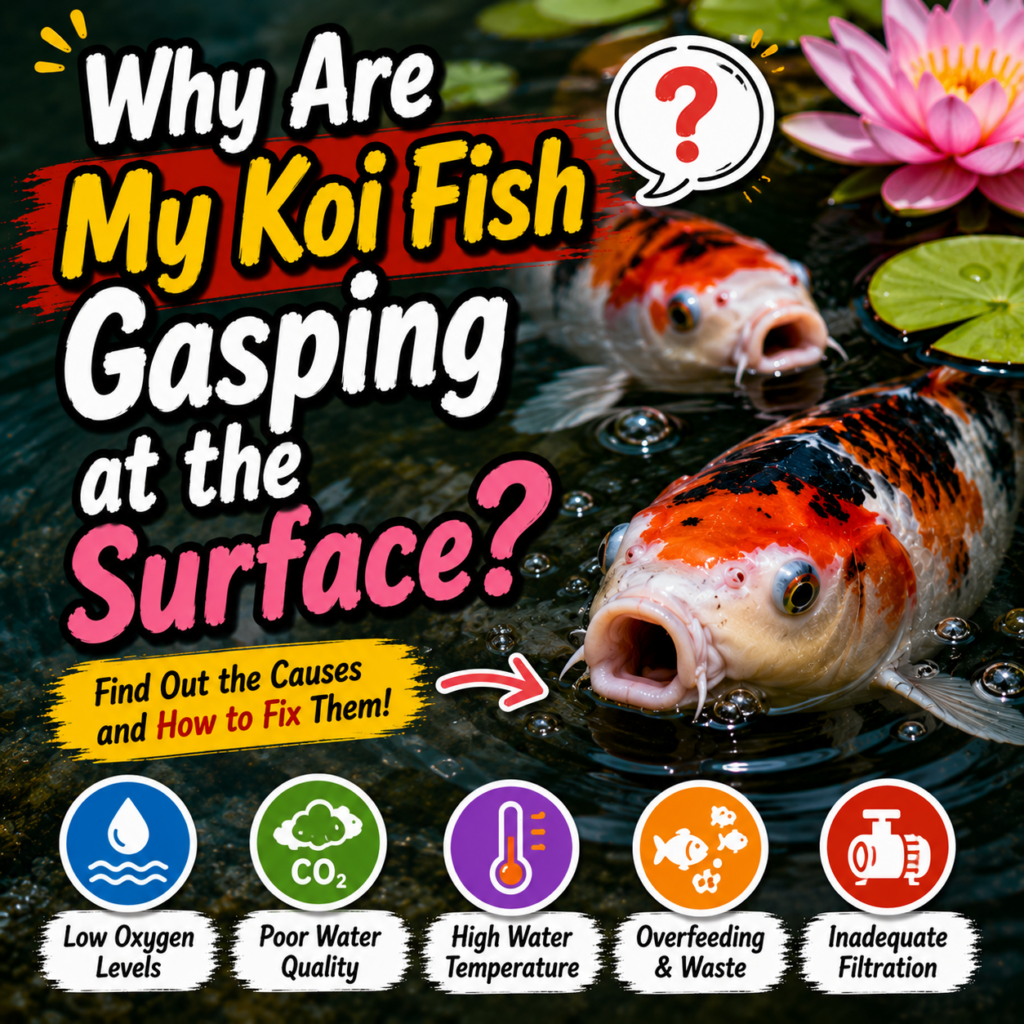
There are few sights more alarming for a pond owner than walking out to the garden pond and seeing your vibrant koi fish crowding at the surface, puckering their mouths, and frantically breathing at the air-water interface.
This behavior is officially known as “piping.” While koi occasionally gulp at the surface for a floating pellet, continuous gasping is an absolute emergency. It is a clear, visual cry for help showing that your fish are suffocating.
So, why are your koi fish gasping at the surface? Let’s dive straight into the 5 most common causes behind this life-threatening behavior and the immediate actions you must take to save them.
1. Severely Low Dissolved Oxygen Levels (The Most Common Cause)
By far, the number one reason koi gasp at the surface is hypoxia—there simply isn’t enough dissolved oxygen (DO) in the water for them to breathe through their gills.
Unlike humans, fish extract oxygen that is dissolved directly into the water column. If oxygen levels plummet, the highest concentration of oxygen remaining will naturally be in the top fraction of an inch where the water meets the air.
- The Summer Trap: This problem happens most frequently during hot summer days. Warm water is physically incapable of holding as much dissolved oxygen as cold water. Furthermore, during the night, pond plants and algae reverse their daytime photosynthesis process and actually consume oxygen, causing oxygen levels to bottom out right before dawn.
2. Elevated Ammonia or Nitrite Spikes (Chemical Burns)
Even if your pond has plenty of oxygen, your koi might gasp for air because their gills are too damaged to absorb it. This happens when there is a sudden spike in toxic ammonia or nitrites due to overfeeding, a clogged filter, or an overstocked pond.
Ammonia and nitrites act like chemical acid on a fish’s delicate respiratory system.
- Brown Blood Disease: High nitrites bind directly to the hemoglobin in a koi’s blood, rendering it incapable of transporting oxygen throughout the body. Your fish are essentially suffocating from the inside out, forcing them to gasp frantically at the surface.
3. Excessive Algae Blooms or Floating Debris
While a small amount of algae is healthy, a massive algae bloom (pea-green water) or a thick layer of string algae can suffocate a pond.
During heavy summer heatwaves, algae grow rapidly during the day. However, if a sudden cloudy day occurs or the algae die off rapidly, the decomposition process completely strips the water of oxygen within hours, leaving your koi gasping for their lives.
4. Parasitic Infections (Gill Flukes or Ich)
If your water chemistry is perfect and your pumps are running, the issue might be microscopic intruders. Parasites like Gill Flukes (Dactylogyrus) or Ich (Ichthyophthirius multifiliis) selectively target and attach themselves to a koi’s gills.
The physical presence of these parasites causes intense irritation. In response, the koi’s body produces a massive amount of thick, defensive mucus over its gills. This thick mucus layer blocks the transfer of oxygen, making it incredibly difficult for the fish to breathe normally.
5. Overstocking and High Water Temperatures
Koi are large, messy fish that grow rapidly. If your pond houses too many fish for its overall volume, the collective demand for oxygen will outpace what your current filtration system can provide. Combined with high water temperatures that accelerate your fish’s metabolism, an overstocked pond will experience an oxygen crash incredibly quickly.
🚨 Emergency Action Plan: How to Save Your Gasping Koi
If your fish are actively gasping right now, do not wait. Follow these immediate emergency steps to stabilize your pond:
- Step 1: Maximize Aeration Instantly: Turn on every waterfall, fountain, and stream to maximum capacity. If you have an air pump, toss heavy-duty air stones directly into the center of the pond. Point a clean garden hose nozzle on a “spray” or “shower” setting directly over the water surface to force air bubbles downward.
- Step 2: Perform a Major Water Change: Immediately drain 20% to 30% of the pond water and refill it with clean, cooler water. Crucial: Always add a high-quality water dechlorinator/conditioner to neutralize toxic chlorine and chloramine instantly.
- Step 3: Stop All Feeding: Do not drop a single pellet into the pond. Digesting food requires immense amounts of metabolic energy and oxygen from your fish, and uneaten food will only worsen ammonia spikes.
- Step 4: Test Your Water Chemistry: Use a liquid drop test kit to verify your Ammonia, Nitrite, Nitrate, and pH levels. If toxic elements are detected, utilize an ammonia binder to temporarily neutralize the threat.
Conclusion: Prevention Prevents Suffocation
A gasping koi fish is a critical warning sign that your pond’s life-support ecosystem has shifted out of balance. By maintaining a highly robust filtration system, running your waterfalls and heavy-duty air pumps 24/7 during the summer heatwaves, and tracking your water quality weekly, you can guarantee your gorgeous aquatic family never has to struggle for a breath of fresh air.