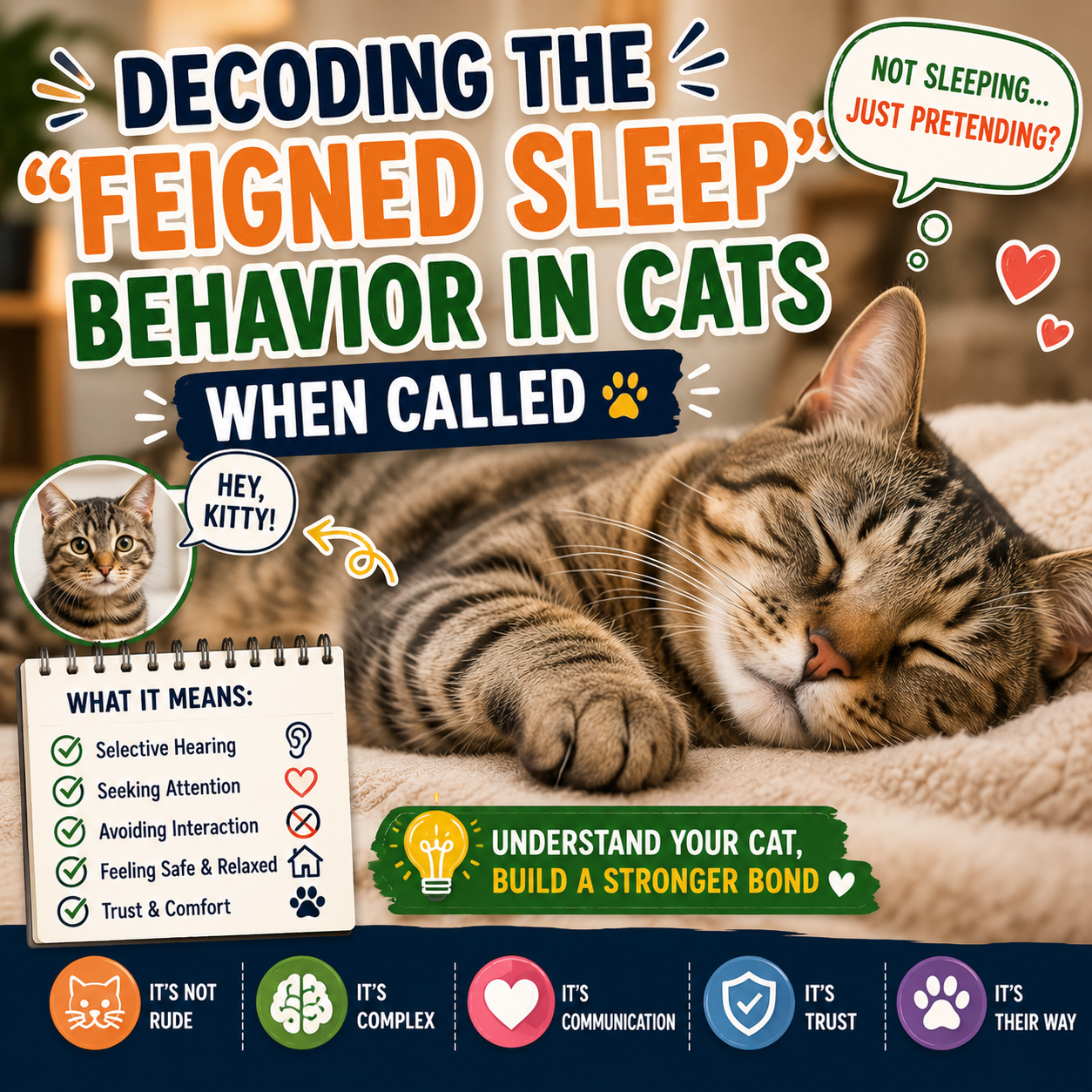
We have all been there: You call out your cat’s name, expecting a head turn or a happy “meow.” Instead, your cat remains perfectly still, eyes tightly shut, ears perhaps flicking ever so slightly—but they don’t move a muscle. Are they genuinely asleep, or are they ignoring you on purpose?
If you have ever suspected your cat is “faking it,” you are likely correct. This phenomenon, known as feigned sleep, is a classic display of feline independence. Here is why your cat might be pretending to be asleep when called—and what it actually means.
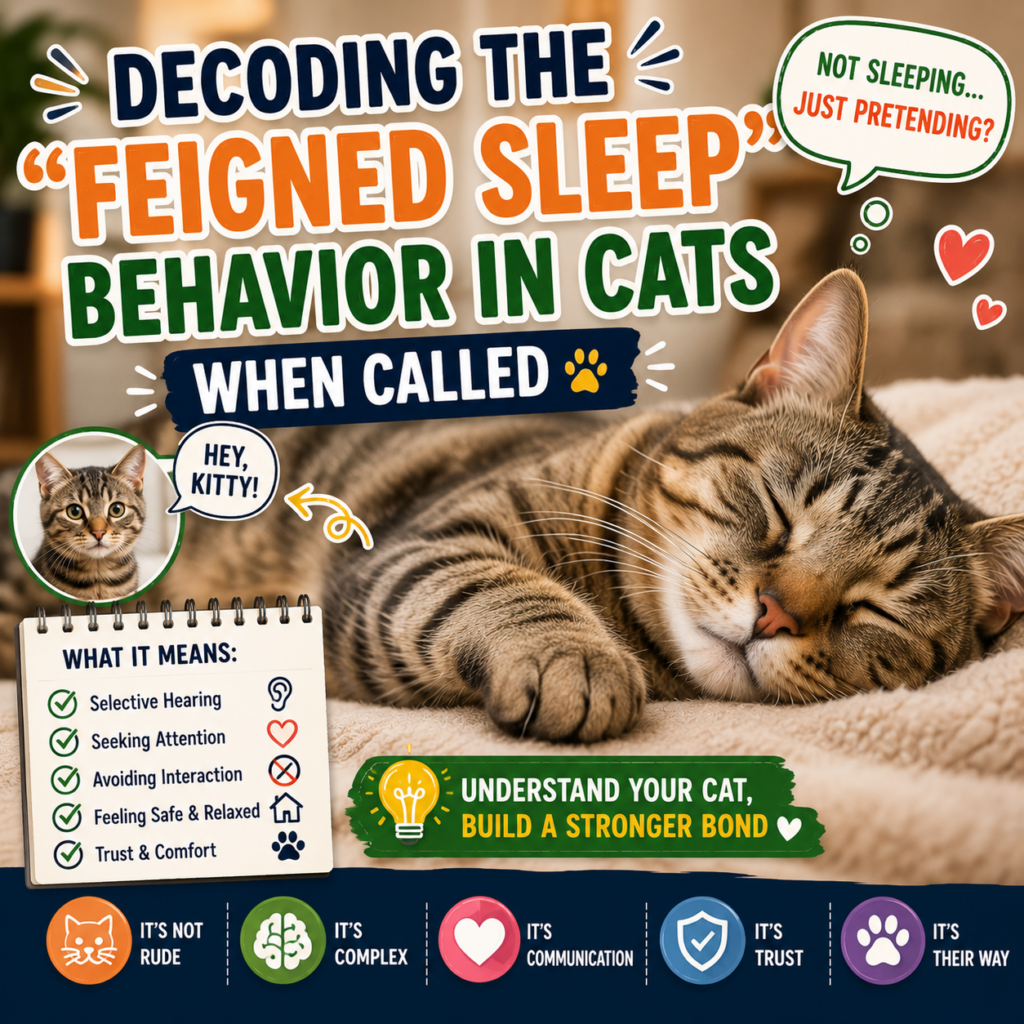
1. The Feline Art of “Strategic Ignoring”
Cats are highly observant and deeply intelligent. They are acutely aware of their environment and recognize their names perfectly well. When a cat chooses not to respond, it is rarely due to a lack of hearing; rather, it is a conscious choice to prioritize their current comfort.
- The Comfort Priority: If your cat is in a state of deep relaxation, they may weigh the cost of “getting up” against the reward of staying cozy. If the call isn’t accompanied by a high-value incentive (like a treat or a toy), they may decide that maintaining their current state of rest is more important.
- Energy Conservation: Cats are crepuscular creatures, meaning they are most active at dawn and dusk. During the middle of the day, their biological drive is to conserve energy. Responding to your call requires a physical output that they may simply not feel like providing.
2. When Is It Actually Sleep?
How can you tell if your cat is truly sleeping or just “pretending”? Cats have two distinct sleep stages:
- The “Cat Nap”: This is the stage where the behavior you are seeing occurs. A cat in a light nap remains alert to their surroundings. You might notice their ears swiveling toward your voice, whiskers twitching, or the tail giving a tiny flick. This is their way of saying, “I hear you, but I’m busy resting.”
- Deep Sleep: During deep sleep, the cat’s body is limp, their breathing is slower and more rhythmic, and their ears are less responsive to external stimuli. If you call your cat and there is absolutely no physical reaction, they are likely in a deep rest cycle.
3. The Psychology Behind the “Feigned Sleep”
Why do they go through the effort of pretending to be asleep instead of just ignoring you?
- Setting Boundaries: Feline social behavior is rooted in autonomy. By feigning sleep, your cat is gently communicating that they are not interested in interaction at this moment. It is a polite “do not disturb” sign.
- Testing Your Reaction: Your cat is watching you, too. If they ignore you and you walk away, they have successfully reinforced their boundary. If you persist and they eventually get up, they have learned that their “feigned sleep” didn’t work—but it’s all part of the social dance between a cat and their human.
4. Should You Be Concerned?
In most cases, feigned sleep is simply a sign of a confident, comfortable, and independent cat. However, there are times to take note:
- Lethargy: If your cat is unresponsive to everything—even stimuli they usually love—and seems unusually lethargic for an extended period, it could be a sign of illness.
- Loss of Hearing: If you suspect your cat truly isn’t hearing you, try making a sound they cannot ignore, like opening a treat bag or shaking a toy. If they still show no reaction, a visit to the veterinarian is warranted to check for hearing loss.
Conclusion
The next time you call your cat and get the “cold shoulder,” don’t take it personally. They aren’t being mean; they are simply being a cat! Their ability to tune out the world and stay in a state of zen is one of the many traits that make them such unique companions. The best way to get a response? Next time, skip the name call and just open a can of their favorite food—the “feigned sleep” will likely vanish in an instant!