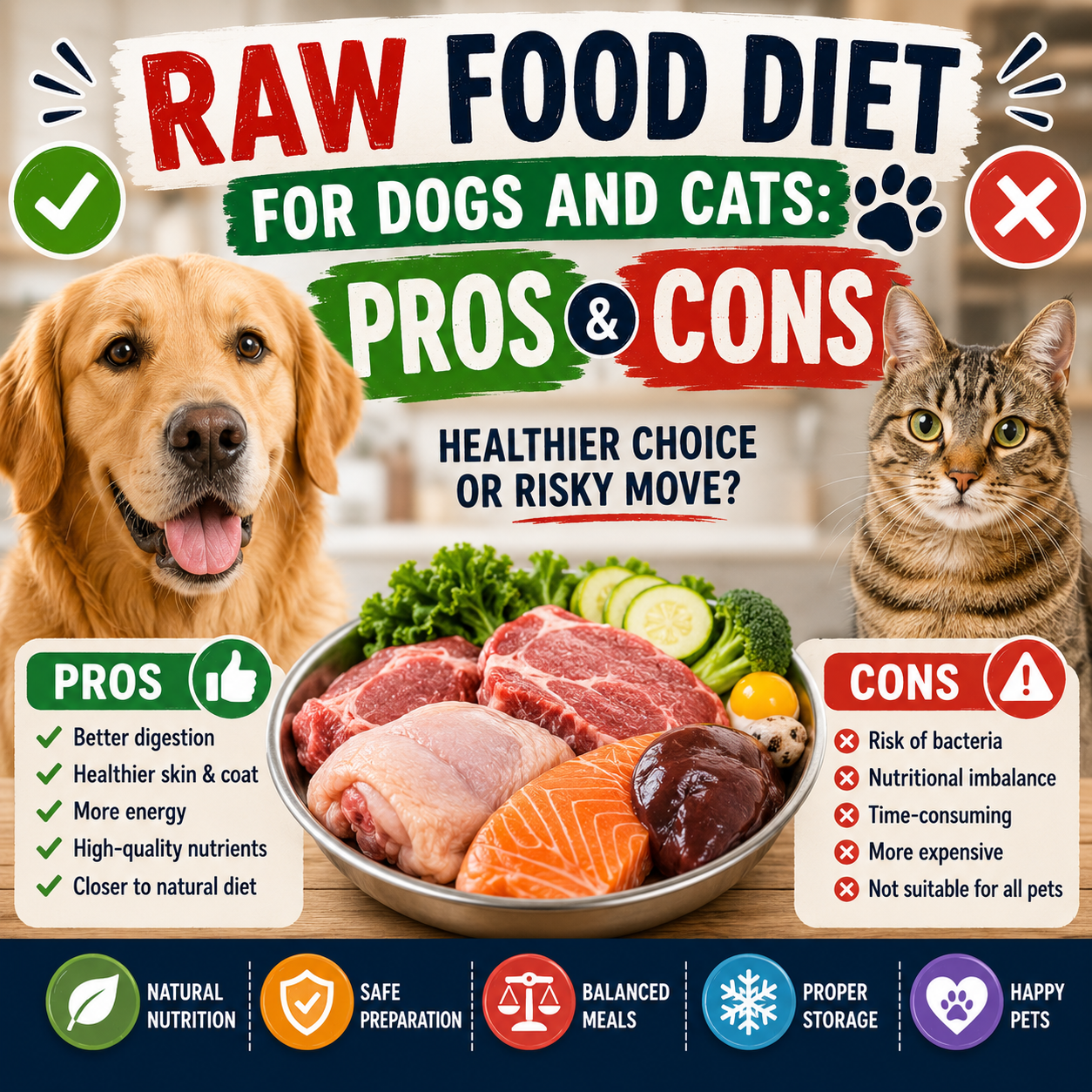
The “BARF” (Biologically Appropriate Raw Food) diet has moved from a niche trend to a mainstream conversation in the pet world. Many owners swear by the health benefits, while others remain concerned about the risks of foodborne illness. If you are considering transitioning your pet to a raw diet, it is essential to look at both sides of the bowl.
Here is a balanced breakdown of the pros and cons of raw feeding for dogs and cats.
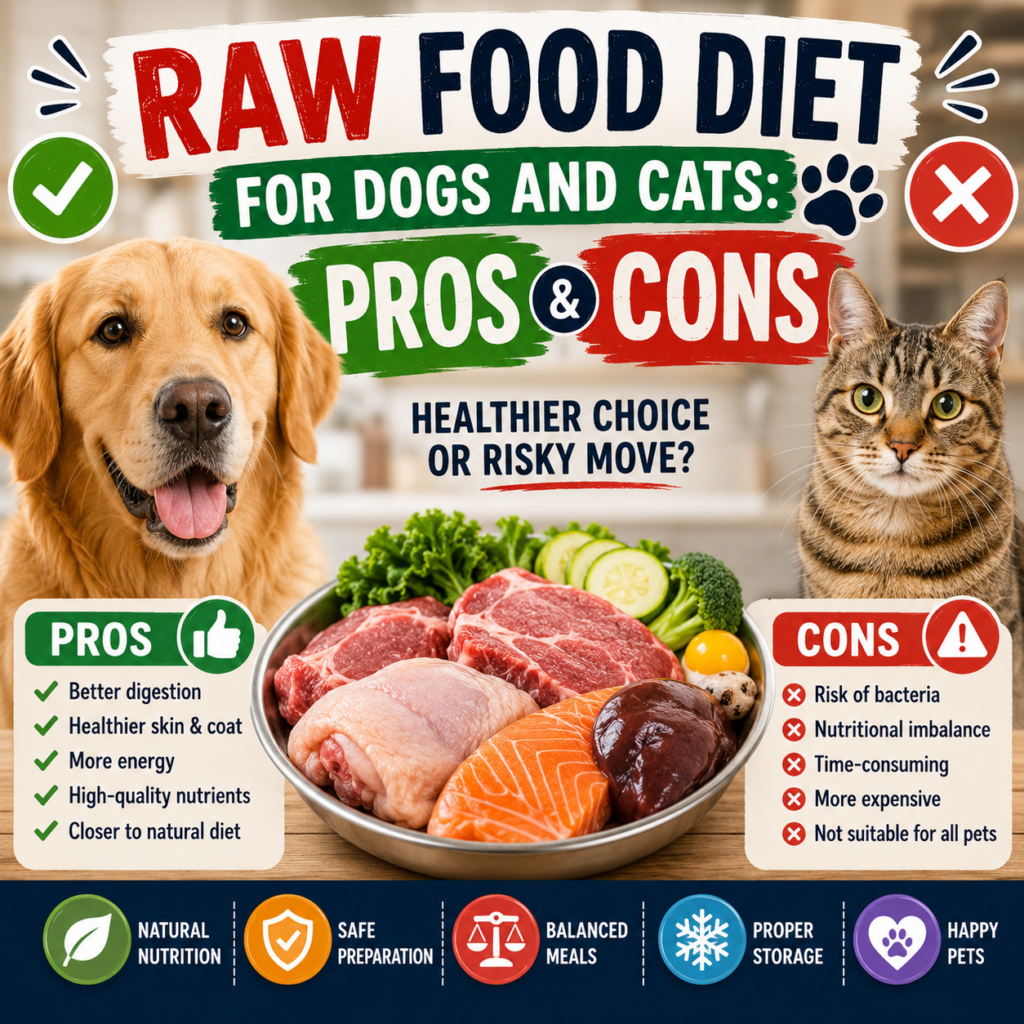
1. The Pros: Potential Health Benefits
Proponents of raw feeding often report visible improvements in their pets’ vitality.
- Improved Skin and Coat: High-quality raw ingredients are rich in natural oils and essential fatty acids, which can lead to a shinier coat and reduced skin inflammation.
- Cleaner Teeth: While not a substitute for brushing, many raw feeders note that chewing on raw meat and bones helps mechanically scrape away plaque and tartar buildup.
- Smaller, Less Smelly Stool: Because raw food is highly digestible, the body absorbs more nutrients, leading to significantly less waste (stool) and reduced odors.
- Increased Energy Levels: Many owners report that pets on a balanced raw diet show more “puppy-like” or “kitten-like” energy and improved weight management.
2. The Cons: Critical Health and Safety Risks
It is equally important to understand the downsides, particularly regarding safety and nutritional balance.
- Bacterial Contamination: The biggest concern is pathogens like Salmonella, E. coli, and Listeria. These not only pose a danger to your pet but also to the humans in the household who handle the food.
- Nutritional Imbalance: A “raw diet” isn’t just a steak on a plate. Dogs and cats have specific requirements for calcium, phosphorus, and essential vitamins. If you don’t follow a vet-approved, balanced formula, your pet could suffer from nutrient deficiencies or skeletal issues over time.
- Risk of Physical Injury: Feeding raw bones carries a risk of splintering, which can cause severe damage to a pet’s teeth, mouth, or internal digestive tract.
- Higher Cost and Effort: Preparing a raw diet—or buying high-quality, pre-made raw food—is significantly more expensive than standard dry kibble and requires strict food-handling hygiene.
3. The “Middle Ground” Options
If you are worried about the risks of 100% raw but still want a more natural approach, consider these alternatives:
- Freeze-Dried Raw: Offers the nutritional benefits of raw food with the convenience and safety of shelf-stable products.
- Gently Cooked Diets: Provides fresh, whole-food nutrition without the danger of raw bacterial contamination.
- High-Quality Kibble Toppers: Adding fresh, raw-friendly ingredients (like raw goat milk or freeze-dried organ treats) to your pet’s regular diet can provide variety without the full risks of a raw-only diet.
Important Safety Tips for Raw Feeders
If you decide to proceed with a raw diet, follow these best practices:
- Consult Your Vet First: Especially if your pet has pre-existing health conditions or is a puppy/kitten.
- Practice Strict Hygiene: Wash your hands, bowls, and surfaces thoroughly after every feeding.
- Choose Reputable Brands: If you aren’t preparing the food yourself, purchase from companies that follow strict food safety protocols and provide verified nutritional analysis.
- Avoid Cooked Bones: Raw bones are generally safer to chew, but never feed cooked bones, as they become brittle and splinter easily.
Conclusion
The raw food diet is a complex topic. While it can offer significant benefits for some pets, it requires a high level of responsibility, research, and hygiene from the owner. There is no “one-size-fits-all” diet—what matters most is that your pet is thriving on a balanced, nutrient-dense regimen that fits your lifestyle.