
If you’ve ever adopted a rescue animal, you know there is a specific, magical moment when their entire demeanor changes. The tense posture relaxes, the suspicious eyes soften, and they lean their weight completely into your hand. It feels like a silent thank you.
But does that moment stick with them? Do pets remember kindness?
Or do animals live completely in the present moment, forgetting your gentle gestures, favorite treats, and soothing words the minute the environment changes?
Let’s look at the fascinating neurobiology and animal psychology behind how dogs, cats, and birds store memories of compassion.
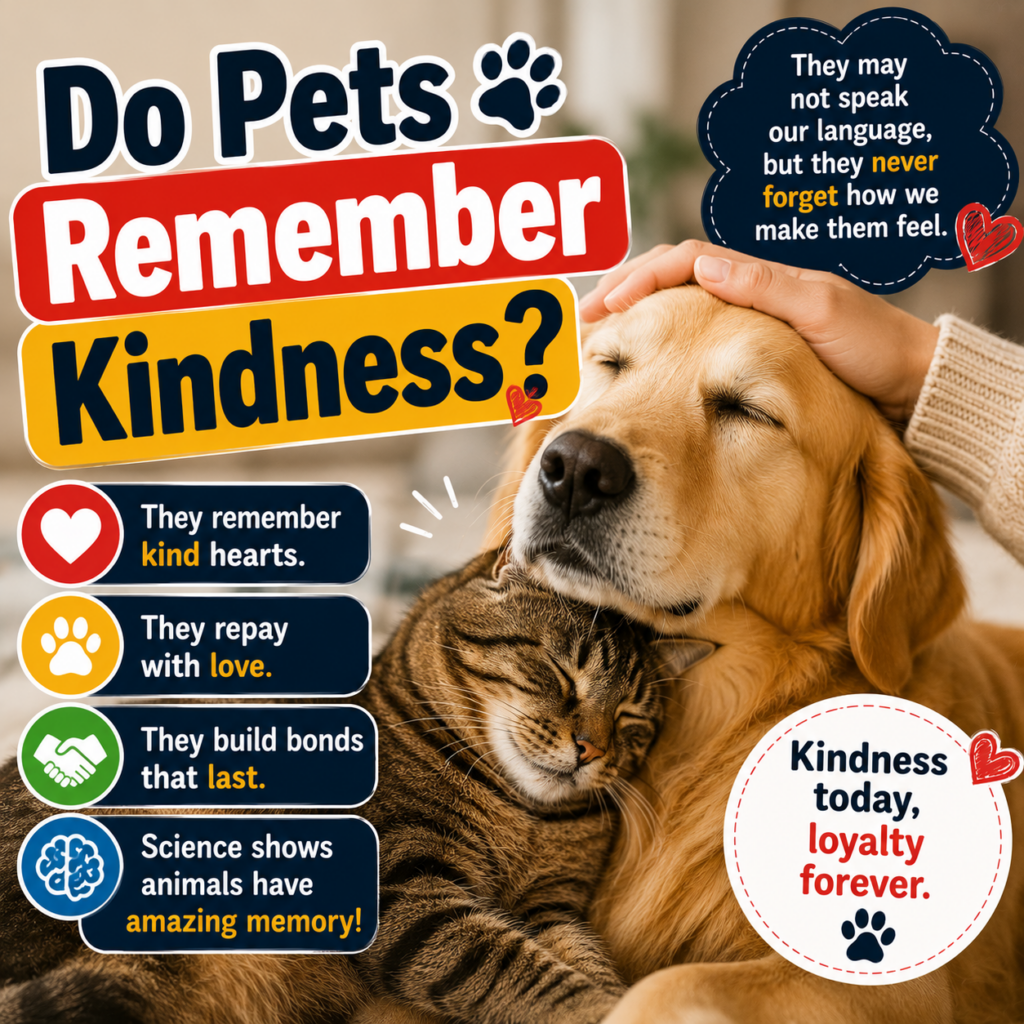
1. Dogs and Episodic Memory: Tracking Who Is “Good”
For years, scientists believed animals were limited to associative memory—meaning a dog only connects a stimulus (like a leash) with an action (a walk) without remembering specific past events.
However, a groundbreaking study published in Current Biology completely disrupted this theory. Researchers proved that dogs possess episodic-like memory. This is the ability to mentally travel back in time to recall specific personal experiences, including the who, what, and where of a past event.
The Cognitive Evidence:
- The Scent Blueprint: A dog’s brain possesses a dedicated region for processing human faces and scents. When they encounter someone who showed them immense kindness, their brain’s reward center (the caudate nucleus) lights up instantly, even if years have passed since they last saw that person.
- The “Social Bookkeeper” Effect: Dogs track human behavior. If a stranger offers them high-value treats and uses a warm, low-pitched voice, the dog logs that face into their “safe and kind” database. They will actively seek out that person during future encounters.
2. Cats: The Discerning Memory Keepers
Cats are notorious for their sharp, long-term memory structures, which are structurally similar to a human’s brain. In fact, a cat’s short-term memory can last up to 16 hours—vastly outlasting a dog’s average 2-to-5-minute short-term window.
When it comes to remembering kindness, cats use their selective memory to build survival maps.
If a human respects a cat’s independent boundaries, offers them premium food, and communicates using gentle slow blinks, the cat records that person as an elite resource and safe harbor. They will remember that specific kindness for their entire life, greeting that person with comfortable head-bunting and loud purring whenever they return.
At a Glance: How Different Pets Remember and Return Kindness
Every species has a completely distinct way of storing and showing gratitude for your gentle care.
| Pet Type | Memory Superpower | How They Return the Kindness |
| Dogs | Episodic-Like Recall: Remembers specific kind actions, tones, and faces for years. | Leaning their full body weight against you, giving soft eye contact, and offering toys. |
| Cats | Long-Term Survival Mapping: Logs who respects their physical boundaries and safe zones. | Bestowing the slow-blink “cat kiss,” kneading (“making biscuits”) your lap, and sleeping near you. |
| Birds (Parrots) | Exceptional Social Memory: Remembers individual human faces and social actions for decades. | Soft beak grinding when falling asleep, whispering learned words, and grooming your hair. |
3. Parrots: The Decades-Long Social Grudge (and Gratitude)
If you share a home with a highly intelligent exotic pet bird like an African Grey, Macaw, or Cockatoo, you are dealing with an evolutionary masterpiece of memory.
In the wild, parrots live in complex, lifelong flock structures where tracking who is helpful and who is dangerous is a matter of life or death. When kept as pets, their memory spans decades.
If you show a parrot kindness—sharing healthy fresh fruits, teaching them tricks with positive reinforcement, and speaking to them like a valued partner—they will remember you forever. Even if a parrot is rehomed or separated from their favorite human for ten years, the moment they see that familiar face or hear that specific vocal inflection, they will immediately react with joyful head-bobbing and affectionate chatter.
💡 The Rescue Dog Transformation
Why do rescue animals often form the most intense bonds? When an animal transitions from a high-cortisol (stressful) shelter environment into a quiet, predictable home, the brain maps that transition vividly. The person who provided that safety is categorized as the ultimate lifesaver. This secure attachment is why rescue pets often transform into incredibly loyal “velvet shadows.”
How to Create Memories of Kindness Your Pet Will Never Forget
If you want to ensure your pet’s memory bank is packed with positive associations, focus on these core behaviors:
- Practice Active, Undivided Attention: Passive proximity (sitting in the same room scrolling on your phone) doesn’t build deep memory anchors. Spend 15 minutes of focused daily play or training to stimulate their reward centers.
- Respect Their Hiding Spots: When a dog or cat retreats to their crate, bed, or under the sofa, leave them alone. Allowing them to have an unviolated safe space is a massive act of kindness that builds profound psychological trust.
- Use Their Language: Slow-blink at your cat, play-bow with your dog, or softly click your tongue at your bird. Communicating on their frequency creates an instant emotional connection they will easily remember.
The Bottom Line
Yes, your pets absolutely remember kindness. They do not live in a blank, forgetful vacuum. Through advanced scent receptors, highly evolved facial-recognition pathways, and a biological need for social safety, dogs, cats, and birds catalog every gentle touch and rewarding interaction. When you treat an animal with patience, empathy, and respect, you aren’t just giving them a temporary good day—you are writing a permanent memory of love into their heart that they will happily return to you every single day!