
Feeding a pet turtle isn’t quite as straightforward as feeding a dog or a cat. If you fill their bowl every time they look at you, you will quickly end up with an overweight reptile. Turtles are opportunistic feeders; in the wild, they never know when their next meal is coming, so they will enthusiastically beg for food even if they’ve just eaten.
Overfeeding is one of the most common mistakes beginner turtle owners make, leading to severe health issues like rapid growth, shell deformities (pyramiding), and fatty liver disease. On the flip side, underfeeding can stunt their growth and weaken their immune system.
So, how often should you feed a pet turtle? The answer depends entirely on one main factor: their age. Let’s break down the perfect feeding schedule to keep your shelled friend healthy and thriving.
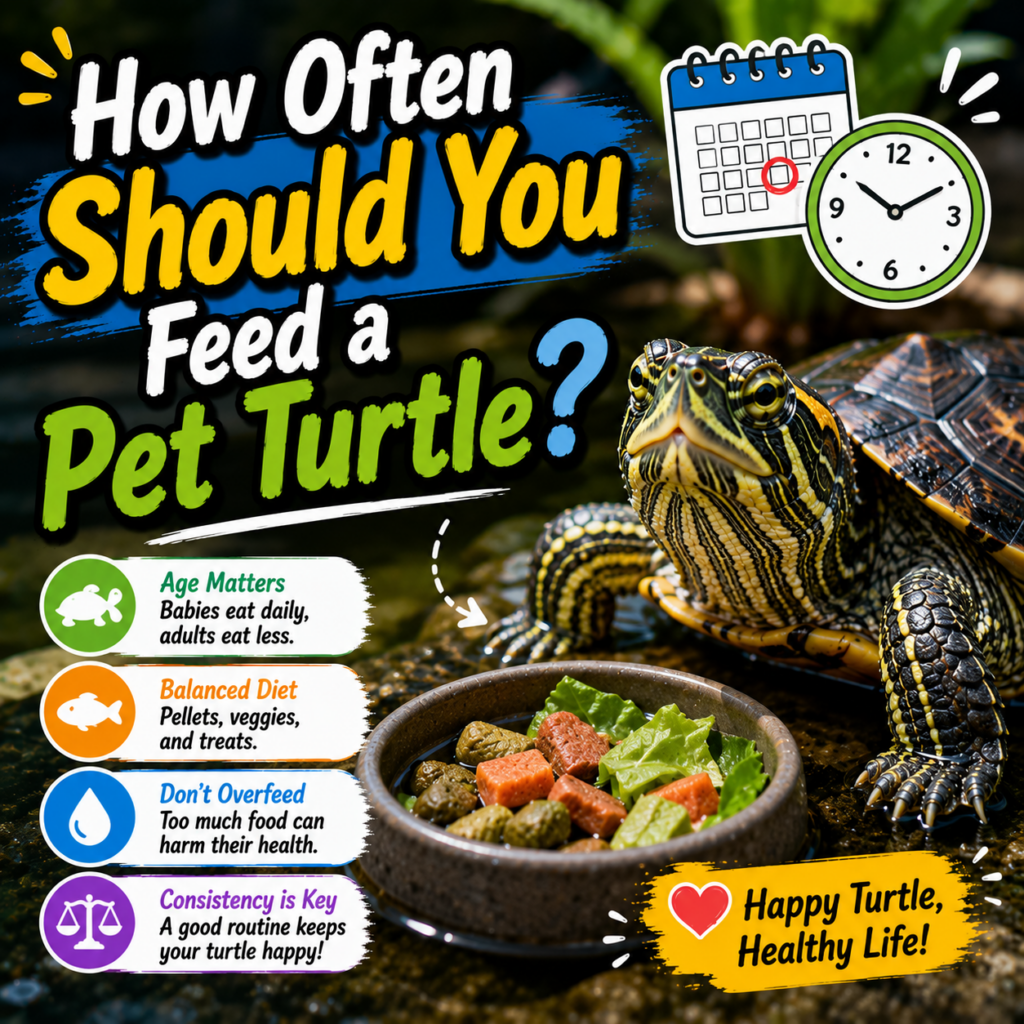
The Turtle Feeding Schedule by Age
As turtles grow, their metabolic rate slows down, and their dietary needs shift from protein-heavy to plant-heavy.
1. Baby and Juvenile Turtles (Under 1 Year Old): Feed Daily
Baby turtles are growing rapidly and require a massive amount of protein and calcium to build strong bones and shells.
- Schedule: Feed them once a day, 7 days a week.
- Diet: Their meals should consist primarily of high-quality commercial turtle pellets, supplemented with live or frozen protein treats (like bloodworms, ghost shrimp, or small crickets).
2. Sub-Adult Turtles (1 to 2 Years Old): Feed Every Other Day
Once your turtle hits its teenage years, its growth rate starts to stabilize.
- Schedule: Transition them to a feeding schedule of 4 to 5 times a week (roughly every other day).
- Diet: Start introducing more fresh vegetables into their diet alongside their pellets.
3. Fully Adult Turtles (Over 2 Years Old): Feed 2 to 3 Times a Week
An adult turtle that is fed every single day will quickly become obese. Their bodies no longer require continuous fuel for growth, only maintenance.
- Schedule: Feed pellets or heavy protein 2 to 3 times a week (such as every Tuesday, Thursday, and Saturday).
- Diet: While pellets are restricted to a few times a week, you can offer them fresh, leafy greens every single day.
How Much Food is Enough? (The 2 Best Rules of Thumb)
Now that you know how often to feed them, how do you know the correct portion size? Use these two universally accepted rules of thumb:
Method A: The “Size of the Head” Rule
Imagine your turtle’s head was completely hollow (excluding the neck). The amount of food you offer per feeding should roughly equal the volume of that imaginary hollow space. This applies perfectly to pellets, veggies, and insects alike.
Method B: The 3 to 5-Minute Window
Drop a few pellets into the water. Allow your turtle to eat continuously for 3 to 5 minutes. Once the time is up, scoop out any remaining, uneaten food with a fish net. This keeps your turtle from overeating and prevents decomposing food from fouling your aquarium water.
What Should a Balanced Turtle Diet Look Like?
To ensure your turtle lives a long life, variety is key. Most common aquatic turtles (like Red-Eared Sliders, Painted Turtles, and Cooter Turtles) are omnivores. Their diet matrix should adjust as they mature:
Baby Turtles Diet:   [ 70% Protein / Pellets ] ──► [ 30% Veggies & Greens ]
Adult Turtles Diet:  [ 30% Protein / Pellets ] ──► [ 70% Veggies & Greens ]
Safe Foods for Your Pet Turtle:
- Commercial Pellets: Choose a reputable brand high in calcium and Vitamin D3.
- Fresh Leafy Greens: Romaine lettuce, dandelion greens, red leaf lettuce, and turnip greens (Avoid iceberg lettuce as it has zero nutritional value).
- Proteins (Occasional Treats): Earthworms, mealworms, crickets, feeder fish, and ghost shrimp.
Signs of an Overfed vs. Underfed Turtle
Keep a close eye on your turtle’s physical appearance to adjust their schedule:
| Physical Sign | What It Indicates | Action Required |
| Skin folds bulging out of the shell when legs pull in | Obesity / Overfed | Scale back pellet frequency immediately. |
| The shell scutes are raising into sharp, unnatural pyramids | Pyramiding (Too much protein) | Reduce protein; increase leafy greens. |
| Visible skin folds look loose, wrinkled, and hollow | Underfed / Malnourished | Increase feeding frequency or check for parasites. |
Conclusion: Consistency is Everything
Establishing a strict feeding schedule is one of the best things you can do for your pet turtle’s longevity. Keep your babies fueled with daily protein, transition your adults to a veggie-heavy lifestyle a few times a week, and always skim away uneaten leftovers.
By mirroring their natural biological timeline, your turtle will reward you with decades of alert, active, and happy companionship!