
There is nothing quite like the peaceful view of vibrant koi gliding gracefully across the surface of a garden pond. So, when you walk out to your pond and notice your usually active “living jewels” sitting motionless or hovering strictly at the very bottom, it can immediately trigger a wave of worry.
While bottom-dwelling behavior can sometimes be a sign of a serious issue, it isn’t always a cause for panic. Because koi are ectothermic (cold-blooded) animals, their position in the water column is heavily influenced by their environment, the seasons, and their physical health.
So, what does it mean when koi fish stay at the bottom? Let’s explore the 5 most common reasons behind this behavior and how to determine if your fish need help.
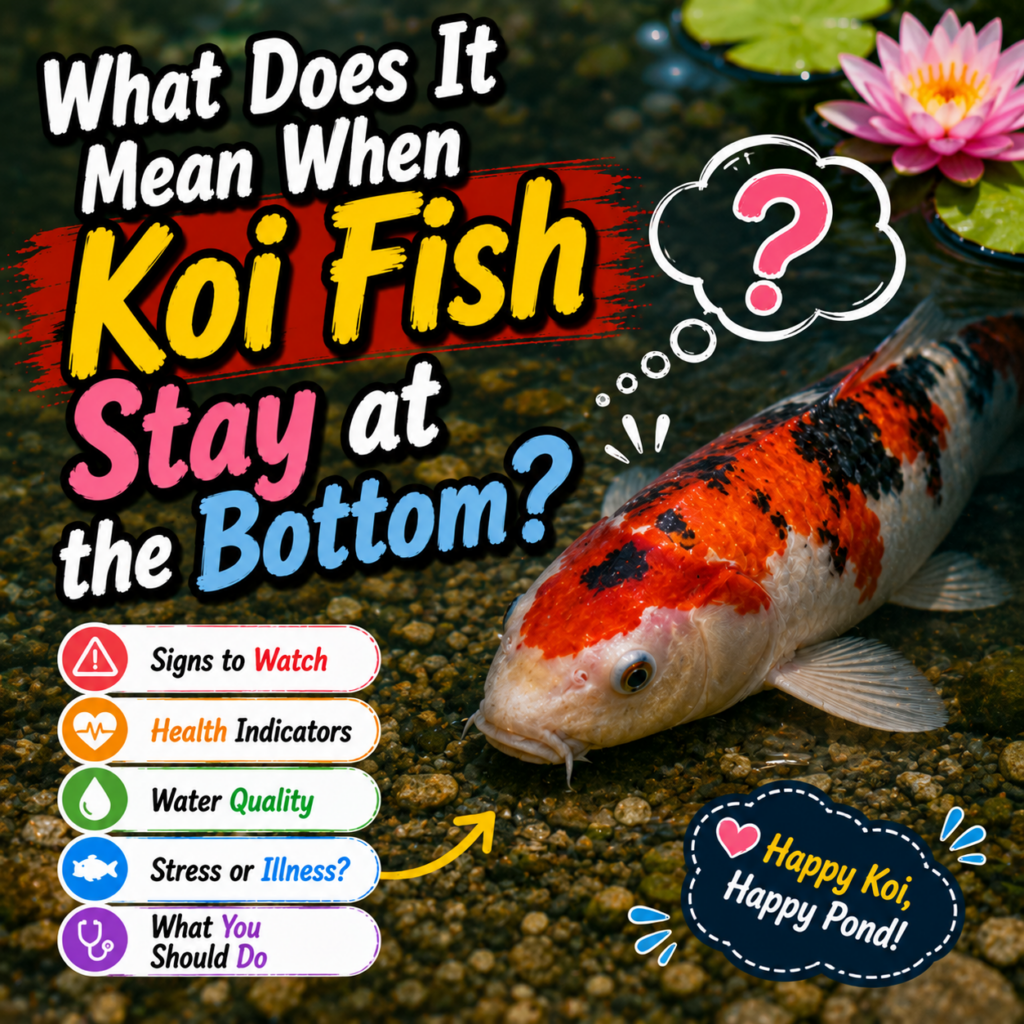
1. Seasonal Water Temperatures (The Winter Rest)
The most common, natural reason for koi to stay at the bottom is cold weather.
As autumn turns to winter and water temperatures drop below 50°F (10°C), a koi’s metabolism slows down drastically. Because warm water is denser than cold water, the deepest part of your pond stays slightly warmer and more stable during the winter months.
Your koi will gather at the bottom in a semi-dormant state called torpor (the fish equivalent of hibernation). They will stay perfectly still, rest close together to conserve energy, and stop eating.
- The Verdict: If it’s winter, this is completely normal, healthy behavior. Do not try to feed them or disturb them.
2. Low Dissolved Oxygen Levels
If the weather is hot and your koi are sitting sluggishly at the bottom, you might be dealing with a dangerous lack of oxygen.
Warm water holds significantly less dissolved oxygen than cold water. During scorching summer days, if your pond lacks proper aeration, the oxygen levels will plummet. While stressed fish often head to the surface to gasp for air (called “piping”), extremely weak or exhausted koi may simply sink to the bottom where they struggle to move.
- The Fix: Ensure your waterfalls, fountains, or air pumps are running 24/7. Adding heavy-duty air stones or an oxygenator during heatwaves can save your fish’s lives.
3. High Stress Levels or a Predator Scare
Have you recently added new fish to the pond? Or perhaps a neighborhood cat, raccoon, or blue heron recently paid a visit to your water’s edge?
Koi have sharp natural instincts. If they sense danger or survive a predator attack, their immediate reflex is to dive deep, seek out dark corners, and stay glued to the bottom where they are harder to see. They can remain in this fearful, guarded state for hours or even days after the threat has vanished.
- The Fix: Check your pond perimeter for signs of wildlife. Installing pond netting, decoys, or motion-activated sprinklers can help restore your koi’s sense of safety.
4. Poor Water Quality (Ammonia or Nitrite Spikes)
Koi are hardy, but they are highly sensitive to sudden chemical imbalances in their environment. High levels of ammonia, nitrites, or dramatic pH swings can burn their gills and skin, causing immense physical distress.
When fish are suffering from poor water chemistry, they lose the energy to swim. They will sit at the bottom with their fins tightly clamped against their bodies (known as clamped fins), looking thoroughly miserable.
- The Fix: Immediately test your water using a reliable liquid pond test kit. If ammonia or nitrites are present, perform a 20% to 30% water change and add a water conditioner to detoxify the pond.
5. Underlying Parasites or Illness
If only a single koi is staying at the bottom while the rest of the school swims happily at the surface, you are likely dealing with an isolated illness or a parasitic infection (such as Ich, Costia, or flukes).
A sick koi lacks the stamina to fight the current or swim upward. Keep a close eye out for supporting behavioral signs like flashing (scratching their bellies against the pond floor), heavy breathing, or visible ulcers and white spots on their scales.
- The Fix: Isolate the sick fish in a separate quarantine tank to treat them with targeted anti-parasitic or antibacterial medications without disrupting the entire pond ecosystem.
The “Bottom-Dwelling” Diagnostic Checklist
Use this quick guide to determine whether your koi are simply chilling out or in desperate need of your help:
| Observation | Likely Cause | Action Required |
| It’s winter, all fish are resting peacefully. | Natural Torpor | None. Stop feeding until spring. |
| It’s summer, fish look lethargic. | Low Oxygen / Heat Stress | Turn on aerators, add air stones. |
| Fish are sitting with fins clamped tight. | Poor Water Quality | Test water instantly; perform a water change. |
| Only one fish is hiding and rubbing against rocks. | Parasites or Illness | Quarantine and treat the individual fish. |
Conclusion: Monitor and Test
At the end of the day, seeing your koi stay at the bottom of the pond is their way of sending an SOS or reacting to their climate. By checking your water thermometer, running a quick water quality test, and ensuring your air pumps are running smoothly, you can easily pinpoint the issue and keep your vibrant aquatic family swimming high, happy, and healthy!