As a dedicated pet parent, you probably scrutinize the ingredient list on your own food—so why should your pet’s diet be any different? With the rise of highly processed pet foods, learning to decode labels is the most effective way to ensure your dog or cat is getting the nutrition they deserve without dangerous additives.
Many commercial pet foods use chemical preservatives to extend shelf life. While these keep food “fresh” for months, some have been linked to serious health concerns. Here is your guide to reading pet food labels and spotting the red flags.
1. Why Preservatives Matter
Preservatives are added to prevent fats from becoming rancid and to inhibit the growth of mold and bacteria. However, not all preservatives are created equal. While natural options exist, many manufacturers rely on cheap, synthetic alternatives that may contribute to long-term health issues, including allergies, skin irritation, and potentially more serious risks.
2. Artificial Preservatives to Avoid
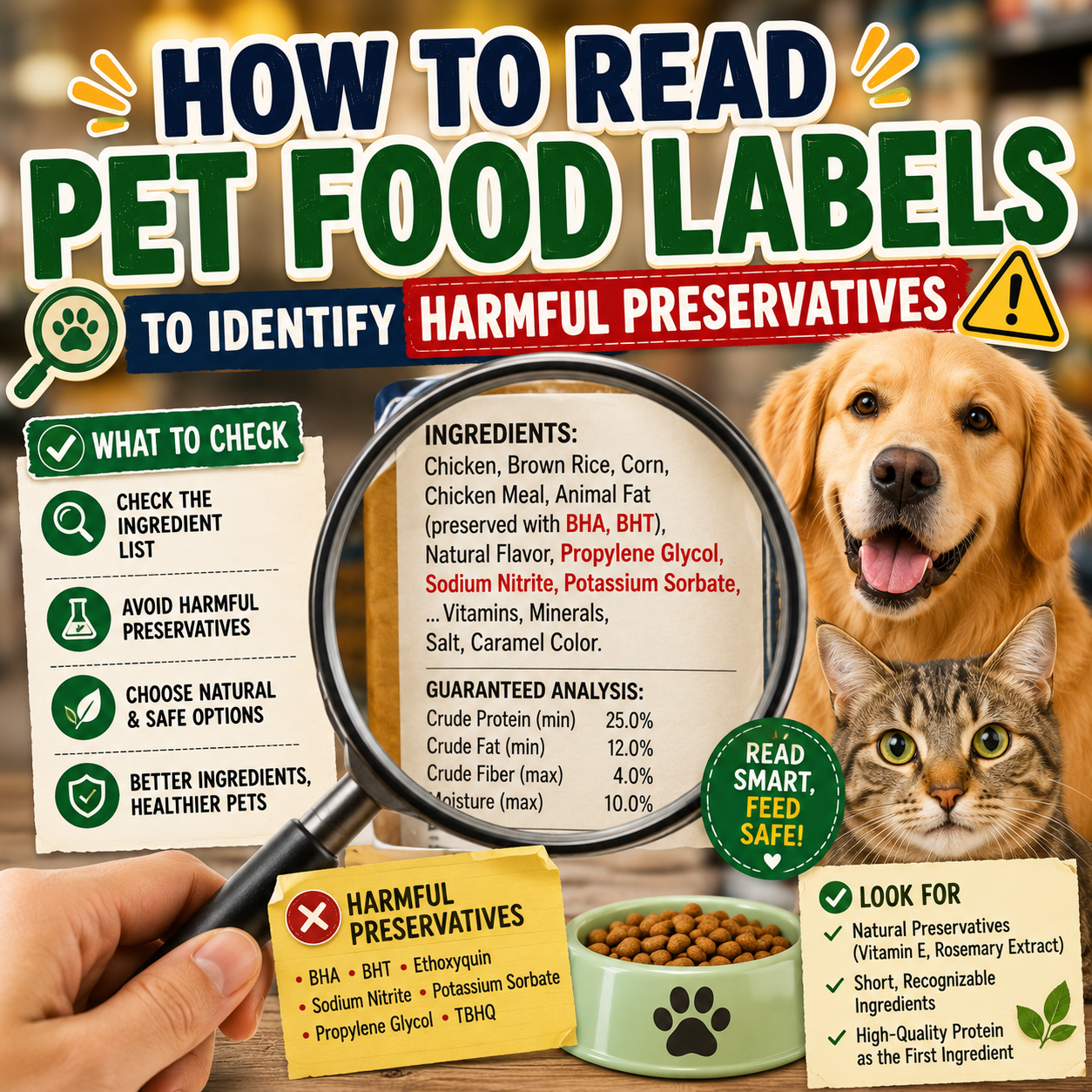
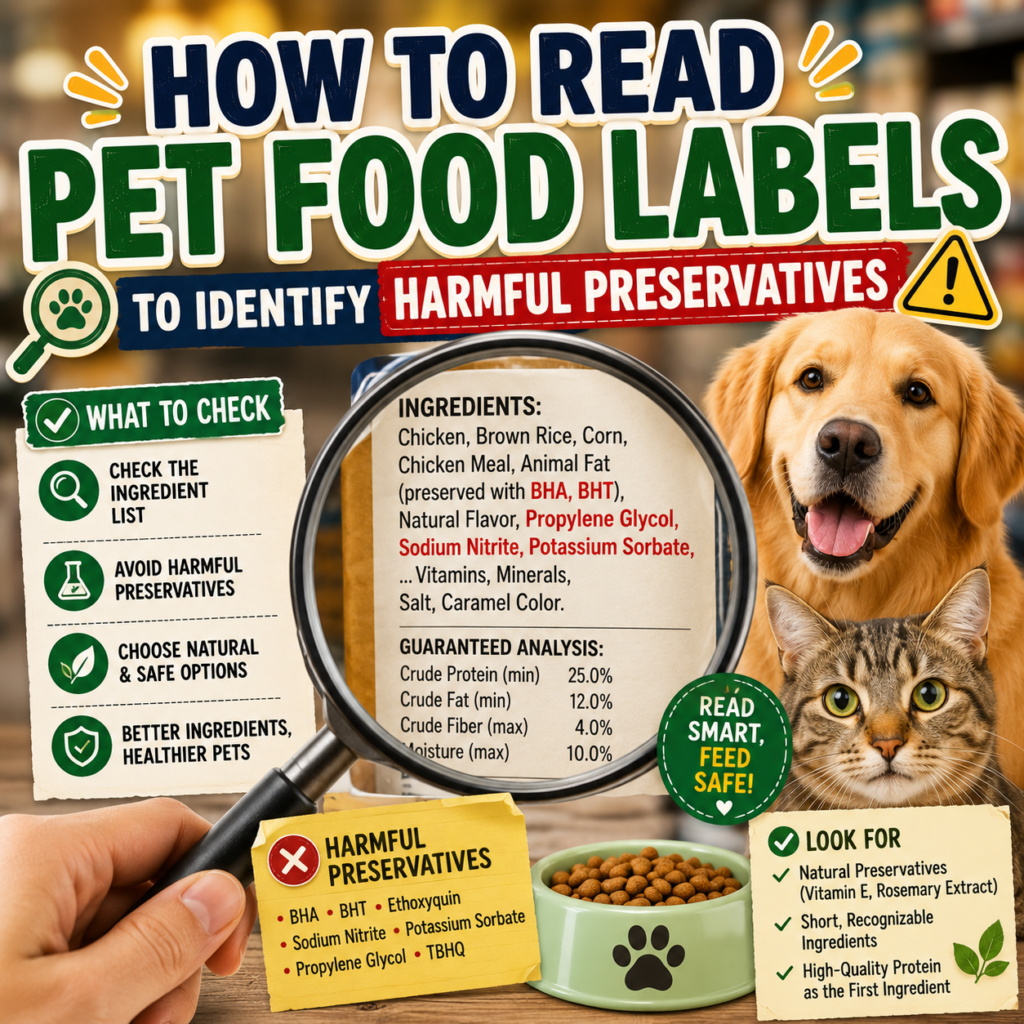
When scanning the ingredient list on the back of the bag or can, keep an eye out for these synthetic ingredients. If you see them, it is time to consider an alternative:
- BHA (Butylated Hydroxyanisole) and BHT (Butylated Hydroxytoluene): These are common in human food but are controversial in pet circles. They are used to preserve fats and oils, but some studies have suggested they may have potential carcinogenic effects in laboratory animals.
- Ethoxyquin: Originally used as a pesticide and a rubber stabilizer, this chemical is often found in fish-based pet foods. It has been linked to liver damage and other health complications in pets.
- Propylene Glycol: Often used to keep semi-moist foods “chewy,” this ingredient is closely related to antifreeze. It is known to cause damage to red blood cells in cats (Heinz body anemia) and is generally discouraged in pet nutrition.
- Sodium Nitrite/Nitrate: Often found in treats (like jerky or processed meat strips), these are linked to several health issues and should be avoided.
3. How to Spot “Hidden” Additives
Sometimes, the preservatives aren’t listed on the ingredient label because they were added by the supplier of the raw materials, not the pet food manufacturer. This is called “ingredient splitting” or “third-party contamination.”
- Look for “Guaranteed Analysis”: While this section doesn’t list ingredients, a high-quality manufacturer will often highlight “No Artificial Preservatives” prominently on the front of the packaging.
- The “Whole Ingredient” Rule: If a label says “meat meal” without specifying which meat (e.g., “poultry meal” instead of “chicken meal”), it may have been preserved with Ethoxyquin before it even arrived at the manufacturing plant. Always look for named protein sources.
4. Better Alternatives: Natural Preservatives
The best pet foods use natural alternatives to maintain freshness. Look for these “safe” preservatives on your next shopping trip:
- Mixed Tocopherols: These are essentially a combination of Vitamin E. They are very effective at preserving fats and are completely safe for pets.
- Ascorbic Acid (Vitamin C): A natural antioxidant that helps prevent oxidation.
- Rosemary Extract: A powerful, natural plant-based preservative that works wonders for keeping dry kibble stable.
Conclusion
Your pet’s health starts with what goes into their bowl. By taking the extra minute to turn that bag around and check the fine print, you are taking a proactive step toward preventing future health issues.
Remember: If you see ingredients you can’t pronounce or recognize, don’t hesitate to search for them online or check the manufacturer’s website. If you are ever in doubt, consult with your veterinarian about brands that prioritize natural, whole-food ingredients.