Dental disease is one of the most common health issues in pets, yet it is often the most overlooked. By age three, most dogs and cats show some signs of periodontal disease. While professional cleanings are essential, daily brushing is the “gold standard” for keeping your pet’s mouth healthy and avoiding expensive vet bills later on.
But what if your pet turns into a tiny monster the moment they see a toothbrush? This guide will show you how to desensitize your uncooperative pet and make brushing a positive experience.
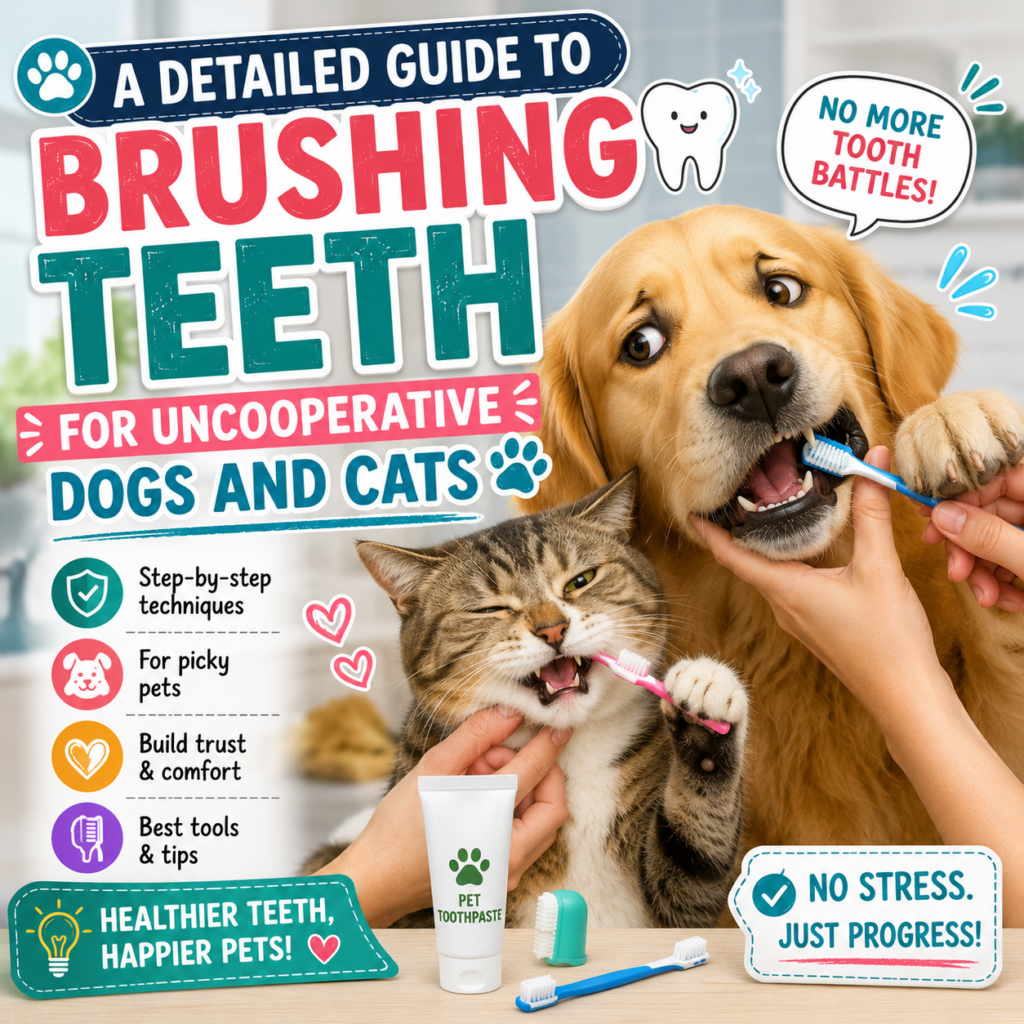
1. Preparation: The Right Tools
Before you start, ensure you have the right equipment. Never use human toothpaste, as it contains fluoride and xylitol, both of which are toxic to pets.
- Pet-Specific Toothpaste: These come in appealing flavors like chicken, beef, or malt.
- The Right Brush: Choose a finger brush for beginners, a soft-bristled pet toothbrush, or even a piece of sterile gauze wrapped around your finger.
- Patience and High-Value Treats: Keep small pieces of their favorite snacks nearby.
2. The Desensitization Strategy (Take it Slow)
If your pet is fearful or resistant, do not force it. Follow these steps over several days or even weeks:
Step 1: Get Them Used to Touch
Before using a brush, spend a few days simply touching your pet’s muzzle, lifting their lips, and rubbing their gums with your finger. Reward them immediately with a treat after each session.
Step 2: Introduce the Taste
Put a small amount of pet-safe toothpaste on your finger and let them lick it off. You want them to associate the taste of the toothpaste with a reward.
Step 3: Introduce the Tool
Let them sniff the toothbrush. Put a bit of paste on the brush and let them lick it off. Do not try to brush their teeth yet; just get them comfortable with the tool.
Step 4: The First Brush
Lift the lip and gently touch the toothbrush to the outer surface of their teeth for just one or two seconds. Stop before they get agitated, and give them a big reward. Gradually increase the time as they become more comfortable.
3. Pro-Tips for Success
- Find the “Sweet Spot”: The best time to brush is when your pet is already tired or relaxed—like after a long walk or a vigorous play session.
- Focus on the Outside: You don’t need to brush the inside surfaces of the teeth (the side facing the tongue). Most of the tartar builds up on the outer surfaces, and your pet’s tongue naturally helps clean the inner side.
- Keep Sessions Short: A one-minute session is better than a stressful five-minute struggle. Consistency matters more than duration.
- The “One-More-Try” Rule: If your pet shows extreme aggression or fear, stop immediately. It is better to use dental chews or water additives as a temporary bridge while you continue to work on desensitization.
4. When to See a Veterinarian
Even with perfect at-home care, some pets are prone to dental issues. Consult your veterinarian if you notice:
- Persistent bad breath (halitosis).
- Red, swollen, or bleeding gums.
- Difficulty chewing or dropping food.
- Excessive drooling.
Conclusion
Brushing your pet’s teeth is an act of love that extends their life and keeps their kisses fresh. By moving slowly, using positive reinforcement, and staying patient, you can turn a dreaded chore into a bonding activity that your pet eventually accepts—or even enjoys!