
Introducing an animal companion into your household is a beautiful milestone. For a child, a dog, cat, or pocket pet isn’t just a fun playmate—it is a living, breathing confidant that can teach profound lessons in responsibility, emotional intelligence, and kindness.
However, children do not enter the world knowing how to decode animal body language or manage their own physical impulses. A toddler might see a cat’s swishing tail as an invitation to grab, or a young child might enthusiastically scream when a puppy approaches, accidentally triggering the animal’s fight-or-flight response.
How do you teach kids to respect pets safely and effectively?
Building a harmonious, low-stress sanctuary under your roof requires moving past simple rules like “Be nice.” Parents must actively translate animal psychology into a simple, practical language children can understand. Let’s look at the expert-approved steps to fostering a deeply respectful kid-to-pet dynamic.
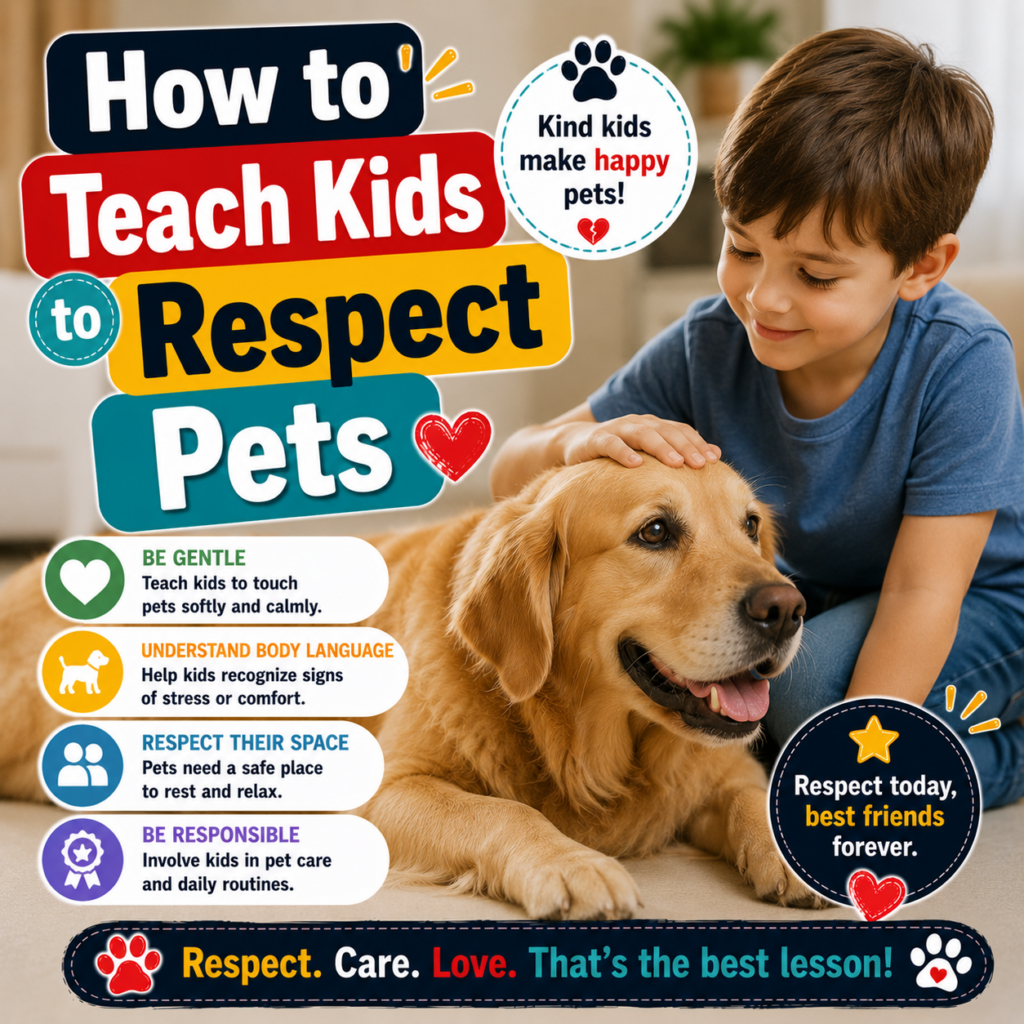
1. Ditch the “Toy” Mindset: Establish the Living Creature Baseline
The very first psychological hurdle to clear is shifting how your child views the animal’s presence. In a world filled with plush teddy bears, moving electronic toys, and animated animal characters on digital screens, young kids can easily treat a real animal like an interactive prop.
The Communication Strategy
Use direct, empathetic comparisons to reframe the pet’s reality. Instead of saying, “Don’t bother the dog,” try phrasing it around shared human experiences:
- “Just like you need quiet time to sleep so your brain can grow, Captain needs his deep sleep uninterrupted too.”
- “You don’t like it when someone grabs your hair or pulls your shirt, so we must never pull Lola’s tail or ears.”
2. Teach the “Language of the Body”: Decoding Feline and Canine Signals
Animals are master non-verbal communicators. They continuously broadcast their stress, comfort, and boundary thresholds using subtle shifts in their ears, tails, and eyes. A primary cause of accidental pet scratches or nips is a child completely misreading these quiet warnings.
Turn decoding animal body language into an interactive family game. Teach your kids to scan for these specific milestones before they attempt to reach out and touch:
In Dogs:
- Green Light (Safe to approach): A relaxed, loose “noodle” body wiggle, a low or neutral tail wag, and soft, blinking eyes.
- Red Light (Stop immediately): A stiff, frozen posture, yawning when they aren’t tired, showing the whites of their eyes (whale eye), licking their lips anxiously, or growling.
In Cats:
- Green Light: Tail held straight up in a proud “question mark” curve, soft purring, and rubbing their cheeks against a leg.
- Red Light: A low, rhythmically thumping tail, ears pinned flat back against their head (airplane ears), dilated pupils, or a sharp vocal hiss.
At a Glance: Golden Rules of Child-to-Pet Interaction
Establish these non-negotiable household parameters to keep both your human children and animal companions physically and emotionally safe.
| Scenario / Action | What Most Kids Do Naturally | The Respectful, Safe Correction | The Animal Psychology Reason |
| Approaching a resting pet | Running up, shouting their name, and bending over their head to hug them. | The 3-Step Rule: Stop two paces away, crouch down, extend a closed fist, and let the pet bridge the gap. | Bending directly over an animal mimics a predatory attack pattern, triggering a defensive reflex. |
| Petting the animal | Patting heavily on top of the head or pulling at the limbs. | Gentle, directional strokes on the side of the neck, chest, or base of the chin. | Top-of-the-head touch can block an animal’s field of vision, causing minor hyper-vigilance. |
| Handling the pet’s items | Messing with their food bowl, taking away active chew toys, or entering their crate. | The Sanctuary Boundary: Treating the pet’s bed, crate, and food zone as a strictly off-limits zone. | Animals possess natural resource-guarding instincts; violating their safe zone spikes their cortisol levels. |
3. Implement the “Consent Test” For All Handling
One of the most powerful tools veterinary behaviorists recommend for families is teaching children the concept of animal consent. This simple test empowers the pet to decide if they want to engage, instantly lowering the risk of fear-based aggression.
Teach your child to use this simple sequence whenever they want to interact with a resting dog or cat:
- Freeze and Call: Sit calmly on the floor a few feet away from the pet and softly call their name.
- Offer the Hand Invitation: Extend an open hand or closed fist at the pet’s nose level without pushing it into their face.
- Analyze the Vote: If the pet stands up, walks over, rubs against the hand, or wags their tail, they have voted “Yes.” Your child can pet them gently. If the pet turns their head away, lets out a sigh, or stays put, they have voted “No.” Teach your child to proudly say, “They want their space right now, and I respect that!”
💡 The Power of Parental Modeling
Children are world-class copycats. They will always pay significantly more attention to your actions than your verbal rules. If you casually nudge the dog out of the way with your foot when you are busy in the kitchen, grab the cat forcefully to put them in another room, or yell loudly at the parrot for screaming, your child learns that physical dominance is how humans interact with animals. Model the exact gentle touch, soft vocal inflections, and patient boundary respect you want your child to mirror.
4. Involve Kids in “Act of Care” Routines
Respect flourishes when a child transitions from a passive observer to an active provider. Even very young toddlers can participate in age-appropriate husbandry routines that build pride and empathy.
- Toddlers (Ages 2-4): Can help carry the lightweight plastic water bowl to the sink, point out where the treat jar is, or help wipe down a bird’s cage tray with a damp paper towel.
- Young Children (Ages 5-8): Can take responsibility for pouring pre-measured kibble into the food bowl at a predictable evening time, hiding treats inside cardboard boxes for a canine foraging game, or using a soft brush to groom a calm senior pet’s back fur.
By participating in these small, nurturing routines, your child’s brain learns that a pet’s comfort requires consistent daily maintenance, strengthening their investment in the animal’s long-term health and emotional safety.
The Bottom Line
Teaching a child to respect animals isn’t about building walls between them; it is about building a secure, intuitive bridge of communication. When a gentle child learns to honor an animal’s unique body language, understand their primal survival instincts, and respect their physical boundaries, a magical transformation happens. The anxious defensive walls of the animal melt away, replacing territorial tension with a lifelong, deeply empathetic family friendship built on a foundation of mutual trust and love under your roof.