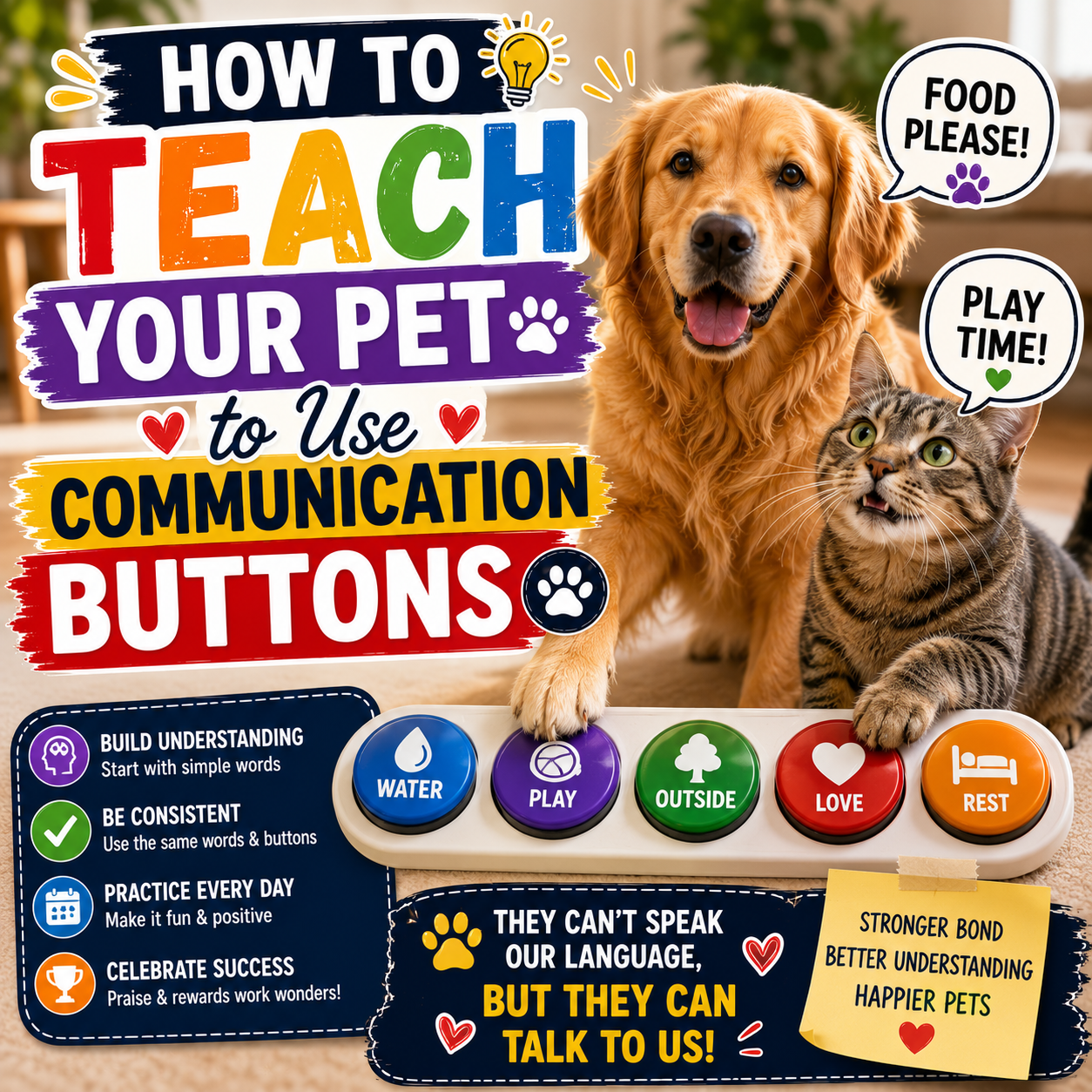
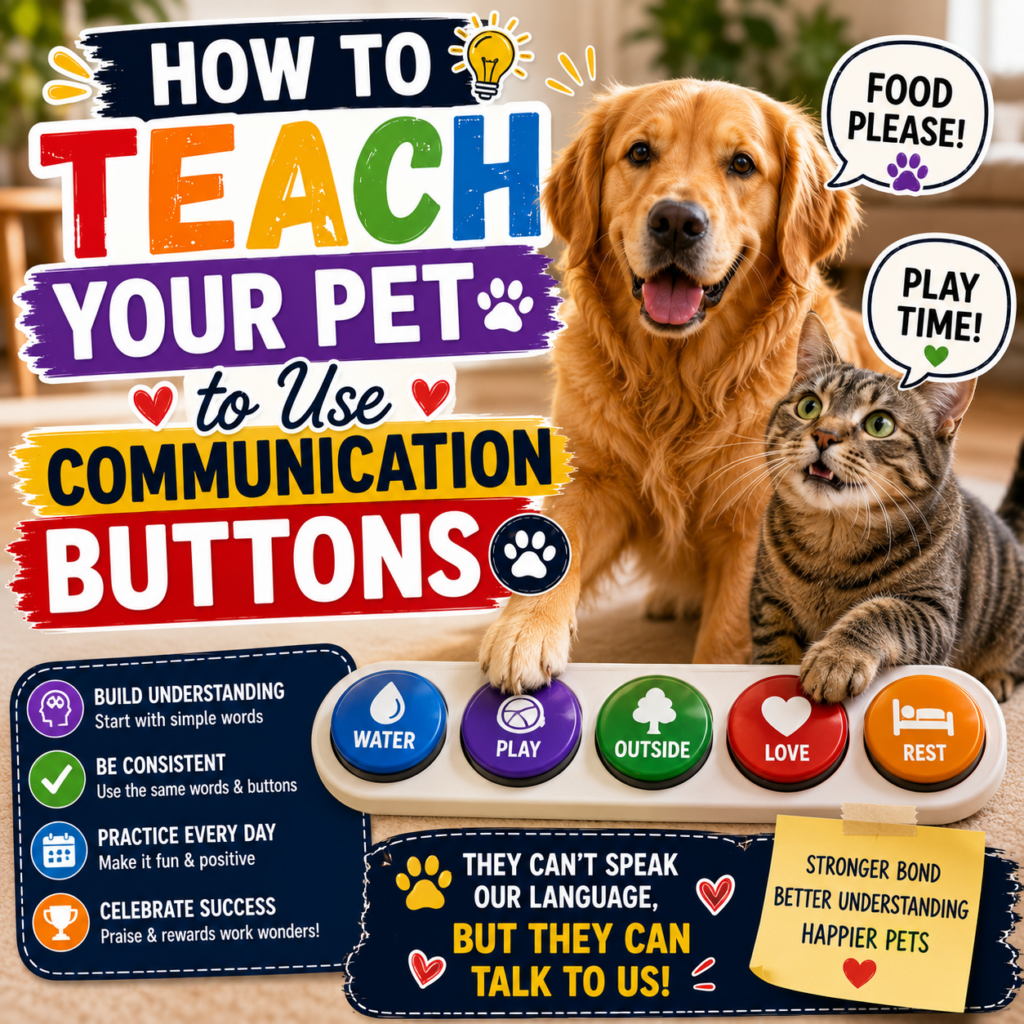
Ever wondered what your pet is thinking? The rise of “talking” pets on social media has sparked a global trend: Augmentative and Alternative Communication (AAC) devices for animals. Teaching your pet to use communication buttons is more than a viral trend—it is a fantastic way to deepen your bond, provide mental enrichment, and give your pet a voice.
Here is your beginner’s guide to teaching your pet to “speak” using communication buttons.
1. Choosing Your Starter Kit
You don’t need an entire soundboard to start. In fact, starting too big can be overwhelming for both you and your pet.
- Start Small: Begin with just one or two buttons. Choose words that are high-value and relevant to your pet’s daily life.
- Dogs: “Outside,” “Play,” or “Treat.”
- Cats: “Play,” “Food,” or “Snuggle.”
- Quality Matters: Choose buttons that are easy to press and have clear, consistent audio playback.
2. The Power of Modeling (The “Show, Don’t Tell” Rule)
Pets learn by observing. You cannot expect your pet to know what a button does unless you show them repeatedly. This is called modeling.
- Pair the Button with the Action: Every single time you perform the action, press the button first.
- Example: Before opening the door to go outside, press the “Outside” button and say the word clearly. Then, immediately take them outside.
- Be Consistent: You must model the word every time it happens, not just when you are actively training. Repetition is the only way your pet will associate the sound with the outcome.
3. Creating the “Expectation”
Once your pet understands that the button produces a specific result, you need to teach them how to trigger that result themselves.
- The “Target” Method: Encourage your pet to touch the button. You can use a target stick or simply guide them to step on the button with their paw.
- Immediate Reinforcement: The moment they press the button—even by accident—immediately provide the reward (e.g., open the door, give the toy). This creates a powerful connection: Button Press = Reward.
4. Troubleshooting Common Challenges
Training isn’t always linear. Here is how to handle the most common hurdles:
- The “Button Spam” Phase: Your pet may discover that pressing the “Treat” button gets them a treat, so they might press it repeatedly. Stay calm. You don’t have to give a treat every single time. Instead, acknowledge the press (“Oh, you want a treat? Not right now, let’s play instead!”) to show them that communication is a two-way dialogue, not just a vending machine.
- The “Frustrated” Pet: If your pet isn’t catching on, keep the sessions short (5 minutes max) and fun. If they lose interest, stop before they get frustrated.
- Location Matters: Place the buttons in a consistent location near where the action occurs. For example, keep the “Outside” button near the door, not in the middle of the living room.
5. Patience is the Secret Ingredient
There is no set timeline for success. Some pets learn to press a button in a few days; others may take months to make the connection.
- Keep it Natural: Don’t turn your home into a rigid classroom. Integrating buttons into your natural routine makes the process more organic and less stressful for your pet.
- Observe Their Intent: Sometimes, your pet may be communicating in ways other than buttons—like looking at the door or bringing you a toy. Recognize and reward these efforts too!
Final Thoughts: It’s About the Connection
Teaching your pet to use communication buttons is a marathon, not a sprint. The goal is not to have a “talking” animal, but to create a shared language that makes your pet feel heard and understood. Regardless of how many buttons they master, the time you spend working together will significantly strengthen your relationship.