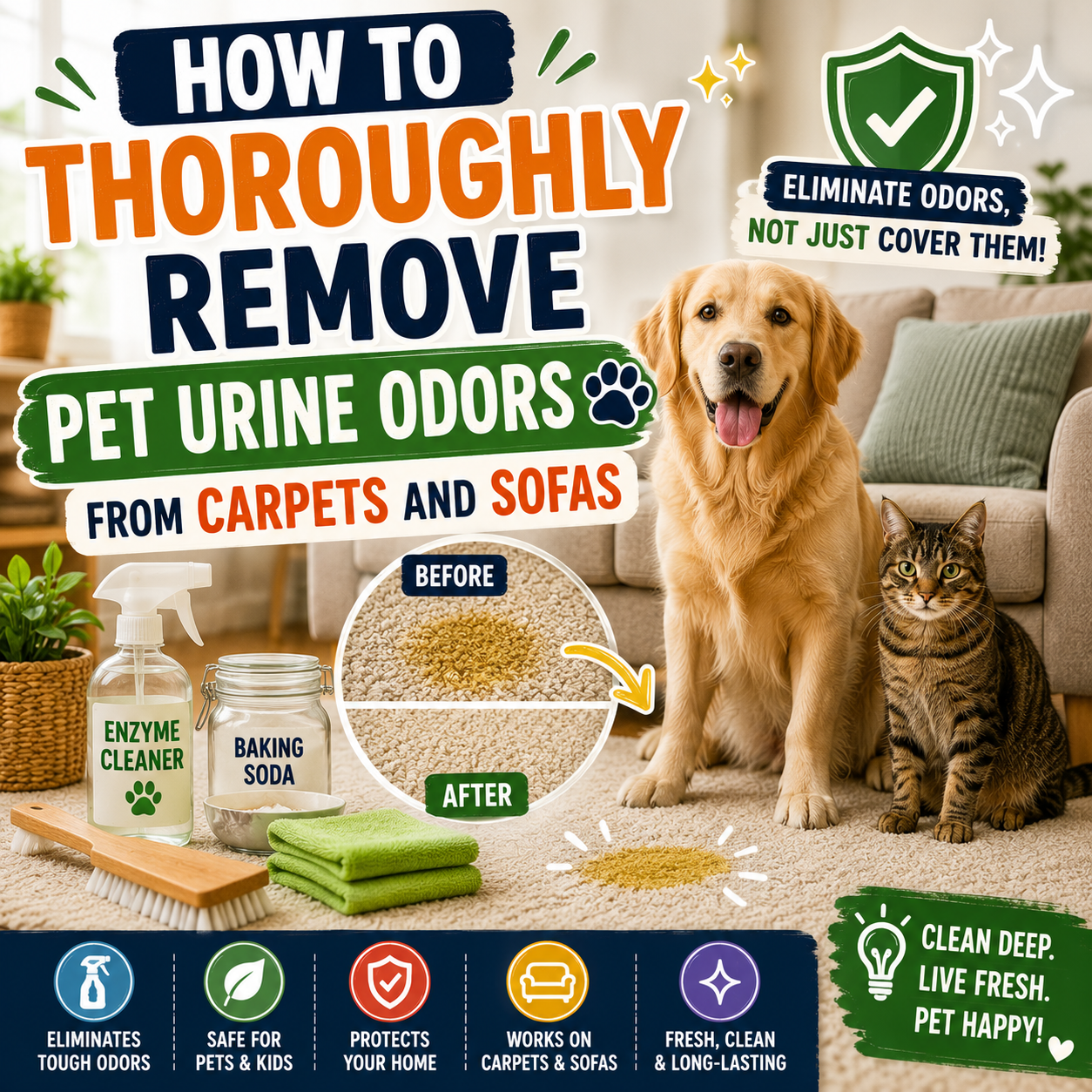
Nothing disrupts the peace of a clean home quite like the lingering smell of pet urine. Whether it’s an accident from a new puppy or an territorial marker from a cat, pet urine odor is notoriously difficult to remove because it contains uric acid crystals that resist standard household cleaners.
If you are tired of masking the smell and want to eliminate it for good, follow this professional-grade guide to cleaning your carpets and sofas.
1. The Golden Rule: Use an Enzymatic Cleaner
This is the most important step. Standard soaps, vinegar, or steam cleaners will not break down uric acid crystals. These crystals are the source of the persistent odor.
- Why Enzymes? Enzymatic cleaners contain biological agents that literally “eat” the bacteria and break down the uric acid molecules.
- Top Tip: Look for a cleaner specifically labeled “Enzymatic” or “Bio-Enzymatic.” Do not use products containing ammonia, as ammonia smells like urine to your pet and may encourage them to soil the exact same spot again!
2. Removing Odors from Carpets (Step-by-Step)
If the stain is fresh, act fast! If it’s dry, you’ll need a bit more patience.
- Blot, Don’t Rub: If the stain is wet, use paper towels or a clean white cloth to absorb as much liquid as possible. Rubbing will only push the urine deeper into the carpet fibers and padding.
- Saturate the Area: Apply your enzymatic cleaner generously. You need the solution to penetrate all the way down into the carpet pad, as that is where the odor often hides.
- The “Dwell Time”: Let the cleaner sit for the time recommended on the bottle (usually 10–15 minutes). Do not let it dry out during this time; you can cover it with a damp towel to keep it moist.
- Blot and Dry: Blot up the excess moisture with fresh towels. Place a stack of paper towels over the area and weigh it down with a heavy book for a few hours to draw out the remaining liquid from the padding.
3. Removing Odors from Sofas and Upholstery
Furniture is trickier because of the foam padding inside.
- Test for Colorfastness: Before applying any cleaner to your sofa, test it on a hidden area (like the back or underneath) to ensure it doesn’t discolor the fabric.
- The Injection Method: If you suspect the urine has soaked deep into the sofa cushion, you may need to use a syringe to inject the enzymatic cleaner directly into the padding.
- Use a Wet-Vac: If you have access to a small portable upholstery cleaner or wet-vac, use it to pull the cleaner and the dissolved uric acid out of the cushion. This is significantly more effective than just blotting by hand.
4. How to Tell if the Odor Is Gone
Your pet’s nose is thousands of times more sensitive than yours. If you can still smell a faint hint of urine, your pet can likely smell a “neon sign” inviting them to go there again.
- The Blacklight Test: Purchase a simple UV (blacklight) flashlight. Turn off the lights and scan your floors and furniture. Dried urine crystals will glow a distinct yellow or neon green under UV light, showing you exactly where you need to re-treat.
Pro-Tips for Preventing Future Accidents
- Regular Cleaning: If your pet has frequent accidents, consult your vet to rule out underlying health issues like UTIs or kidney problems.
- Training Pads: For senior pets or puppies, ensure they have easy access to appropriate toileting areas.
- Odor Neutralizers: Between deep cleans, use a pet-safe fabric refresher to keep the home smelling fresh, but remember that this is a temporary fix, not a replacement for enzymatic cleaning.
Conclusion
Removing pet urine odors doesn’t have to be a nightmare if you use the right tools. By skipping the ammonia-based cleaners and sticking to high-quality enzymatic formulas, you can reclaim your home from stubborn smells and keep your carpets and sofas looking—and smelling—brand new.