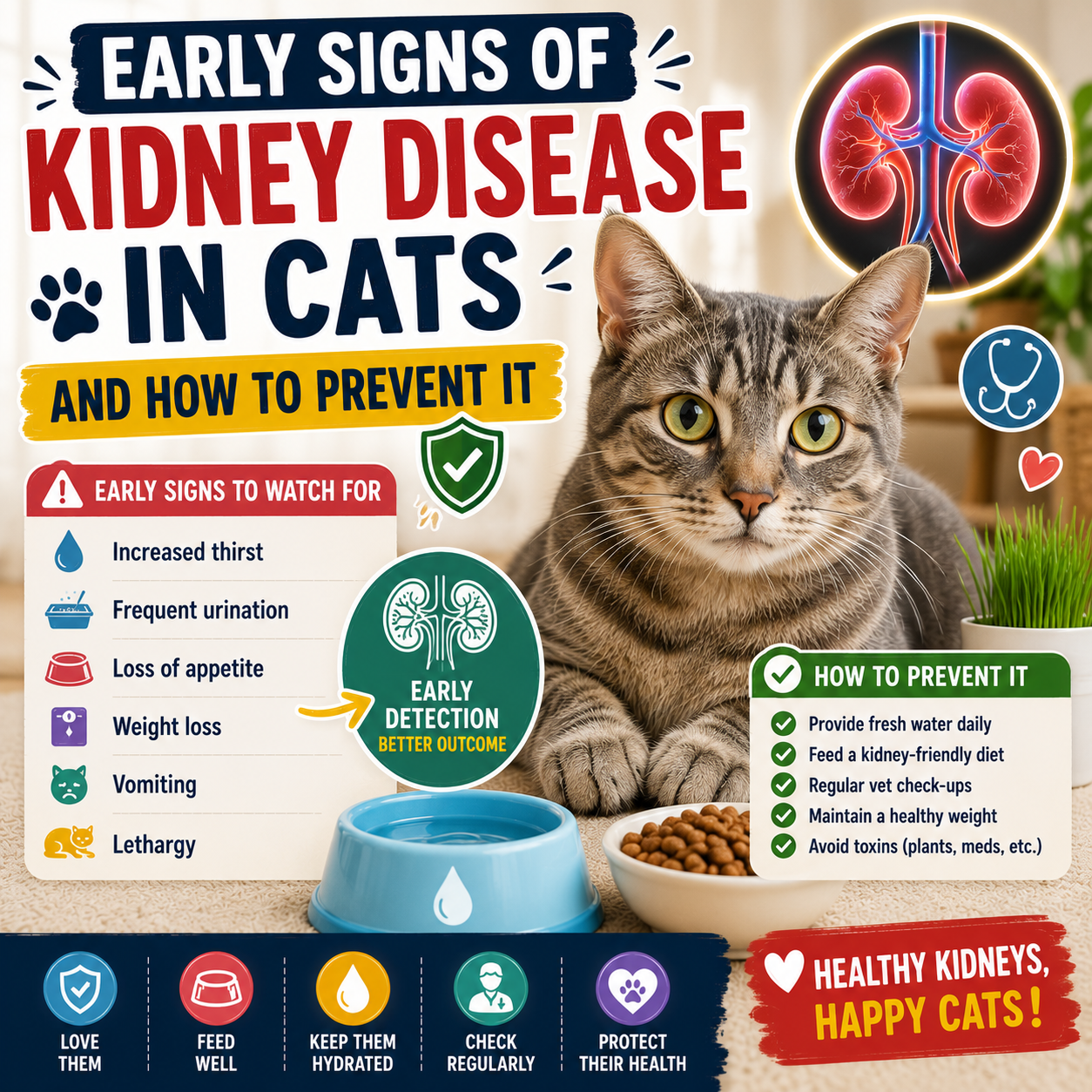
Kidney disease (Chronic Kidney Disease or CKD) is one of the most common health challenges cats face, especially as they enter their senior years. Because cats are masters at masking illness, the kidneys often lose a significant amount of function before owners notice anything is wrong.
However, recognizing the early signs of kidney disease can make a world of difference in your cat’s quality of life. By understanding what to look for and how to implement preventative care, you can help your companion stay healthy for years to come.
1. Early Warning Signs: What to Watch For
Because the kidneys act as the body’s filtration system, their decline affects the entire body. Keep a close eye on these subtle shifts in your cat’s behavior:
- Increased Thirst (Polydipsia): If you find yourself refilling the water bowl more frequently, or if you catch your cat drinking from unusual places like the bathroom faucet, take note.
- Changes in Urination: Larger or more frequent clumps in the litter box are a primary red flag.
- Subtle Weight Loss: Even if your cat’s appetite seems normal, gradual muscle loss or a thinning frame can indicate that their body isn’t processing nutrients efficiently.
- Decreased Appetite: A picky eater is common, but a sudden, consistent decrease in interest in food is a serious warning sign.
- Lethargy and Dull Coat: If your usually playful cat spends more time sleeping or appears to have a “scruffy,” unkempt coat, it may be due to feeling unwell from toxin buildup in the blood.
2. Why Early Detection Matters
Kidney damage is irreversible, but it is manageable. When detected early, your veterinarian can implement strategies—such as specialized renal diets, hydration support, and blood pressure management—that can slow the progression of the disease and significantly extend your cat’s life.
3. How to Prevent Kidney Issues (or Slow Progression)
While some kidney disease is genetic or age-related, you can take proactive steps to reduce the burden on your cat’s kidneys.
Prioritize Hydration
Water is the kidneys’ best friend.
- Switch to Wet Food: Canned food has a significantly higher moisture content than dry kibble.
- Multiple Water Sources: Use cat water fountains, which entice cats to drink more due to the moving, oxygenated water.
- Add Water to Meals: Try mixing a tablespoon of warm water into your cat’s wet food to create a “soupy” consistency.
Regular Vet Screenings
Once a cat reaches the age of seven, annual senior blood panels (including SDMA testing) are essential. These tests can often detect a decrease in kidney function long before your cat shows physical symptoms.
Environmental Enrichment
Stress has a physiological impact on a cat’s immune system. Keeping your cat mentally stimulated and providing a calm, stress-free environment helps keep their overall body health—and therefore their organ function—in better shape.
Avoid Toxic Substances
Be mindful of household hazards. Keep lilies (highly toxic to cat kidneys), essential oils, cleaning chemicals, and human medications strictly out of reach. Accidental ingestion of these items is a common cause of acute kidney injury.
Conclusion
You are your cat’s best advocate. By monitoring their drinking habits, maintaining regular check-ups, and focusing on high-quality nutrition, you can significantly lower the risk of severe complications. If you notice any of the early signs mentioned above, don’t wait—schedule a visit with your veterinarian. Early intervention is the key to a long, happy life for your feline friend.


