Bringing greenery into your home does wonders for your mental health and air quality. However, for pet owners, the “jungle aesthetic” comes with a significant responsibility. Many common houseplants are toxic to cats and dogs, and accidental ingestion can range from mild stomach upset to life-threatening organ failure.
Before you purchase your next botanical friend, check this guide to ensure your home remains a safe sanctuary for your furry companions.
Why Do Pets Eat Plants?
It’s natural for dogs and cats to explore the world with their mouths. Pets may chew on plants due to:
- Curiosity: Especially in younger pets or kittens.
- Boredom: Lack of mental stimulation can lead to destructive chewing.
- Texture: Some pets are simply attracted to the dangling leaves or crunchy stems.
- Nutritional Deficiency: Occasionally, pets seek out plants to soothe an upset stomach.
Popular Toxic Plants to Avoid
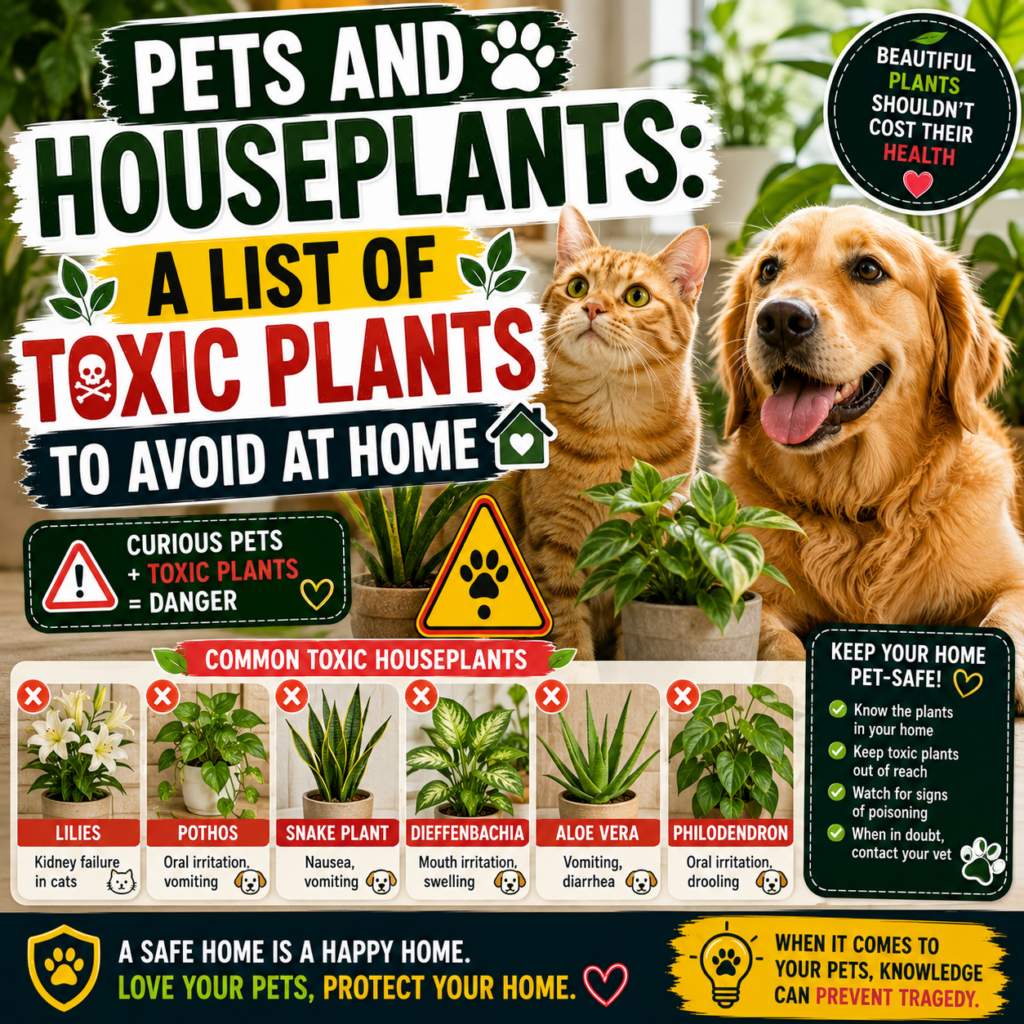
While this list is not exhaustive, these are some of the most common houseplants that you should strictly avoid if you have pets.
| Plant Name | Toxic To | Severity |
| Lilies (Lilium & Hemerocallis) | Cats | Extreme (Fatal kidney failure) |
| Sago Palm | Dogs & Cats | Extreme (Liver failure) |
| Philodendron | Dogs & Cats | Moderate (Oral irritation, vomiting) |
| Monsteras | Dogs & Cats | Moderate (Swelling of mouth/tongue) |
| Aloe Vera | Dogs & Cats | Moderate (Digestive distress) |
| Snake Plant | Dogs & Cats | Moderate (Nausea, vomiting, diarrhea) |
| Pothos | Dogs & Cats | Moderate (Drooling, oral irritation) |
The “Danger Zone”: Lilies
It is crucial to note that True Lilies (such as Easter, Tiger, and Daylilies) are lethal to cats. Even a few grains of pollen brushed onto a cat’s fur, which they then groom off, can be enough to cause rapid, fatal kidney damage. If you own a cat, it is safest to keep all varieties of lilies out of your home entirely.
Symptoms of Plant Poisoning
If you suspect your pet has ingested a toxic plant, monitor them closely for these signs:
- Gastrointestinal: Excessive drooling, vomiting, or diarrhea.
- Neurological: Lethargy, tremors, seizures, or lack of coordination.
- Oral: Swelling of the tongue, lips, or throat; difficulty swallowing.
- Behavioral: Sudden loss of appetite or refusal to drink water.
Safe Alternatives for Pet Parents
You don’t have to give up your love for plants! There are many stunning, pet-friendly options that are completely safe if your pet decides to take a nibble:
- Spider Plant (Chlorophytum comosum): Easy to care for and produces fun, hanging “spiderettes.”
- Boston Fern: Adds a lush, dramatic touch without the danger.
- Parlor Palm: A beautiful, non-toxic palm variety that is safe for both cats and dogs.
- Calathea (Prayer Plant): Known for its striking, patterned leaves that fold up at night.
- Succulents (Echeveria): Most species in this genus are non-toxic, making them great for sunny windowsills.
Tips to Keep Your Pet Safe
- Elevate Your Plants: Use hanging planters or tall plant stands that are inaccessible to your pet.
- Use Deterrents: Some pet owners use bitter apple spray on leaves to discourage chewing (always verify the spray is pet-safe).
- Provide Alternatives: Grow cat grass or wheatgrass specifically for your cat to chew on. This often satisfies their instinct and keeps them away from your houseplants.
- Keep Emergency Contacts: Keep the number of your local emergency vet and an animal poison control center saved in your phone.
Final Thoughts
Being a responsible plant owner means knowing exactly what is inside your home. If you are unsure about a specific plant, the ASPCA Toxic and Non-Toxic Plants List is an excellent, searchable resource to verify safety. When in doubt, it’s better to choose a non-toxic variety and enjoy a worry-free home with your pets.