Have you ever wondered if your pet truly understands what you’re saying? While most dogs and cats respond to basic commands like “sit” or “come,” taking the next step to teach them the names of their toys is a fantastic way to boost their intelligence, strengthen your bond, and provide hours of mental stimulation.
Teaching a pet to distinguish between a “ball,” a “rope,” and a “teddy bear” is easier than you might think. Here is your step-by-step guide to mastering this fun, rewarding training game.
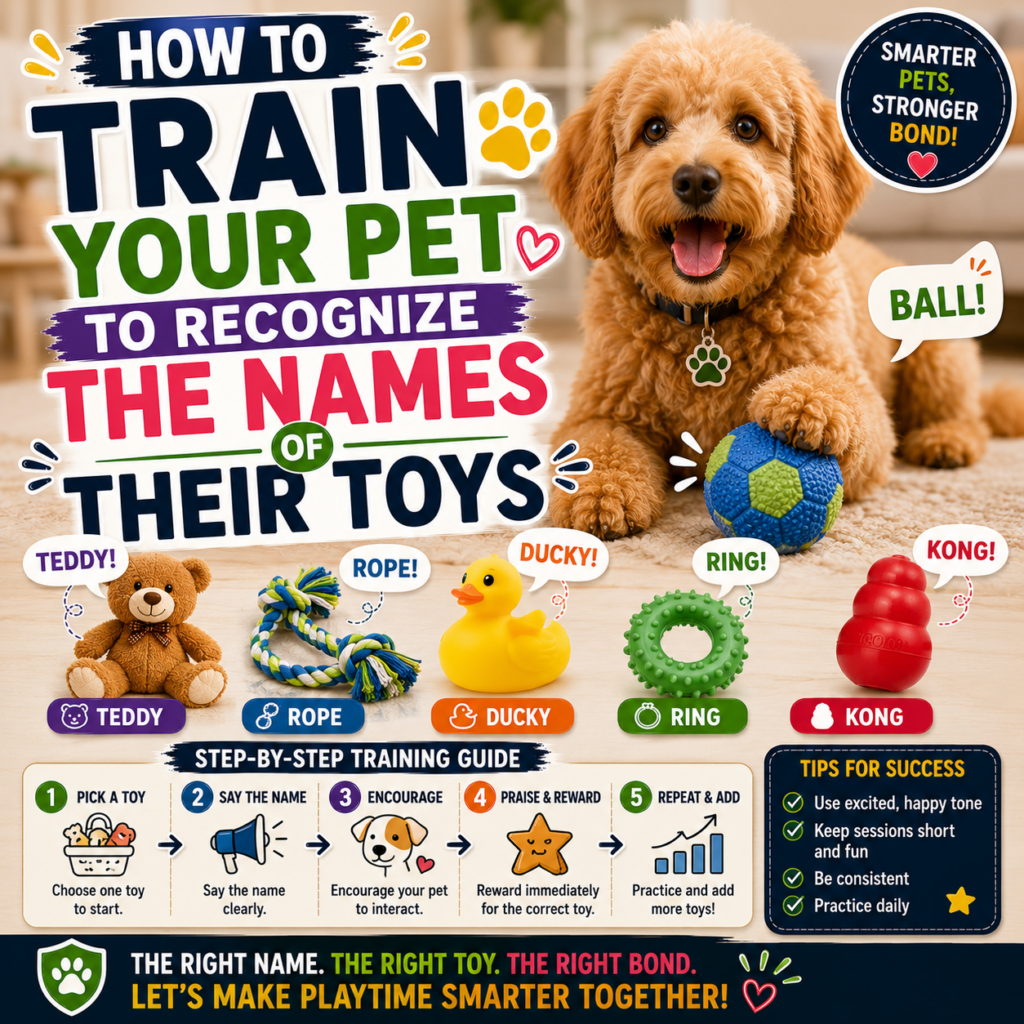
1. Choose a Simple Starting Point
Don’t overwhelm your pet by introducing all their toys at once. Start with one specific toy that they already love and show interest in.
- Pick a favorite: Choose a toy they naturally gravitate toward.
- Keep it consistent: Always use the same name for the toy. If you call it a “ball” one day and a “sphere” the next, your pet will get confused.
2. Associate the Name with the Action
The goal is to create a strong mental link between the word you say and the object your pet touches.
- The “Name-Tag” Method: When your pet picks up the toy, immediately repeat the name clearly: “Yes! Ball! Good boy/girl, you have the ball!”
- Use High-Value Rewards: Whenever they pick up the correct toy after you’ve named it, offer a high-value treat. Reinforcement is key to making the connection stick.
3. The “Which One?” Game
Once your pet consistently responds to one toy name, it’s time to move to the next level: identifying the correct item among a group.
- Place two toys apart: Put Toy A on one side of the room and Toy B on the other.
- Give the command: Say, “Bring me the ball!”
- Guide them if needed: If they look at or move toward the correct toy, use an excited, encouraging tone. If they go for the wrong one, calmly redirect them without scolding.
- Reward the success: The moment they pick up the correct toy, celebrate with treats, play, and praise.
4. Master the “Search” Command
Once your pet has mastered recognizing their toys in a simple setup, you can make the game more challenging:
- Hide the toy: Place the named toy behind a chair, under a rug, or in another room.
- Use the command: Ask your pet to “Find the [Toy Name].”
- Build confidence: Start with easy hiding spots so they don’t get frustrated, and gradually increase the difficulty as they get better.
Pro Tips for Success
- Keep Training Sessions Short: Aim for 5–10 minute sessions. You want the experience to be fun, not like a chore.
- Stay Enthusiastic: Your pet reads your emotions. If you are excited, they will be excited to participate!
- Patience is Key: Some pets learn faster than others. Don’t rush the process; if they aren’t getting it, go back to the previous step and reinforce the basics.
- Use Clear Enunciation: Use a distinct, sharp tone for toy names so they stand out from normal conversation.
Why Is This Training Important?
Beyond just being a “party trick,” teaching your pet the names of their toys offers several benefits:
- Mental Stimulation: It challenges their brain, which helps tire out energetic pets just as much as physical exercise.
- Bonding: It requires focused, one-on-one interaction, which deepens the relationship between you and your companion.
- Vocabulary Growth: This training can be a gateway to teaching your pet even more complex words and commands in the future.
Conclusion
Teaching your pet to recognize the names of their toys is an incredibly rewarding journey. It turns playtime into a structured, intellectual exercise that satisfies your pet’s natural curiosity. So, grab their favorite toy, clear a space on the floor, and get ready to be amazed at just how much your pet can learn!