Hamsters are incredibly delightful pocket pets, famous for stuffing their expandable cheek pouches to maximum capacity with anything they can find. While watching a hamster pack away treats is highly entertaining, it also comes with a big responsibility.
Because hamsters are so tiny, their digestive systems are exceptionally sensitive. A food that is perfectly healthy for a human—or even a dog—can cause severe gastrointestinal distress, obesity, or toxic reactions in a hamster.
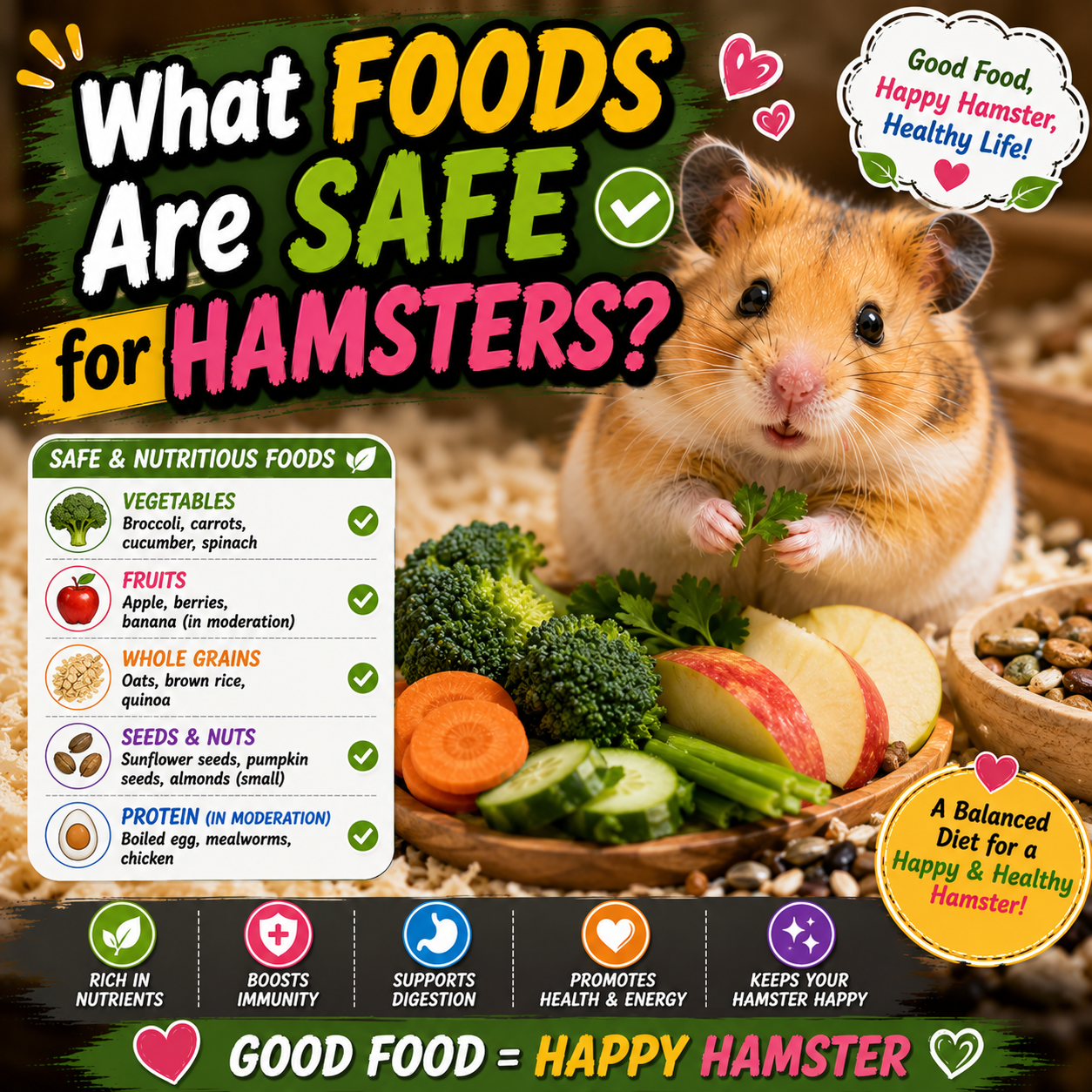
So, what foods are safe for hamsters? Let’s break down the ultimate hamster-safe food matrix, exploring their core dietary needs, safe fresh treats, and the dangerous items you must keep far away from their enclosures.

The Core Foundation: High-Quality Commercial Diets
Before raiding your kitchen pantry, it is important to remember that fresh fruits and vegetables should only be treated as a supplement. A hamster’s daily baseline diet should always consist of two main elements:
- High-Quality Lab Blocks: These are uniform pellets formulated by veterinarians. They provide a precise balance of proteins (15% to 19%), healthy fats, and essential fibers. Pellets are crucial because they prevent “selective feeding”—the habit where a hamster picks out only the fatty sunflower seeds from a mix and leaves the healthy parts behind.
- Premium Seed Mixes: A high-quality seed mix adds vital behavioral variety. Look for blends packed with milo, millet, barley, and occasional oats to encourage their natural foraging instincts.
Safe Fresh Fruits & Vegetables (The Weekly Supplement)
Fresh greens and fruits provide fantastic hydration, vitamins, and antioxidants. However, because fresh foods can cause loose stools if overfed, limit fresh treats to a small portion (roughly the size of a postage stamp) just 2 to 3 times a week.
1. Crunch and Leafy Green Veggies
- Broccoli & Cauliflower: High in fiber and fantastic for your hamster’s continuously growing teeth to chew on.
- Carrots: Packed with Vitamin A. Shred them into small pieces. (Note: Feed sparingly to Dwarf hamsters as they are high in natural sugars).
- Cucumbers: Incredibly refreshing and hydrating during hot summer days.
- Romaine Lettuce & Spinach: Excellent dark greens that provide solid iron and vitamins. (Avoid Iceberg lettuce entirely, as it is mostly water and causes severe diarrhea).
- Peas & Zucchini: Highly digestible, safe, and nutritious options.
2. Sweet Fruit Treats
Fruits are highly prized by hamsters, but due to their high fructose content, treat them like candy:
- Apples: Safe and crisp. Crucial: Always remove 100% of the seeds, as apple seeds contain trace amounts of toxic cyanide.
- Bananas: A fan favorite! Feed in tiny pea-sized bites, as sticky banana can get stuck inside their dry cheek pouches.
- Blueberries & Strawberries: Packed with cell-protecting antioxidants.
Safe Healthy Proteins: The Muscle Builders
Wild hamsters are true omnivores, not herbivores. They actively hunt down insects in the wild to supplement their protein intake. You can supercharge your pet’s protein levels—especially for growing juveniles or pregnant mothers—with these safe snacks:
- Dried or Live Mealworms: The ultimate hamster superfood. They absolutely love the crunch and the heavy protein hit.
- Plain Boiled Chicken: Completely unseasoned (no salt, garlic, or oil), shredded into tiny threads.
- Hard-Boiled Eggs: A small, pea-sized piece of the white or yolk is a safe, nutrient-dense luxury treat.
Toxic Foods to Avoid Completely ❌
Some everyday kitchen staples contain chemical compounds that are flat-out fatal to a hamster’s tiny cardiovascular or digestive systems.
- Onions, Garlic, and Leeks: Contain thiosulfate, which destroys a hamster’s red blood cells, causing acute anemia.
- Raw Kidney Beans: Highly toxic to rodents unless thoroughly cooked.
- Citrus Fruits (Oranges, Lemons, Grapefruits): The extreme acidity severely irritates a hamster’s stomach lining, leading to painful ulcers.
- Almonds (Specifically Bitter Almonds): Contain cyanogenic glycosides, which can cause rapid cyanide poisoning.
- Chocolate & Sticky Candies: Chocolate contains toxic theobromine. Sticky candies or peanut butter can permanently glue their expandable cheek pouches shut, causing fatal infections.
The Perfect Daily Menu Setup
To simplify your feeding routine, follow this easy dietary structure:
Step 1: Daily Baseline ──► 1 to 2 tablespoons of premium Lab Blocks + Seed Mix
Step 2: Hydration Lift  ──► Fresh, clean water changed daily in a siphon bottle
Step 3: Bi-Weekly Pop   ──► A postage-stamp-sized salad (e.g., 1 blueberry + 1 broccoli floret)
Pro Tip: Hamsters are hardwired hoarders. Whenever you feed fresh fruits or vegetables, inspect their bedding nests the next day. Hamsters will often bury fresh food underground where it can quickly mold and harbor dangerous bacteria. Always discard uneaten fresh pieces within 24 hours!
Conclusion: A Balanced Diet for a Happy Pocket Pet
Feeding your hamster a safe, varied diet is the single best way to maximize their brief but beautiful 2 to 3-year lifespan. By keeping their core menu centered around high-protein lab blocks, treating them to small, crunchy carrot or broccoli bites, and keeping toxic traps like onions and citrus far away, you will ensure your chubb-cheeked friend stays active, alert, and beautifully fluffy.
Keep their portions measured, track their secret burrows for rotting food, and enjoy the magical bond of caring for a thriving pocket pet!