When you bring a pet turtle home, your first instinct might be to pick up a container of standard commercial pellets from the pet store. While high-quality pellets offer a solid nutritional foundation, they are only one piece of the puzzle.
In the wild, most adult turtles are dedicated omnivores or herbivores. Offering a vibrant variety of fresh vegetables is essential to mimic their natural foraging habits, provide vital dietary fiber, and deliver the specific vitamins needed to keep their shells rock-hard and their skin healthy.
However, a turtle’s digestive system processes nutrients very differently than mammals. Feeding the wrong vegetable can block calcium absorption and trigger severe illnesses.
So, what vegetables can turtles eat safely? Let’s unpack the ultimate turtle-safe veggie list and learn how to build the perfect salad for your shelled friend.
Dietary Math: Age and Species Matter 🐢
Before raiding your refrigerator, you must identify your turtle’s specific age and species. Their nutritional requirements shift drastically over time:
- Juvenile Turtles (Under 1 Year Old): Young turtles are growing rapidly and require a diet heavy in proteins (roughly 70% protein to 30% greens) to build muscle and bone density.
- Adult Turtles (Over 1 Year Old): As turtles mature, their metabolism slows down. Adult aquatic turtles (like Red-Eared Sliders) should transition to a diet composed of 50% to 75% fresh vegetables. Box turtles and tortoises require an even higher plant ratio.
The Best Daily Leafy Greens: The Core Matrix
Leafy greens should make up roughly 80% of your turtle’s total vegetable intake. Look for dark, fibrous greens that have an optimal calcium-to-phosphorus ratio:
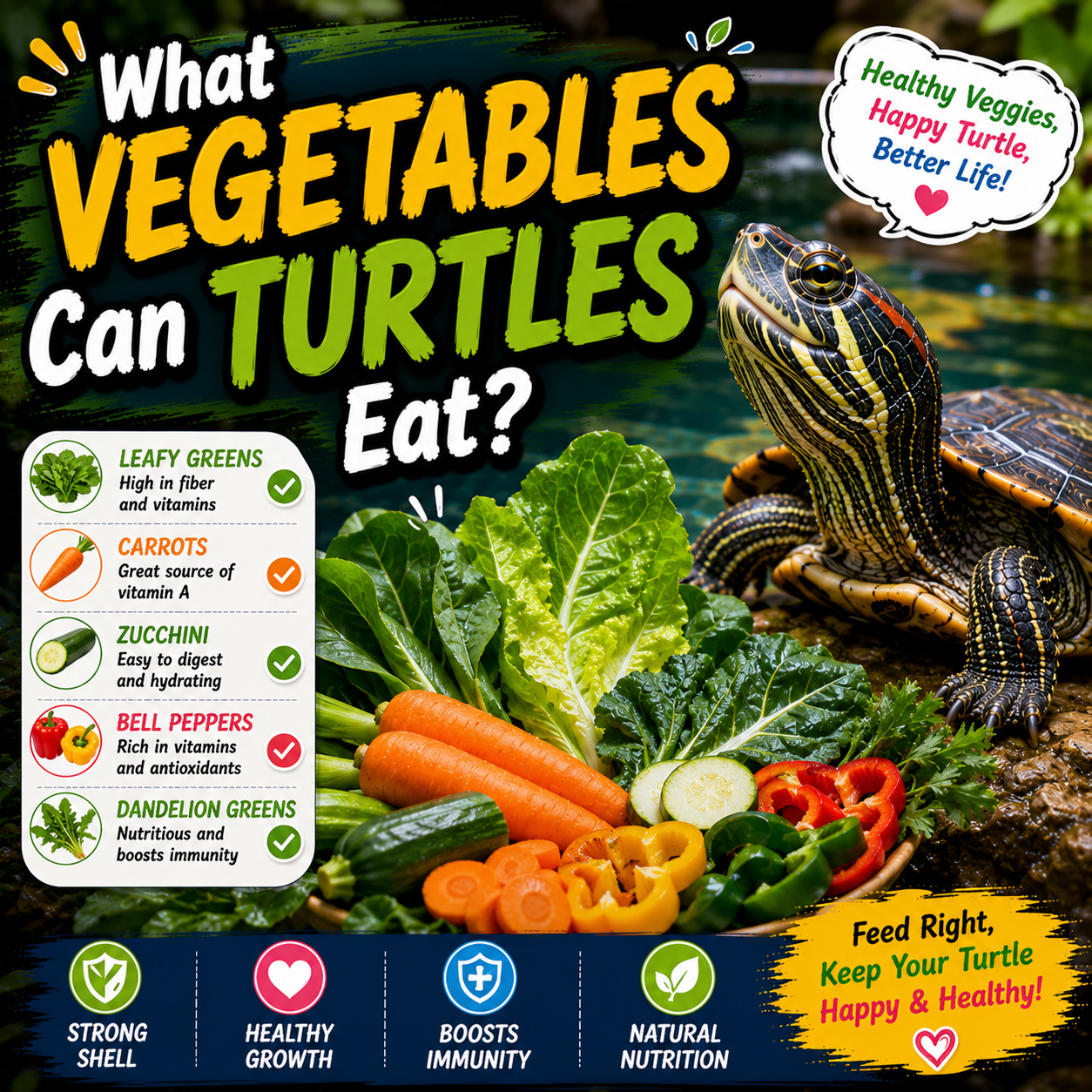
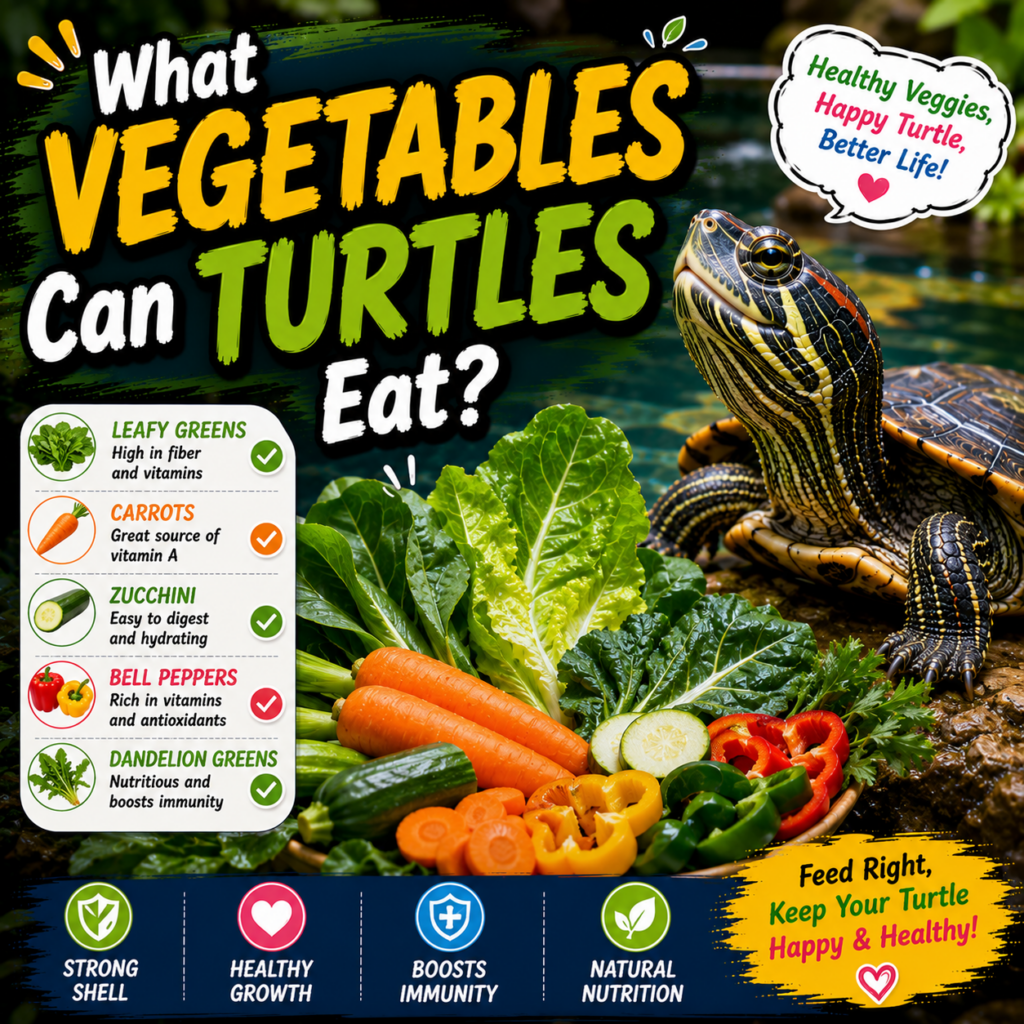
- Dandelion Greens: Arguably the single best green you can feed a turtle. They are exceptionally high in calcium, iron, and Vitamin A.
- Romaine and Green Leaf Lettuce: Fantastic for daily hydration and crunch. (Note: Avoid Iceberg lettuce entirely, as it contains almost zero nutritional value and causes diarrhea).
- Turnip Greens and Mustard Greens: Highly nutritious options packed with essential minerals.
- Escarole and Endive: Perfect structural greens that add great variety to their daily salad bowl.
- Aquatic Plants (Anacharis, Water Hyacinth, Duckweed): If you have an aquatic turtle, dropping live floating plants directly into their tank simulates wild foraging perfectly and provides excellent fiber.
Crunchy Veggies: Feed in Moderation (Treats)
These denser vegetables are safe and highly enjoyed, but they should only make up about 20% of their salad because they are richer in sugars, starches, or water content.
- Carrots: Packed with Beta-Carotene (Vitamin A), which prevents painful eye infections in turtles. Feed them raw in thin, ribbon-like shavings or steam them slightly so they are easy to chew.
- Bell Peppers: Green, red, and yellow bell peppers are safe, colorful treats packed with Vitamin C. (Always slice them into bite-sized strips).
- Squash and Zucchini: Shredded butternut squash, yellow squash, or zucchini cubes are highly digestible and safe.
- Cucumber: Incredibly hydrating during hot summer months, but feed sparingly as too much water can loosen their stools.
Vegetables to Avoid completely ❌
Some household vegetables contain toxic compounds, cause extreme bloating, or carry high levels of oxalates. Oxalates are dangerous because they bind to calcium, preventing your turtle’s body from absorbing it, which directly triggers Metabolic Bone Disease (MBD).
- Iceberg Lettuce: Completely devoid of nutrients; causes digestive upset.
- Spinach, Chard, and Beet Greens: High in oxalates that block vital calcium absorption.
- Rhubarb: The entire plant is highly toxic to reptiles.
- Onions and Garlic: Cause severe gastrointestinal irritation and blood issues.
- Wild Mushrooms: Never feed unidentified fungi picked from the garden.
The Ultimate Turtle Salad Blueprint
To make feeding effortless, adhere to this balanced preparation structure:
Step 1: Base Layer (80%) ──► Chop dark leafy greens (Dandelion, Romaine, Endive)
Step 2: Accent Layer (20%) ──► Grate or shred crunchy treats (Carrot ribbons, Bell peppers)
Step 3: Micronutrient Boost ──► Dust lightly with a high-quality Calcium + D3 powder
Pro Feeding Tips
- Chop to Fit: Always slice or shred vegetables into pieces smaller than the space between your turtle’s eyes to prevent choking.
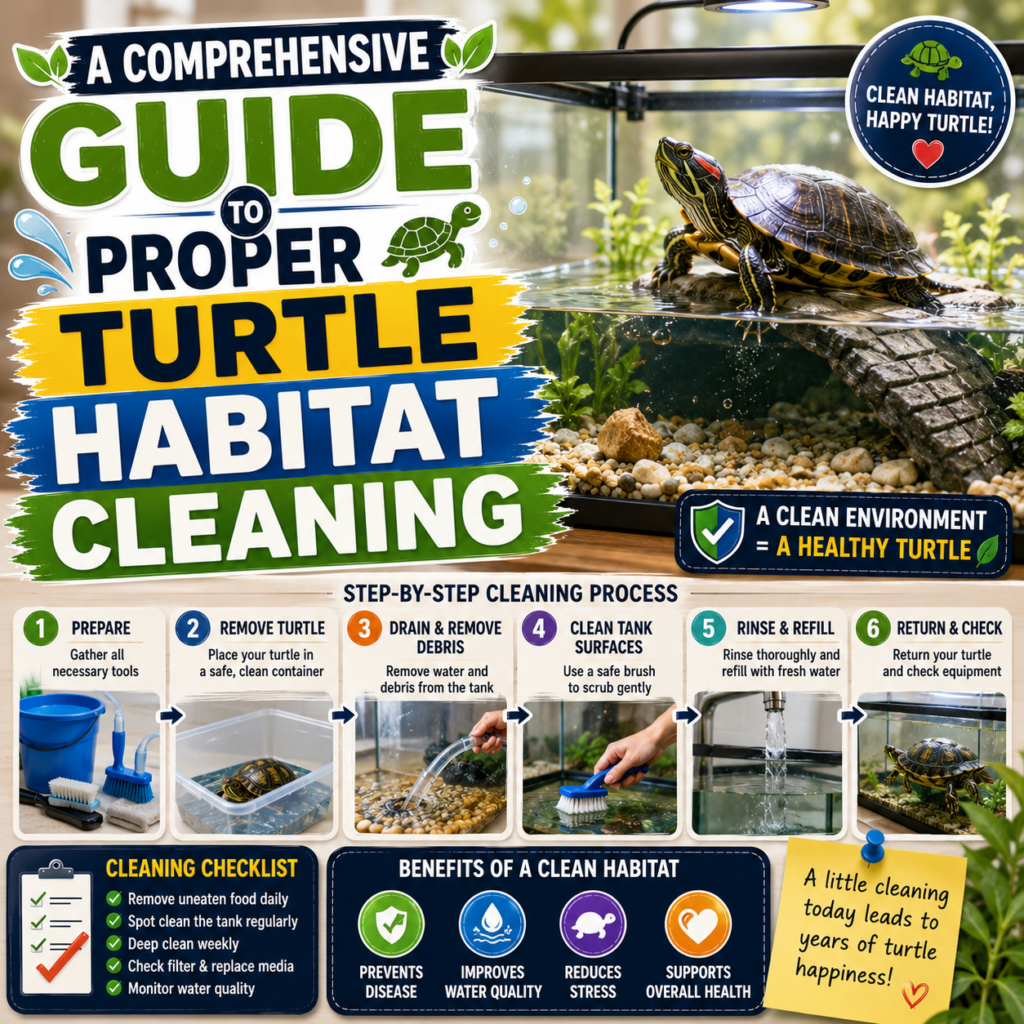
- The Water Challenge: Aquatic turtles prefer to eat underwater. Simply drop their leafy greens directly into the tank and let them float. Use a pool skimmer to remove any uneaten pieces after 6 to 12 hours so they don’t rot and ruin your water clarity.
Conclusion: A Colorful Diet for a Century of Life
Feeding fresh vegetables is one of the most rewarding ways to interact with your pet turtle and keep their habitat engaging. By centering their meals around safe daily greens like dandelion and romaine, adding a pop of color with shredded carrots, and strictly avoiding high-oxalate traps like spinach, you will give your prehistoric companion the exact biological tools they need to live a long, vibrant, and healthy life!