
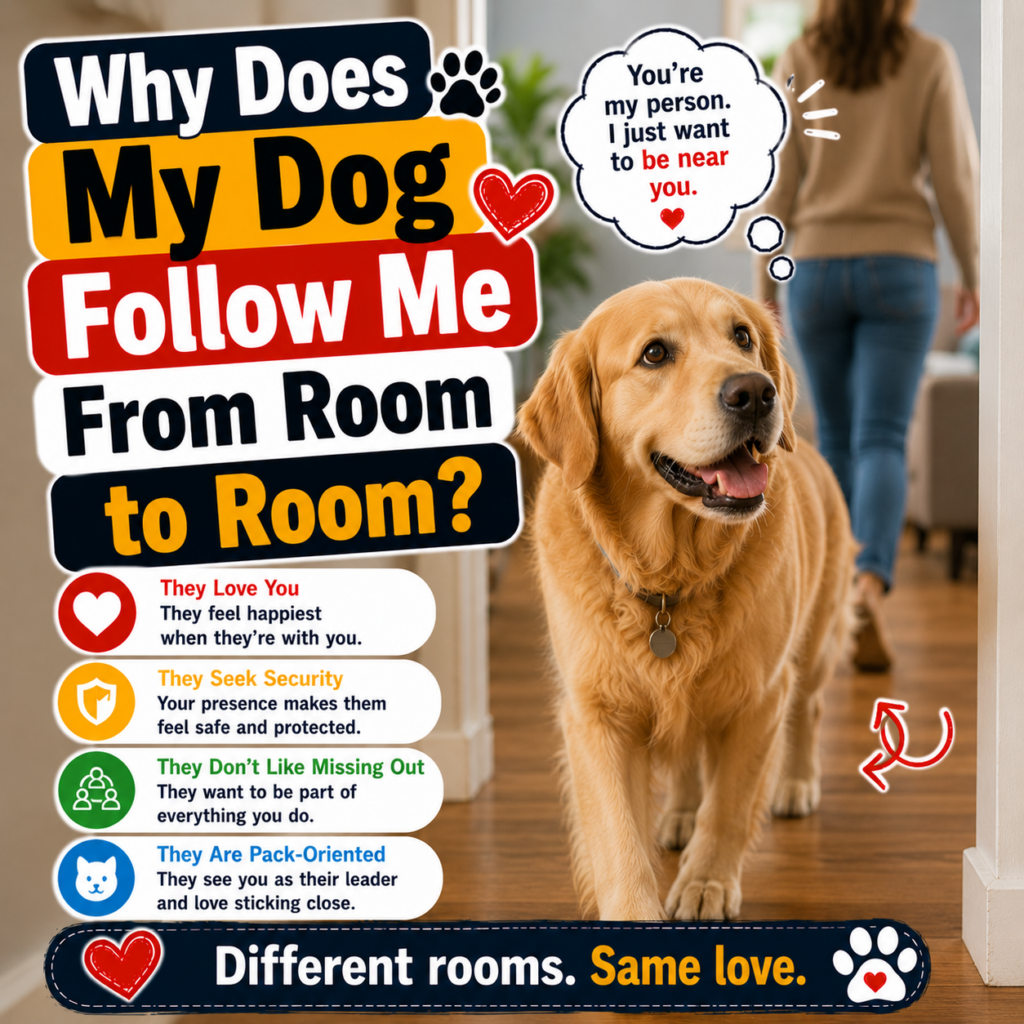
You get up from the couch to grab a glass of water, and you immediately hear the rhythmic patter-patter of paws on the floor behind you. You walk into the kitchen, turn around, and find your dog sitting right by your feet. You move into the hallway, head toward the bathroom, and close the door—only to see two dark paws slide under the crack or hear a soft, inquiring sigh from the other side.
Whether you are working in your home office, folding laundry, or simply moving from the bedroom to the living room, having a dog that follows you from room to room like a permanent “velvet shadow” is a universally relatable experience.
While it is incredibly flattering and heartwarming, it also leaves many pet parents asking a deeper question: Why does my dog follow me from room to room? Are they constantly anxious, are they just begging for a treat drop, or is there an ancient evolutionary blueprint driving this endless surveillance?
Let’s look into the fascinating world of canine psychology and pack biology to uncover the truth.
1. The Ancestral Pack Mentality: Staying Synced with the Leader
To understand why your pup tracks your every step, we have to look back at their wild ancestors. Wolves and wild dogs are cooperative pack animals that rely entirely on group cohesion for survival. In a wild pack, moving away from the group or losing sight of the leader is incredibly dangerous—it leaves an individual vulnerable to rival packs or large predators.
When you bring a dog into your home, your human family becomes their default pack.
Because your dog views you as their trusted leader, provider, and primary protector, their ancient evolutionary programming tells them to stay physically synced with you. When you move to a new room, their instinctual reflex fires, telling them: “The leader is changing locations; I must move with them to keep the pack unified and safe.”
2. Operant Conditioning: Tracking the “Reward Drop”
Dogs are absolute geniuses when it comes to observing human behavior. They don’t just watch you move; they log every single action you take into a permanent, highly sophisticated mental database.
Through a psychological process called operant conditioning, your dog has learned that staying close to you yields massive real-time rewards.
Think about your daily routine. When you walk into the kitchen, it often results in a delicious treat or a piece of cheese dropping from the counter. When you head toward the front door, it might mean an exciting walk around the neighborhood. Even when you just sit at your desk, you might reach down to offer a comforting scratch behind their ears. Because being near you is the most rewarding place in the entire house, your dog simply refuses to miss out on a potential lottery win!
At a Glance: Decoding Your Dog’s Room-to-Room Tracking
How your dog behaves while they follow you can tell you exactly what resource or emotional reassurance they are looking for.
| Canine Behavior | The True Meaning in Dog Language | The Root Psychological Motivation |
| Walking calmly beside you, relaxed tail wag, soft eyes. | “I am completely content just being part of your daily progression.” | Healthy Pack Bonding: They enjoy your company and find deep comfort in your proximity. |
| Staring intensely at your hands, sitting instantly when you stop. | “I am highly alert and waiting for you to drop a resource or initiate play.” | Reward Expectation: They have associated your movement with a treat, food, or a toy. |
| Pacing anxiously, whining, panting, or trembling if a door closes. | “I feel intensely vulnerable and panicked when I lose sight of you.” | Hyper-Attachment / Separation Anxiety: Their survival instincts are misfiring due to stress. |
3. The Power of “Imprinting” and Human Anchors
If you raised your dog from early puppyhood, their shadow-like behavior is deeply tied to a biological phenomenon known as imprinting. Between the ages of 3 and 16 weeks, a puppy’s brain undergoes massive development where they identify their primary caretaker as their ultimate mother figure and emotional anchor.
Even as fully grown adult dogs, this psychological mapping remains active.
Furthermore, whenever your dog locks eyes with you or sits close to your feet, both of your brains experience a massive surge of oxytocin (the bonding and love hormone). This chemical rush lowers their heart rate and reduces stress. They follow you from room to room simply because your physical presence acts like a living, breathing security blanket that keeps their emotional baseline calm and balanced.
💡 Is It Love or Separation Anxiety? How to Spot the Difference
While having a dedicated canine shadow is beautiful, there is a fine line between healthy companionship and separation anxiety.
- Healthy Following: Your dog follows you casually but can easily settle down, chew on a toy, or fall asleep in another room if you are busy or close a door for a few minutes.
- Anxious Attachment: Your dog panics the moment a wall blocks their view. They whine frantically, scratch at the bathroom door, pant heavily, or engage in destructive behaviors when left alone.
- The Training Fix: If your dog struggles with hyper-dependence, introduce gentle boundaries. Use a strict “Place” command to train them to lie down on a designated mat or bed in the living room while you walk into the kitchen. Reward them with a high-value, long-lasting treat—like a frozen KONG stuffed with peanut butter—only when they remain calm and quiet in their own space.
4. Pure Canine Curiosity: Checking Your Agenda
Dogs are intensely curious, social creatures that experience cognitive boredom if left alone in a quiet room. To your dog, your human movements are the most interesting, unpredictable show in the entire house!
When you get up from the sofa, your dog doesn’t know if you are going to fold laundry, open a package, look out the window, or start a fun activity. They follow you because they want to analyze your agenda using their superpowered senses. To their brain, turning into your personal bodyguard is an excellent way to burn up cognitive energy and stay mentally stimulated throughout the day.
The Bottom Line
When your dog follows you from room to room, they aren’t trying to invade your privacy or crowd your space. They are simply acting on beautifully ancient pack instincts, displaying their deep emotional attachment, and choosing to stay close to their favorite human in the world. By recognizing their subtle body language cues and setting healthy, loving boundaries around your private spaces, you can enjoy a beautifully balanced bond with your loyal canine shadow!