
It is a daily routine that plays out in almost every pet-owning household. You stand up, head down the hallway, and step into the bathroom. As you close the door to claim a brief moment of privacy, you immediately hear a soft thump against the baseboards. If you look down, you might spot two furry paws sliding underneath the crack, hear a soft inquiring chirp from your cat, or notice your dog sitting in a rigid, dedicated stakeout right on the bath mat.
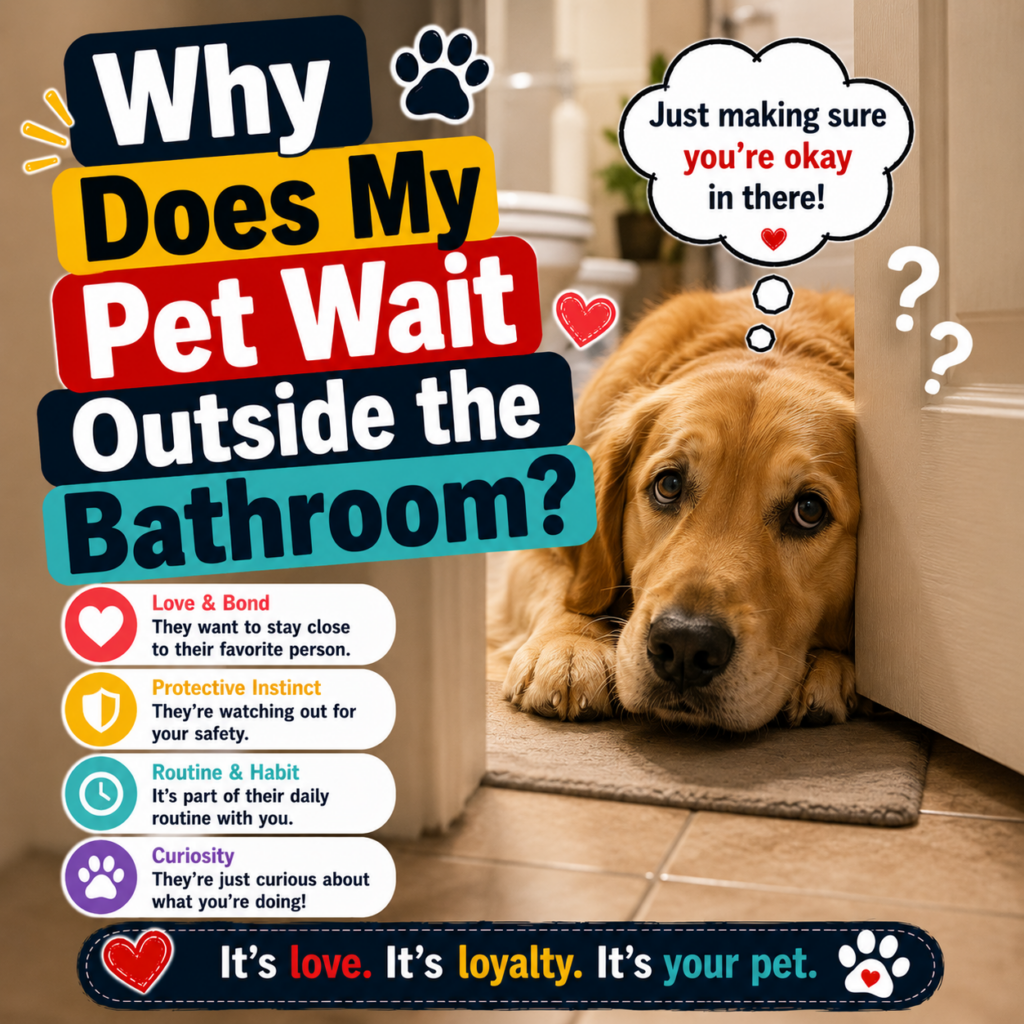
While it is undeniably endearing and occasionally hilarious, it leaves many owners asking the ultimate question: Why does my pet wait outside the bathroom?
Do they think you are trapped, are they tracking your schedule, or is there a deep evolutionary blueprint driving this endless bathroom surveillance? Let’s dive into the fascinating world of animal psychology and pack biology to find out.
1. The Canine Lens: The Vulnerability of a “Pack Transition”
If your dog is the one staging a silent protest outside the closed door, their behavior is deeply rooted in thousands of years of shared history and ancestral pack dynamics.
In the wild, wolves and wild dogs live in tightly knit family units where survival depends entirely on group cohesion. To a canine brain, separation from the pack signifies immediate danger. Furthermore, dogs do not possess a concept of “private bathroom time.” In the wild, relieving oneself is the exact moment an animal is most vulnerable to an ambush from a predator.
When you close that door, your dog isn’t trying to invade your space; they are acting as your personal bodyguard. They stay posted outside the door to monitor the perimeter, ensuring their trusted leader remains safe from perceived threats until the pack can successfully reunite.
2. The Feline Motive: Eliminating Territorial Blindspots
Anyone who owns a cat knows they treat closed doors as a personal insult. If you shut the bathroom door, your cat might scratch furiously at the wood or vocalize their deep disapproval.
This behavior is driven by a mixture of territorial ownership and intense feline curiosity.
- The Barrier Problem: Cats do not view your house as just a building; they view it as their established hunting territory. A closed door creates a sudden, unmapped blindspot in their kingdom. Their instincts tell them that a hidden threat or a highly valuable resource could be developing behind that wood, and they need to monitor it immediately.
- The Scent Matrix: The bathroom is packed with your highly concentrated personal scent profile (from towels, laundry, and running water). Because cats map out their safe zones using pheromones, they are naturally drawn to this room because it smells intensely like their primary human parent.
At a Glance: Decoding Your Bathroom Bodyguard by Species
Every domestic animal utilizes a unique psychological framework to process your brief moments of isolation.
| Pet Type | Core Psychological Driver | Signature Bathroom Body Language | What It Truly Means |
| Dogs | Pack Proximity & Safety | Sitting or lying flat with their nose pressed tightly against the door crack; a heavy sigh. | “I am guarding the entrance to ensure my leader returns safely to the pack.” |
| Cats | Territorial Control & Curiosity | Sliding paws under the door, meowing loudly, or jumping onto the counter the second you open it. | “You have locked me out of my territory. I must analyze what you are doing inside.” |
| Birds (Parrots) | Flock Bond Dynamics | Pacing their perch nearby or letting out a high-pitched flock call. | “The flock has been fragmented. I am calling out to verify your exact coordinates.” |
3. The Power of the “Vulnerability Mirror”
Have you ever noticed that when your dog or cat goes to use the bathroom outside or in their litter box, they often look up to lock intense eye contact directly with you?
In animal psychology, this is a profound display of trust. Because they feel highly vulnerable in that physical state, they look at you to ensure you are scanning the environment for danger.
When you go into the bathroom, they are simply mirroring this exact evolutionary courtesy back to you. They understand that a transition is happening inside that room, and their defensive programming tells them to stay alert on the other side of the threshold until you emerge healthy and intact.
💡 Is It Affection or Separation Anxiety?
While having a dedicated bathroom shadow is a beautiful testament to your bond, pet parents must monitor the line between healthy love and true separation anxiety.
- Healthy Waiting: Your pet sits or lies down calmly outside the door, treats it like a peaceful rest break, and wanders back to their toys if you take a few extra minutes.
- Hyper-Anxious Distress: Your pet panics the moment the latch clicks. They whine frantically, pant heavily, salivate, or actively dig up the carpet or scratch the door frame to force their way in.
- The Fix: If your pet struggles with hyper-attachment, practice short “ghost door” intervals. Close the bathroom door for just 10 seconds, walk out calmly without making a big fuss, and reward them with a small treat only when they remain quiet and relaxed on their mat.
4. Simple Pattern Recognition: Expecting the Next Event
On a final, purely practical level, pets are world-class observers of human routine. They follow you into the hallway and wait outside the door because they know what happens right after the bathroom break.
For many pet parents, a morning bathroom visit is followed immediately by walking into the kitchen to scoop out fresh wet food, rattling a bag of treats, or grabbing a leash for a walk around the neighborhood. Your pet has cracked this behavioral code completely. They aren’t just waiting out of curiosity—they are staying at the front of the line so they are ready the exact microsecond the reward cycle begins!
The Bottom Line
When your furbaby or feathered companion sets up a dedicated camp outside your bathroom door, it isn’t an act of defiance or an attempt to crowd your lifestyle. It is a beautiful display of ancient pack alignment, deep environmental trust, and pure, unconditional devotion. They view you as their entire world, their pack leader, and their ultimate protector. Accept the sweet compliment—it is just another wonderful reminder that you are deeply loved, fiercely protected, and never truly alone under your own roof!