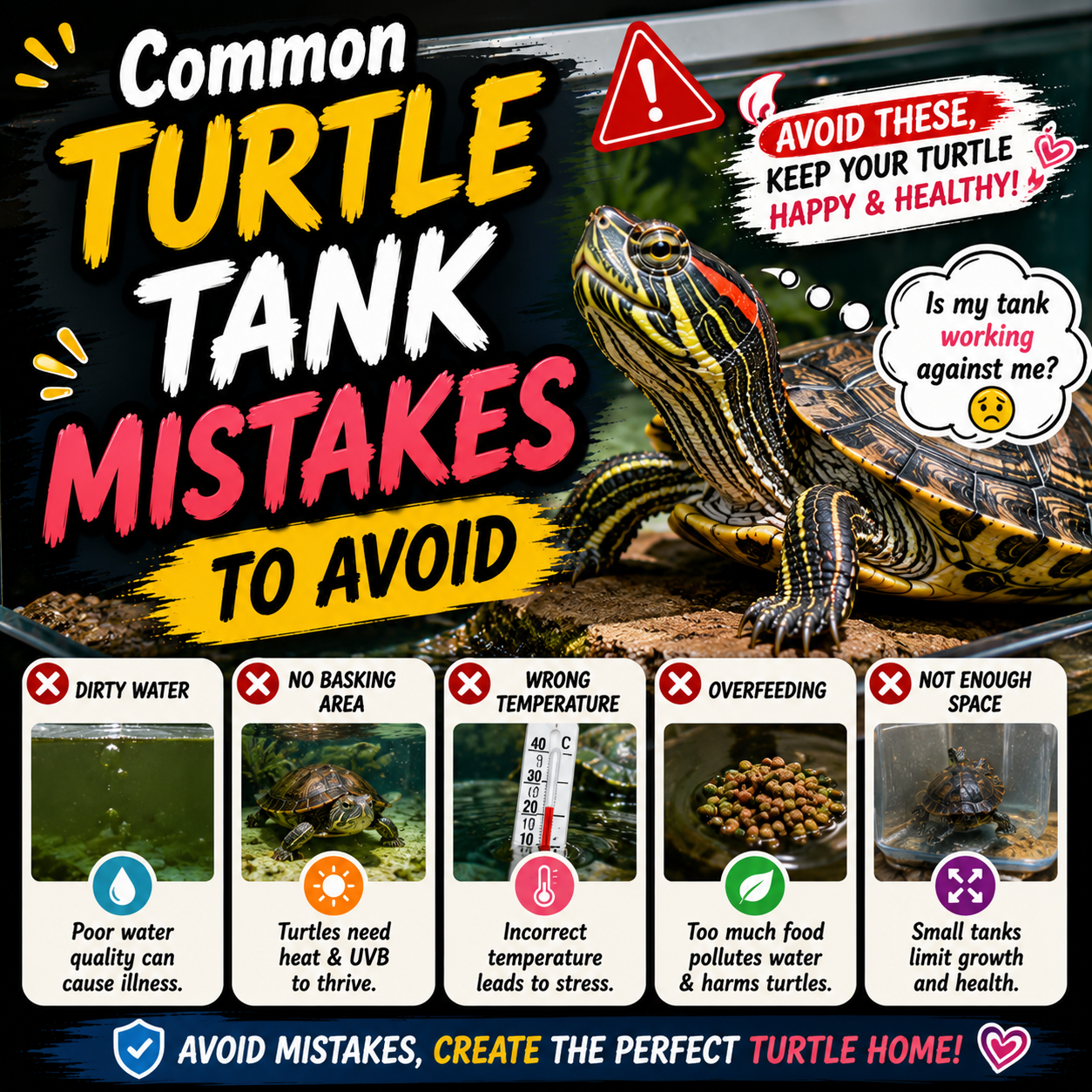
Turtles are incredibly popular pets, admired for their hardy nature, prehistoric charm, and long lifespans. However, setting up a proper home for an aquatic turtle is far more complicated than most beginner keepers realize. Many pet stores still sell tiny plastic bowls or inadequate setups that doom these sensitive reptiles to a life of chronic stress and illness.
In reality, an aquatic turtle requires a heavily engineered environment to simulate their wild habitats. Even well-meaning owners can make critical layout mistakes that directly impact their pet’s health.
Whether you are setting up your first aquarium or reviewing an existing one, avoiding these 6 common turtle tank mistakes will ensure your shelled companion lives a clean, vibrant, and incredibly long life.
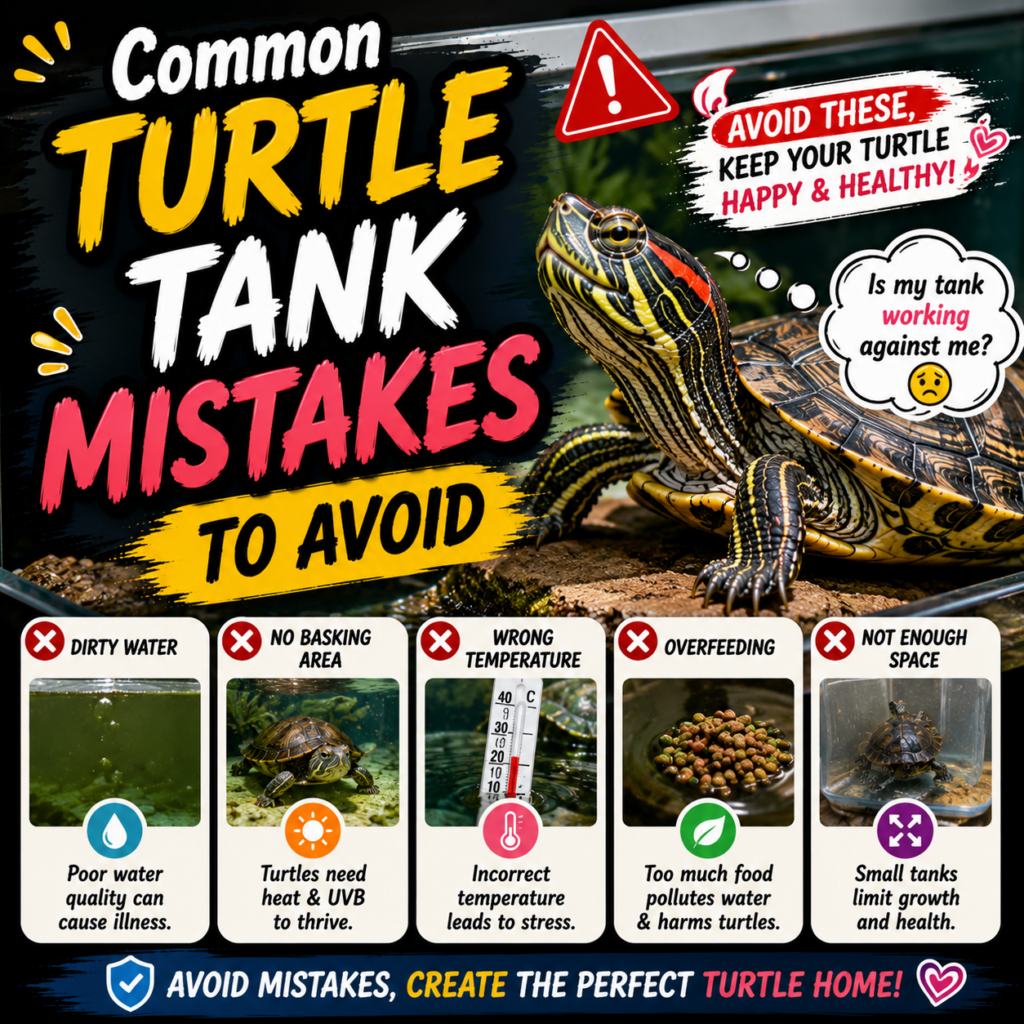
1. Buying a Tank That is Too Small (The Growth Trait)
By far, the number one mistake turtle owners make is severely underestimating how large their pet will grow. That cute, coin-sized baby turtle at the pet store can easily balloon into a 10 to 12-inch adult within a few years—especially female Red-Eared Sliders.
Keeping a large turtle in a cramped 20-gallon tank quickly leads to stunted growth, muscle atrophy, and rapid water fouling.
- The Industry Standard: Always follow the 10-Gallon-Per-Inch Rule.
- 5-inch Turtle = Minimum 50-Gallon Tank
- 10-inch Adult Turtle = Minimum 100-Gallon Tank
2. Using an Inadequate Water Filter
Turtles are exceptionally messy creatures. They eat sloppily, shed skin fragments continuously, and produce a massive amount of waste compared to aquarium fish. If you use a cheap internal filter rated exactly for your tank size, your water will become murky, foul-smelling, and toxic within 48 hours.
- The Solution: Always purchase a heavy-duty external canister filter that is rated for two to three times the actual size of your aquarium. If you have a 50-gallon turtle tank, your filter should be rated for at least a 100 or 150-gallon fish tank. Look for filters with massive chambers for biological and mechanical media to process heavy ammonia loads.
3. Forgetting or Improperly Placing UVB Lighting
Turtles do not just use light to see; they require specialized radiation to survive. Without a high-quality UVB bulb, a turtle cannot synthesize Vitamin D3, which is critical for absorbing calcium from their food. Missing or cheap lighting leads to Metabolic Bone Disease (MBD), which causes soft, deformed shells, broken limbs, and eventual organ failure.
- The Correct Layout: Your basking area must have two separate bulbs: a heat bulb for warmth and a dedicated reptile UVB bulb.
- The Screen Barrier Trap: Never place glass or fine plastic mesh between the UVB bulb and the basking dock. Glass filters out 100% of beneficial UVB rays, rendering the bulb completely useless. Additionally, remember to replace reptile UVB bulbs every 6 to 12 months, as the invisible UVB output fades long before the bulb stops emitting visible light.
4. Keeping the Basking Dock Too Cool or Small
Basking is not a leisure activity for a turtle—it is a biological necessity. Because they are cold-blooded ectotherms, they rely on the heat lamp to raise their core body temperature, jumpstart their digestive metabolism, and completely dry out their shell to prevent fungal rot.
- The Mistakes: Using a floating dock that sinks under the turtle’s weight (preventing their plastron, or belly shell, from drying), or keeping the heat lamp too far away.
- The Calibration: Ensure your basking platform is completely sturdy and large enough for your turtle to haul its entire body completely out of the water. Calibrate the zone using a digital thermometer: the water should be 75°F–78°F (24°C–26°C), while the dry basking zone must hit a warm 85°F–90°F (29°C–32°C).
5. Adding Dangerous Gravel Substrate
Many owners line the bottom of their turtle tank with colorful aquarium gravel to make it look pretty. This is an incredibly dangerous choking hazard.
Turtles are curious foragers that bite at everything on the tank floor. If they accidentally swallow small gravel stones while eating food pellets, it will cause a fatal intestinal impaction (a complete blockage of their digestive tract).
❌ AVOID: Standard Fish Gravel ──► Swallowed easily; causes fatal digestive impaction.

            🌟 USE: Bare-Bottom Tank OR Large River Stones (> Size of Turtle's Head) 🌟
- The Safe Choice: Keep the bottom of the tank completely bare (which is much easier to vacuum clean), or use large, smooth river stones that are physically impossible for your turtle to fit inside its mouth.
6. Neglecting Regular Water Changes
Even with a powerful canister filter, a turtle tank is a closed ecosystem where nitrates and dissolved organic compounds build up over time. Relying solely on the filter without changing the water will result in highly acidic, toxic conditions that cause severe eye and shell infections.
- The Routine: Perform a 25% to 30% water change every single week. Use a siphon vacuum to extract debris hidden between rocks. Crucial: Always treat the incoming tap water with a high-quality water conditioner to instantly neutralize toxic chlorine and chloramines that can burn your turtle’s eyes.
Conclusion: Build a Habitat, Not a Cage
Setting up a flawless turtle habitat requires an initial investment in space, filtration, and specialized lighting. By bypassing the tiny starter tanks, over-specifying your filtration system, securing an unblocked UVB light source, and keeping hazardous gravel far away, you will create a crystal-clear underwater oasis.
Provide your turtle with a balanced, highly calibrated habitat, and they will reward you with decades of active, responsive, and wonderfully entertaining companionship!