Watching your dog suffer from constant scratching, licking, or digestive issues is heartbreaking. As a pet parent, your first instinct is to find the cause. Two of the most common culprits are food allergies and environmental allergies.
While they share similar symptoms, they are distinct conditions that require different management strategies. Understanding the differences is the first step toward getting your furry friend the relief they deserve.
What are Food Allergies in Dogs?
A food allergy occurs when a dog’s immune system mistakenly identifies a specific protein in their food as a threat. The body reacts by launching an immune response, triggering symptoms that can affect the skin, the gastrointestinal tract, or both.
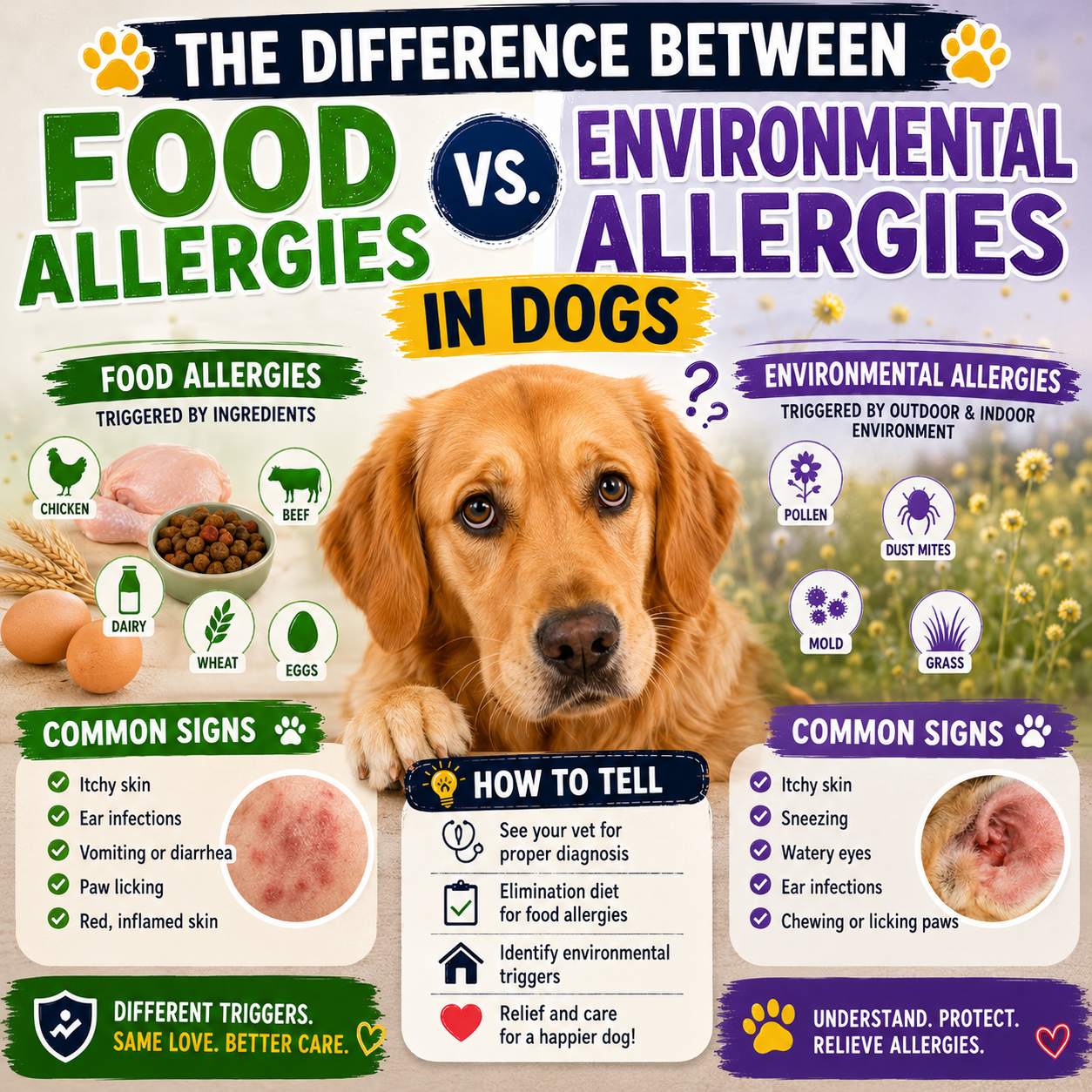
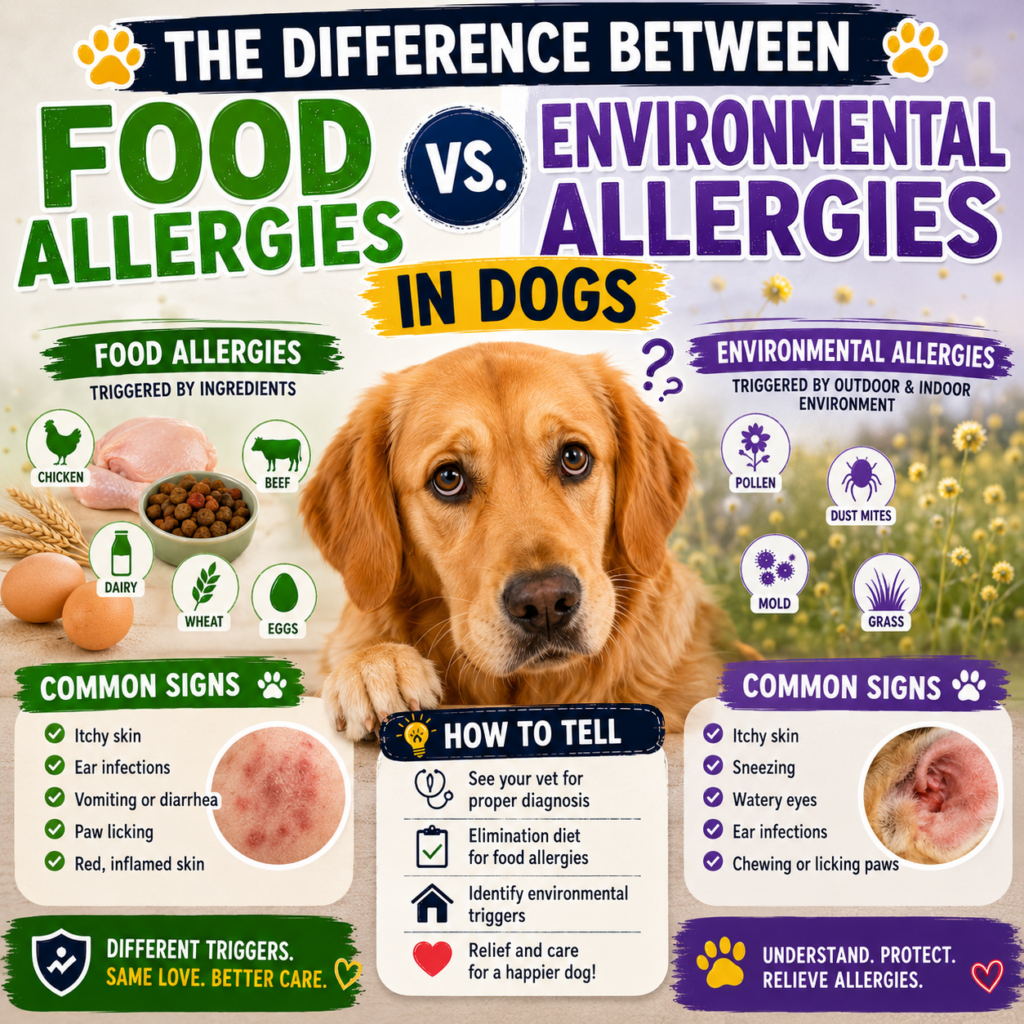
- Common Triggers: Beef, chicken, dairy, wheat, and eggs are the most frequent culprits.
- Key Indicators: Food allergies often manifest as chronic ear infections, paw chewing, and frequent bowel movements or gas.
- The Diagnostic Process: The “Gold Standard” for diagnosing a food allergy is an elimination diet trial. This involves feeding your dog a strictly controlled, hydrolyzed protein or novel protein diet for 8 to 12 weeks to see if symptoms resolve.
What are Environmental Allergies (Atopy) in Dogs?
Environmental allergies, often referred to as canine atopic dermatitis, occur when your dog has a hypersensitive immune reaction to substances in their surroundings. Unlike food allergies, these are usually seasonal or persistent depending on the environment.
- Common Triggers: Pollen, grasses, mold spores, dust mites, and dander.
- Key Indicators: Symptoms typically include intense itching (pruritus), particularly in areas like the armpits, belly, feet, and face. Dogs with environmental allergies often suffer from “hot spots” and secondary skin infections caused by excessive scratching.
- The Diagnostic Process: Because there is no single test for environmental allergies, veterinarians usually diagnose this through “exclusion”—ruling out parasites (fleas/mites) and food allergies first, then evaluating the history and clinical presentation.
Comparison Table: Food vs. Environmental Allergies
| Feature | Food Allergies | Environmental Allergies |
| Primary Trigger | Proteins (Chicken, Beef, etc.) | Pollen, mold, dust, mites |
| Seasonality | Usually non-seasonal | Often seasonal |
| Common Symptoms | GI issues + skin irritation | Mostly skin irritation/itching |
| Age of Onset | Can happen at any age | Usually manifests between 6 months – 3 years |
| Treatment | Dietary modification | Meds, immunotherapy, hygiene |
How to Tell the Difference
While only a veterinarian can provide a definitive diagnosis, you can look for these patterns at home:
- Monitor the Calendar: If your dog’s scratching spikes only during spring or fall, it is likely environmental (pollen). If the scratching is constant throughout the year, regardless of the season, it is more likely to be a food-related issue.
- Check for GI Symptoms: While some dogs with food allergies only have skin issues, a dog with chronic diarrhea or vomiting alongside skin problems is much more likely to be reacting to their diet.
- Location Matters: Does the itching start immediately after a walk in the park? That suggests environmental exposure.
When to See a Veterinarian
Self-diagnosing allergies can be difficult because symptoms often overlap with other issues like flea infestations or hormonal imbalances. You should schedule an appointment if you notice:
- Excessive hair loss or raw skin patches.
- A foul odor coming from the ears or skin.
- Signs of discomfort that keep your dog from sleeping.
Treatment options your vet might explore include:
- For Food: Prescription hypoallergenic diets or home-cooked elimination diets.
- For Environmental: Antihistamines, medicated shampoos, allergy shots (immunotherapy), or newer targeted therapies like Apoquel or Cytopoint.
Conclusion
Whether your dog is struggling with a food-based reaction or an environmental allergy, relief is possible. By keeping a detailed journal of your dog’s symptoms, diet, and environment, you provide your veterinarian with the tools needed to reach an accurate diagnosis. With the right management plan, your dog can get back to living a happy, itch-free life.