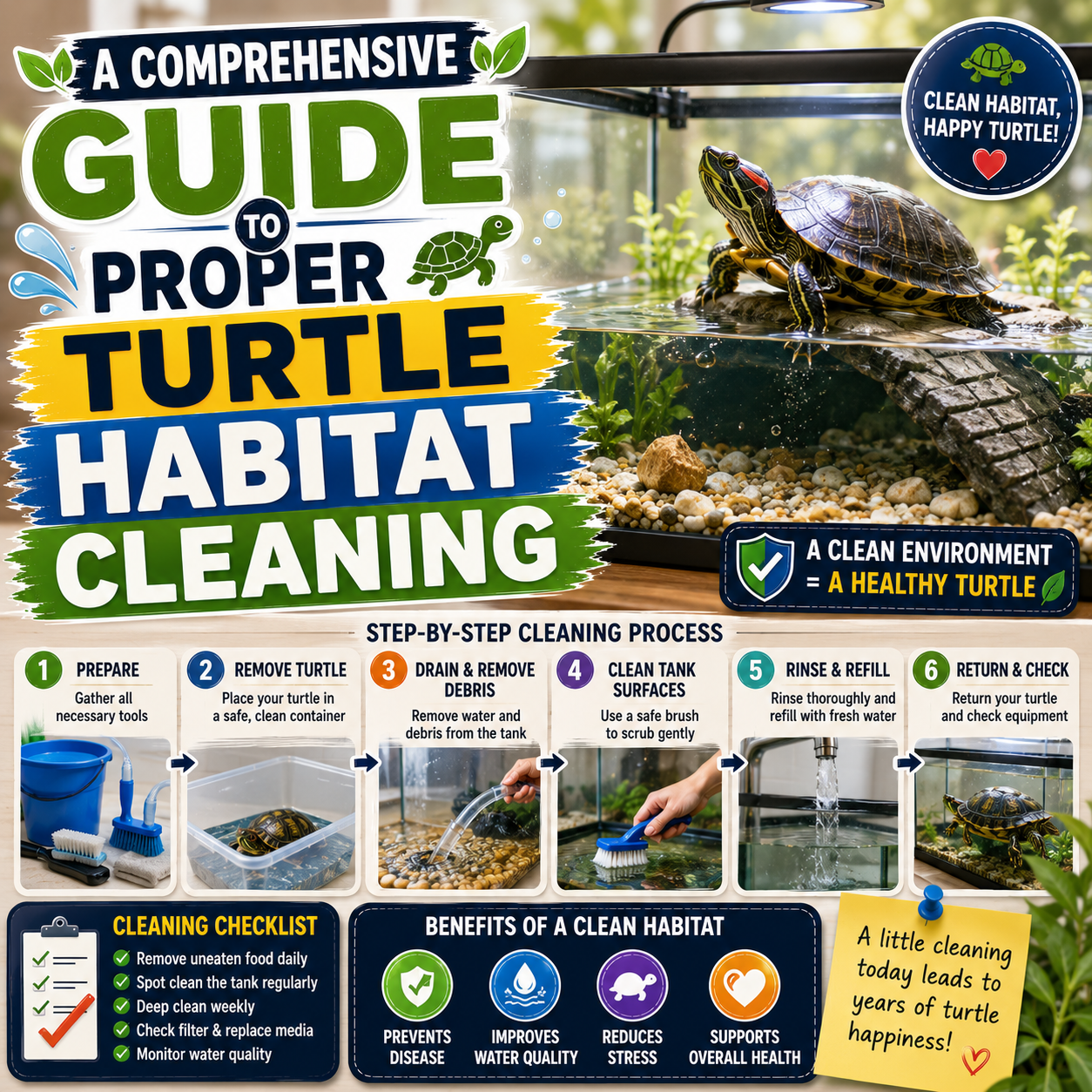
Turtles are fascinating pets, but their aquatic environment requires diligent maintenance to stay healthy. Because turtles produce significant waste, their habitat can quickly become a breeding ground for harmful bacteria and ammonia, which can lead to serious health issues like shell rot or respiratory infections.
Whether you are a new owner or looking to refine your routine, this guide provides a step-by-step approach to keeping your turtle’s tank pristine and safe.
1. The Maintenance Schedule: Consistency is Key
To prevent the buildup of toxins, you need a two-pronged approach: daily maintenance and deep cleaning.
- Daily Tasks:
- Remove Debris: Use a small net to remove uneaten food and visible waste.
- Monitor Filtration: Check that your filter is running smoothly and that the water flow remains strong.
- Check Water Temperature: Ensure your heater (if applicable) is maintaining the correct range for your species.
- Weekly/Bi-Weekly Tasks:
- Partial Water Change: Replace 20% to 30% of the water volume. Never remove 100% of the water at once, as this destroys the beneficial bacteria needed for the nitrogen cycle.
- Filter Maintenance: Rinse filter media in dechlorinated water or water taken directly from the tank. Never use tap water, as the chlorine will kill the beneficial bacteria in your filter.
2. The Deep Clean: Step-by-Step
Once every month or two, a more thorough cleaning is required. Follow these steps to ensure safety for both you and your turtle:
- Move the Turtle: Place your turtle in a secure, dry temporary container (like a plastic bin) while you work.
- Drain the Tank: Use a siphon to drain the water. If you have a gravel substrate, use a gravel vacuum to pull out waste trapped at the bottom.
- Clean Decor and Basking Area: Remove rocks, logs, and basking platforms. Scrub them with a non-toxic, turtle-safe cleaner or simply use hot water and a stiff brush. Avoid using household soaps or detergents, as residues can be toxic.
- Wipe the Glass: Clean the interior glass with a specialized aquarium scrubber or a clean, white paper towel. Do not use chemical window cleaners.
- Refill with Treated Water: When adding new water, always use a water conditioner to remove chlorine and chloramines. Ensure the new water is temperature-matched to the existing tank water to avoid shocking your turtle.
3. Essential Hygiene Tips for Owners
Turtle maintenance isn’t just about the animal; it’s about your safety, too.
- Salmonella Awareness: Turtles are common carriers of Salmonella. Always wash your hands thoroughly with soap and water after touching your turtle or cleaning their habitat.
- Dedicated Tools: Keep a specific set of brushes, nets, and buckets solely for your turtle tank. Do not use these tools for any other household tasks to prevent cross-contamination.
- Avoid “Over-Cleaning”: While it might sound counterintuitive, having a sterile tank is bad for the ecosystem. You want to maintain the “good” bacteria that help break down waste, so never sanitize everything at once.
4. Troubleshooting: When the Water Gets Cloudy
If your tank looks murky shortly after a cleaning, consider these factors:
- Overfeeding: Unconsumed food is the #1 cause of poor water quality. Feed your turtle in a separate container if possible.
- Under-Filtration: Turtle tanks need much more powerful filtration than fish tanks. Ensure your filter is rated for at least 2–3 times the volume of your tank.
- Lighting: Ensure your UVB light is replaced every 6–12 months, as old bulbs lose their effectiveness, which can indirectly impact the turtle’s health and waste production.
Final Thoughts
A clean habitat is the foundation of a long, happy life for your turtle. By mastering a consistent cleaning routine, you minimize your workload and maximize your turtle’s longevity.