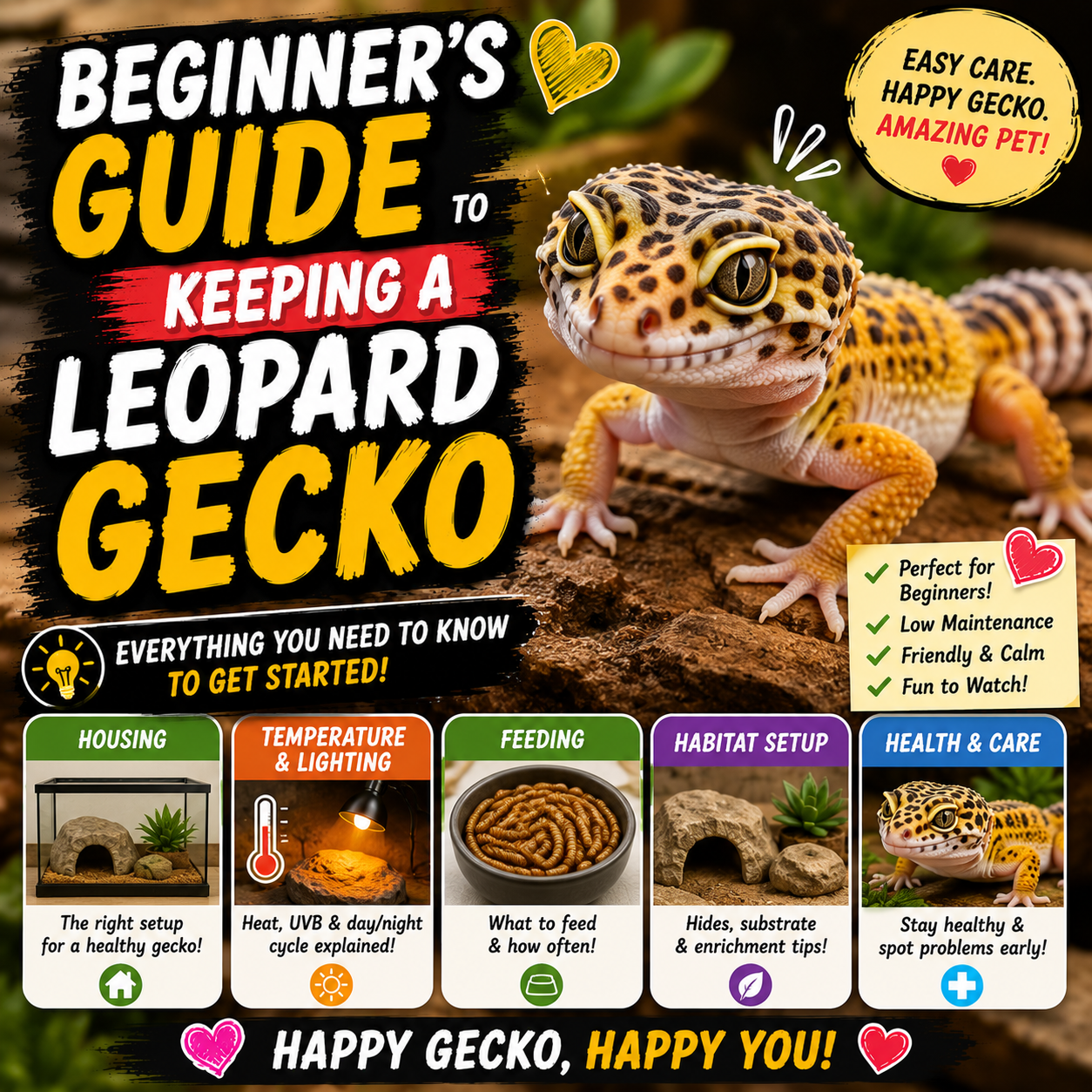
If you are looking to step into the wonderful world of reptile keeping, there is no better ambassador than the Leopard Gecko (Eublepharis macularius). With their distinctive spotted patterns, oversized expressive eyes, and an adorable physical facial structure that makes them look like they are permanently smiling, these little lizards have captured the hearts of pet parents worldwide.
Unlike many delicate or aggressive reptiles, leopard geckos are naturally gentle, relatively slow-moving, and highly adaptable. This makes them the undisputed “gold standard” starter reptile for beginners.
However, “beginner-friendly” does not mean zero effort. Leopard geckos have highly specific biological requirements regarding heat, lighting, and nutrition that you must get right from day one. Let’s dive into the ultimate beginner’s guide to keeping a leopard gecko safely and happily!
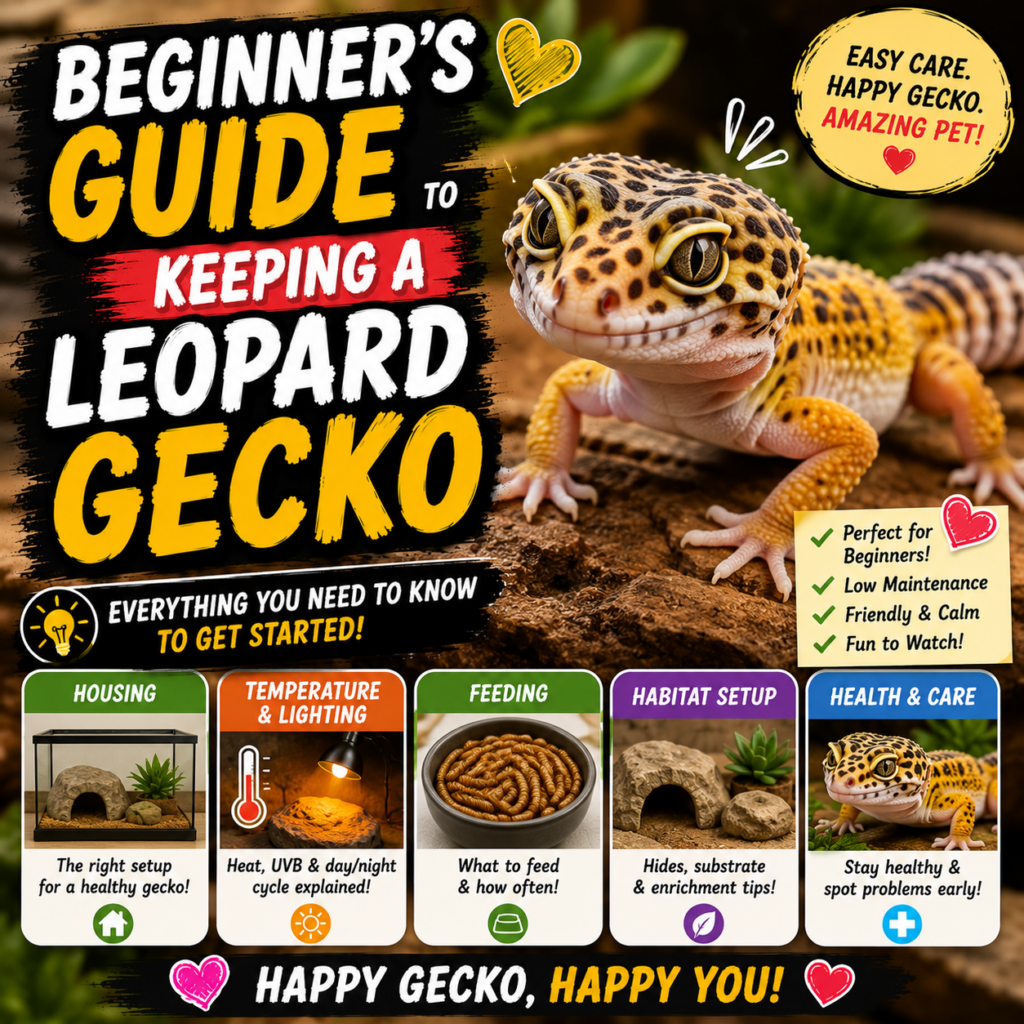
1. Meeting the Leopard Gecko: Quick Profile
Before assembling their habitat, let’s look at what makes these desert-dwelling lizards so unique:
- Lifespan: With proper care, they easily live for 15 to 20 years. They are a long-term commitment!
- Size: Adults max out at a manageable 7 to 10 inches (18 to 25 cm) long.
- The Tail Secret: They store their fat reserves entirely inside their plump tails. If they feel extremely threatened, they can drop their tail as a defense mechanism (autotomy)—it will grow back, but it will never look quite the same. Always handle them gently!
- No Sticky Toes: Unlike tree-dwelling geckos, leopard geckos are strictly ground dwellers. They possess tiny claws instead of adhesive toe pads, meaning they cannot scale smooth vertical glass walls.
2. Setting Up the Ultimate Leopard Gecko Habitat
To prevent psychological stress and metabolic health issues, bypass small beginner kits and build your enclosure using these structural baselines:
The Tank Volume
Adult leopard geckos require room to roam, forage, and regulate their body temperature. The modern veterinary baseline standard is a minimum 20-gallon long tank, though a 40-gallon breeder terrarium ($36″ \times 18″ \times 18″$) is highly recommended to provide a luxury environment.
The “Three-Hide” Requirement
Leopard geckos are nocturnal prey animals that spend their days hiding. Your terrarium must feature at least three distinct hides to make them feel secure:
- The Warm Hide: Placed directly on the heated side of the tank so they can digest their food safely.
- The Cool Hide: Placed on the opposite, unheated side so they can cool down when needed.
- The Humid Hide: Placed in the middle, lined with damp moss or wet paper towels. This creates a high-humidity microclimate that is absolutely vital to help them peel away their old skin safely during a shed cycle.
👉 The Perfect Terrarium Layout:
[ Warm Zone (85-90°F) ] ──► [ Humid Hide (Shedding Zone) ] ──► [ Cool Zone (75°F) ]
     (Warm Hide)                                                  (Cool Hide)
The Substrate Dilemma: What Goes on the Floor?
- ❌ What to AVOID: Never use loose desert sand, walnut shells, or calcium sand. Leopard geckos accidentally swallow substrate while hunting insects. Loose sand clumps inside their digestive tract, causing fatal gut impaction.
- ✓ Safe Options for Beginners: Use unglazed ceramic tiles, slate stones, paper towels, or specialized textured reptile carpets. These are 100% safe, impossible to swallow, and incredibly easy to wipe clean.
3. The Thermal Gradient: Heating and Lighting
Leopard geckos are ectothermic (cold-blooded), meaning they rely on their environment to control their internal body temperature. You must create a thermal gradient—a warm side and a cool side inside the same tank:
- Basking Side Surface Temp: 88°F to 92°F (31°C to 33°C) using an overhead ceramic heat emitter or a deep heat projector connected to a thermostat.
- Cool Side Ambient Temp: 73°F to 76°F (23°C to 24°C).
- Do They Need UVB? While leopard geckos are crepuscular (active at dawn and dusk), providing a low-percentage (2% to 5%) overhead linear UVB light during a 12-hour day cycle mimics natural sunlight, supercharges their immune system, and helps them synthesize Vitamin D3 naturally.
4. Nutrition: The Strict Insectivore Matrix
Leopard geckos are 100% insectivores. They cannot digest fruits, vegetables, or commercial processed pellets. If it doesn’t crawl, they won’t eat it!
Safe Daily Feeder Insects
- Dubia Roaches: The undisputed king of reptile nutrition—high in protein, low in fat, and easy to digest.
- Mealworms & Crickets: Fantastic daily staples that encourage active hunting behavior.
- Superworms & Waxworms: Treat these like candy! They are incredibly rich in fat and should only be fed once a week to prevent lizard obesity.
The Essential Dusting Equation
Insects alone lack the vital minerals your gecko needs to build solid bones. To prevent Metabolic Bone Disease (MBD)—a horrific condition that softens their jaws and twists their limbs—you must dust their insects with mineral supplements using this rotation:
$$\text{Meal 1 \& 2: Pure Calcium Powder} \longrightarrow \text{Meal 3: Calcium with Vitamin D3} \longrightarrow \text{Meal 4: Reptile Multivitamin}$$
Beginner Care: Quick Troubleshooting Matrix
| What You Might See | Potential Root Cause | The Immediate Fix |
| Dull skin, white patches on toes or tail. | Incoming Shed Cycle / Low Humidity | Ensure the humid hide moss is thoroughly damp; never peel dry skin yourself! |
| Lethargy, shaking limbs, flexible lower jaw. | Metabolic Bone Disease (MBD) | Instantly audit your calcium dusting routine; install a fresh UVB reptile bulb. |
| Tail looking skinny or deflated. | Malnutrition, Parasites, or Dehydration | Boost gut-loaded Dubia roaches; check that your water dish is filled daily. |
Conclusion: Consistency Breeds a Sweet Lizard
At the end of the day, successfully keeping a leopard gecko boils down to consistency. By trading dangerous loose sand for safe ceramic tiles, setting up a strict three-hide layout, keeping their basking zones perfectly heated via a thermostat, and dusting their crawling insect meals with calcium, you will easily bypass the classic beginner pitfalls.
Set up their desert sanctuary correctly, respect their daylight sleeping cycles, and get ready to enjoy nearly two decades of calm, smiling companionship with one of the most delightful reptiles on earth!