Introducing a pet into your child’s life is a beautiful milestone. For a gentle, calm, and sensitive child, an animal companion isn’t just a fun playmate—it becomes an emotional anchor, a quiet confidant, and a wonderful way to foster lifelong empathy and gentle responsibility.
However, picking the wrong first pet can accidentally lead to overwhelming maintenance for parents, stressful environments for the animal, or an unintended mismatch in energy levels.
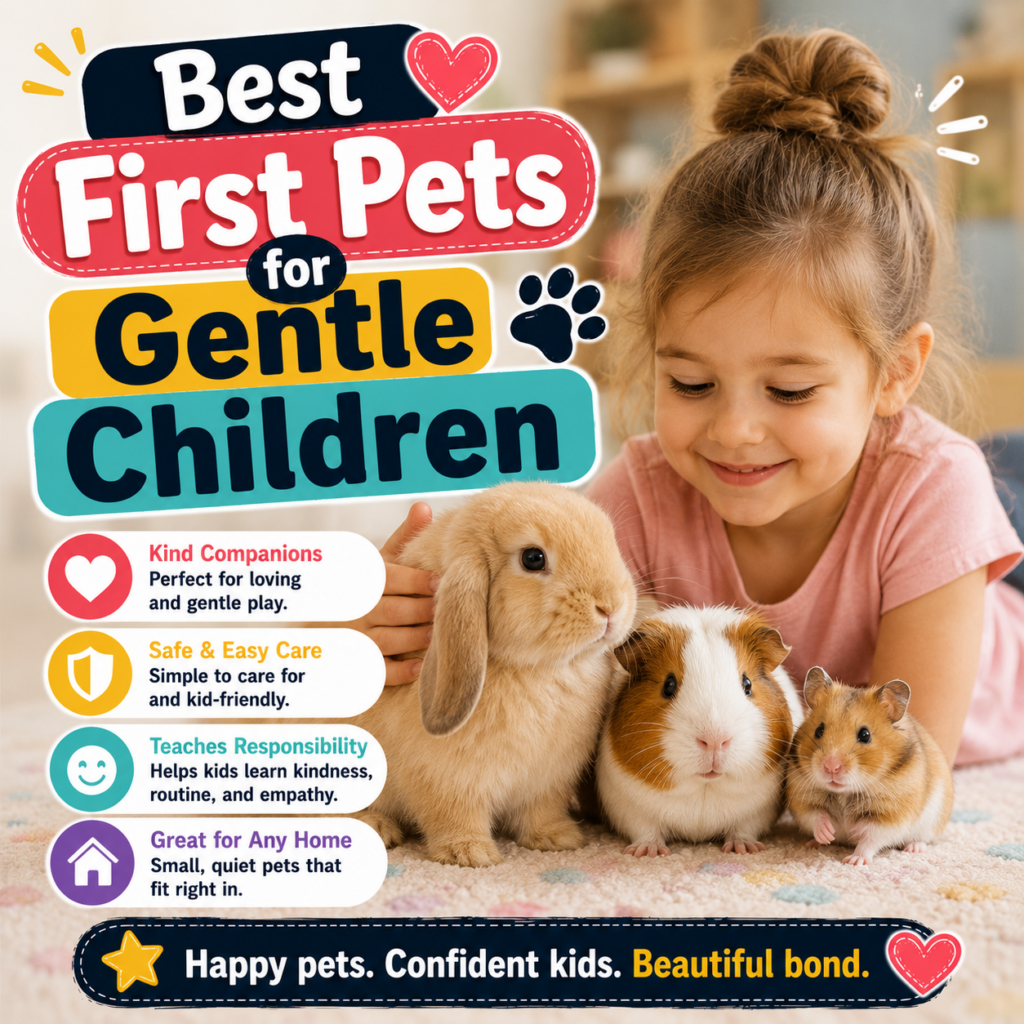
What are the best first pets for gentle children?
If your child naturally respects boundaries, speaks softly, and enjoys quiet observation over rowdy play, certain animals are perfectly matched to their unique emotional pace. Let’s dive into the top science-backed pet choices for gentle kids, along with the unique psychological benefits of each.
1. Guinea Pigs: The Vocal and Affectionate Cuddle Buddies
For a gentle child who craves a tactile, warm animal to bond with, guinea pigs are the absolute gold standard. Unlike their smaller hamster cousins (which are nocturnal, fast-moving, and prone to nipping when startled), guinea pigs are diurnal—meaning they are awake during the day right alongside your child.
The Gentle Compatibility Factor
Guinea pigs are naturally docile, social herbivores that express happiness through an adorable range of vocalizations, most notably a soft squeaking sound called “wheeking.”
Because they enjoy being held flat against a child’s chest inside a soft towel, a calm, gentle child who can sit quietly on the rug is their ideal human companion. Your child can easily participate in their care by hand-feeding them fresh bell peppers or romaine lettuce, building a beautiful loop of mutual trust.
2. Senior Rescue Dogs: The Empathetic Soulmates
While a bouncy, high-energy puppy can easily overwhelm a quiet child (and require exhausting training from parents), a mature or senior rescue dog offers an unmatched level of emotional stability.
The Power of Matched Energy
Older dogs have already outgrown the destructive chewing and frantic energy phases. They ask for very little: a predictable routine, a comfortable bed, a gentle walk around the neighborhood, and someone to sit quietly beside them.
A gentle child who excels at offering soft head scratches and quiet companionship will find a senior dog to be a deeply intuitive, empathetic protector who naturally tracks and mirrors their calm emotional baseline.
At a Glance: Comparing the Best First Pets for Calm Children
Every animal companion introduces a distinct level of responsibility and interaction. Use this grid to find your child’s perfect match:
| Pet Type | Their Daily Lifestyle Pace | Ideal Interaction Style | What It Teaches Your Child | Parent Commitment Level |
| Guinea Pigs | Daylight routine, social, thrives in pairs. | Quiet lap time, hand-feeding greens, gentle brushing. | Emotional care, understanding subtle animal vocalizations. | Medium: Requires weekly enclosure cleaning and fresh daily hay/veggies. |
| Senior Rescue Dogs | Low-energy, calm, predictable, deeply loyal. | Sitting side-by-side, calm brushing, peaceful backyard walks. | Ultimate empathy, deep companionship, and emotional buffering. | High: Requires standard veterinary care, feeding, and waste cleanup. |
| Budgies (Parakeets) | Vibrant, cheerful, vocal, visually stimulating. | Sitting near the enclosure, whistling, teaching words. | Respecting flight boundaries, patience, auditory bonding. | Medium: Daily food/water refreshes, cage liner changes, and social interaction. |
| Fancy Rats | Highly intelligent, pocket-sized, clean, playful. | Solving mini cardboard puzzles, riding on shoulders, hand-grooming. | Advanced animal intelligence, creative problem-solving. | Medium: Weekly cage cleaning, mental enrichment rotation. |
3. Budgies (Parakeets): The Cheerful, Low-Touch Whistlers
If your child is a creative, artistic, or observant soul who prefers visual and auditory connection over constant physical holding, a small exotic bird like a budgie (parakeet) is a magnificent choice.
The Avian Flock Connection
Budgies are highly social, beautifully colored, and endlessly entertaining to watch. They express their joy through soft, melodic chatter and intelligent head-bobs.
A gentle child is a perfect fit for a budgie because birds are prey animals that are easily terrified by loud shouting or sudden, erratic hand movements. A calm child who sits quietly near the enclosure to read a book, do homework, or softly whistle to them will quickly be accepted as a safe member of the “flock,” prompting the bird to confidently fly over to rest on their finger.
💡 The Surprise Contender: Fancy Rats (The Pocket Dogs)
Don’t let old cultural stigmas fool you—domestic fancy rats are widely considered by veterinary behaviorists to be the single best pocket pets for smart, gentle kids. They are clean, incredibly affectionate, and possess a toddler-like intelligence. They can easily be trained to solve miniature maze puzzles, recognize their names, and happily ride around on your child’s shoulder while they read or study.
Parent’s Checklist: Ensuring a Successful First Match
Before finalizing the adoption, keep these three golden rules of animal psychology in mind:
- Acknowledge the “Parental Safety Net”: No matter how mature or gentle your child is, there is no such thing as a pet a child can care for 100% alone. Parents must always remain the primary guardians of the animal’s ultimate health, nutrition, and enclosure sanitation.
- Prioritize Species-Specific Pairs: Small pocket pets like guinea pigs and budgies are intensely social flock/herd animals. Keeping one entirely alone causes them severe cognitive loneliness and stress. Always adopt them in bonded pairs to ensure their emotional health thrives.
- Honor the Decompression Phase: When you bring a new pet home, their cortisol (stress hormone) levels are temporarily spiked due to the unfamiliar territory. Teach your child to give the animal 48 to 72 hours of complete quiet time in their new home before attempting to hold or play with them.
The Bottom Line
A gentle child is a rare and beautiful gift to the animal world. Because they naturally possess the soft voices, calm movements, and protective instincts that animals crave, they have a magnificent head start in forming deep, soul-stirring connections with the animal kingdom. By picking a species that matches their peaceful lifestyle pace, you aren’t just adding a pet to your house—you are giving your child a beautiful, living lesson in unconditional love that they will carry in their hearts forever.