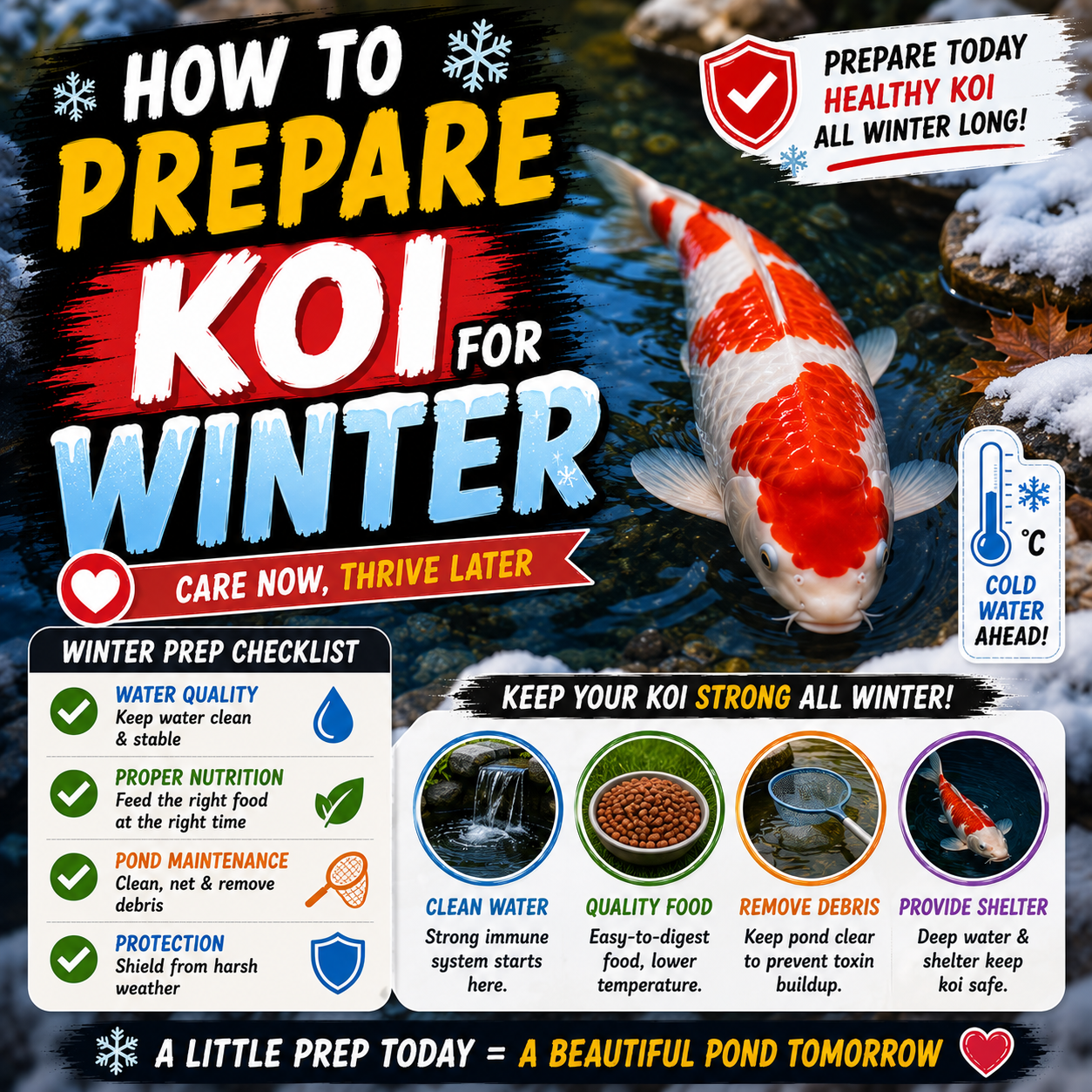
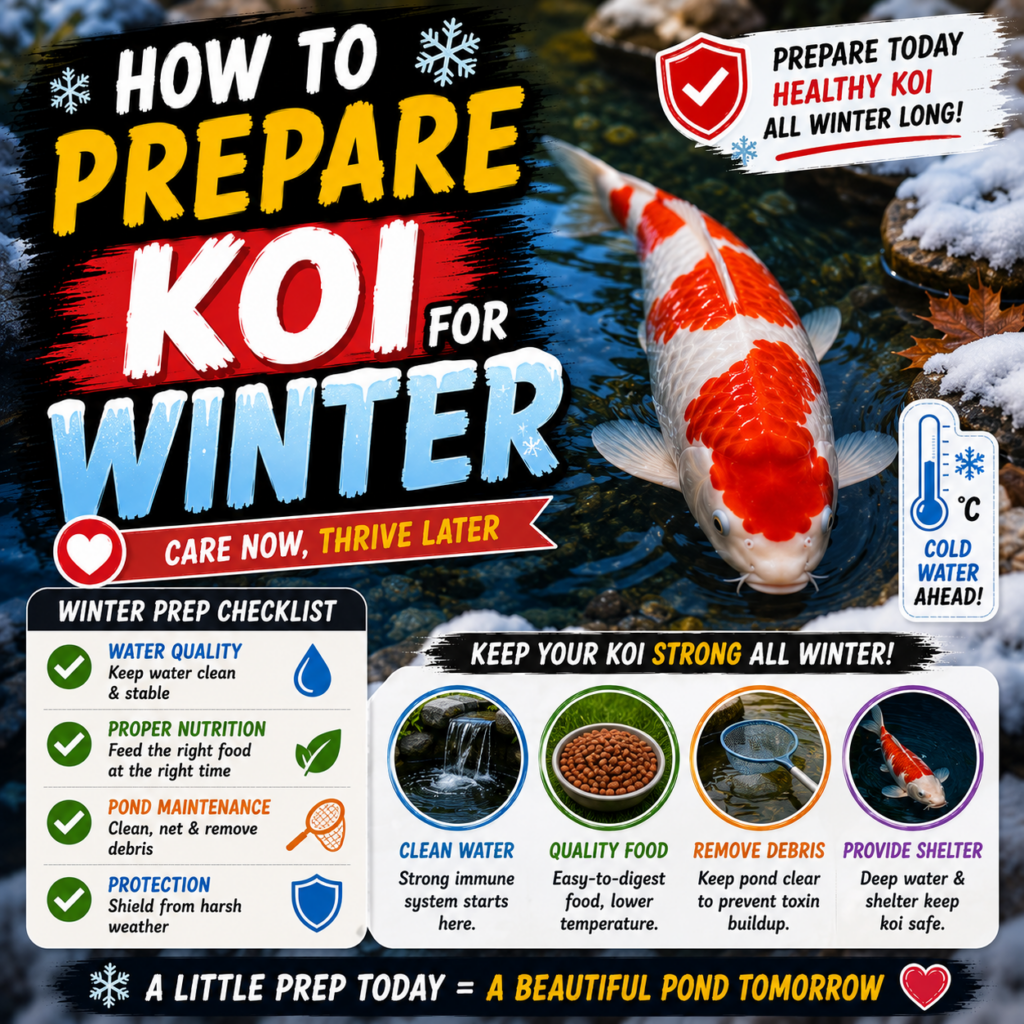
For pond hobbyists, autumn brings a dramatic shift in routine. As the leaves begin to turn vibrant shades of orange and gold, a subtle biological countdown begins beneath the surface of your garden pond.
Koi (Cyprinus rubrofuscus) are remarkably hardy, resilient fish capable of surviving freezing winter climates. However, they are entirely cold-blooded ectotherms. This means their internal body temperature, metabolic rate, and immune systems are governed completely by the temperature of the water around them.
Failing to properly winterize your pond can lead to rotting food in your fish’s gut, severe toxic gas buildup under surface ice, or fatal bacterial outbreaks in the spring (commonly known as “Spring Aeromonas Syndrome”).
So, how do you prepare koi for winter safely? Let’s break down the essential steps to protect your living jewels through the freezing months.
1. The Water Temperature Matrix (Adjusting Your Feeding Routine)
The single biggest mistake pond beginners make is feeding their koi standard, high-protein pellets too late into the autumn. As water temperatures drop, a koi’s digestive tract slows down to a crawl. If you feed them when it’s too cold, the food will literally sit and rot inside their intestines, causing fatal bacterial infections.
Invest in a reliable pond thermometer and follow the strict Three-Tier Winter Feeding Protocol:
- Tier 1: 60°F to 55°F (15°C to 13°C) — Switch to Wheatgerm: Reduce feeding to once a day and switch exclusively to a highly digestible, low-protein wheatgerm pellet. Wheatgerm is incredibly easy on a koi’s sluggish winter digestive tract.
- Tier 2: 55°F to 50°F (13°C to 10°C) — Scale Back: Reduce feeding to just 2 to 3 times per week, only offering food during the warmest hours of the afternoon.
- Tier 3: Below 50°F (10°C) — STOP Feeding Completely: At this threshold, a koi’s digestive enzymes shut down entirely. Your fish will enter a state of semi-hibernation known as torpor. Do not panic; they will safely live off their stored fat reserves until spring!
2. Execute a Deep Autumn Clean (Eliminating the Sludge Trap)
Before the first freeze hits, you must eliminate the organic waste pooling at the bottom of your pond. Fallen autumn leaves, dead algae, and fish waste combine to form a toxic layer of anaerobic muck.
If this sludge is left inside the pond when a sheet of ice caps the surface, it will continuously decompose. This release floods the water with invisible, lethal doses of ammonia, hydrogen sulfide, and methane gases that cannot escape, suffocating your sleeping fish.
🍂 Fallen Leaves + Fish Muck ──► Trapped Under Winter Ice ──► Toxic Gas Buildup (Suffocation) ❌
🍁 Deep Autumn Clean Out ──► Clear Bottom + Aeration Hole ──► Safe Winter Hibernation (Torpor) 🌟
- The Action Plan: Use a fine-mesh pond net to skim away floating debris daily. Use a specialized pond vacuum to extract the organic muck from the bottom floor. Finally, perform a 20% to 25% partial water change to dilute any lingering water column toxins before winter locking.
3. Keep a Breathing Hole in the Ice (Never Let the Pond Freeze Solid)
If you live in a region where winter ice completely blankets the surface of your pond, you face a major oxygen crisis. While your koi require very little oxygen during torpor, they still need to vent carbon dioxide and absorb fresh oxygen to survive.
- ❌ Never Smash the Ice: If you wake up to find your pond capped in ice, never hit it with a hammer or a shovel. The acoustic shockwaves traveling through the water column can easily rupture a hibernating koi’s swim bladder or induce fatal cardiac arrest.
- ✓ Use a Pond De-Icer / Heater: Place a floating, energy-efficient pond de-icer (or pond heater) on the surface. These devices do not heat the entire pond; they simply heat a small localized circle to maintain a permanent, open breathing hole in the ice matrix.
- ✓ Add an Air Pump: Place an aeration stone just 1 foot below the surface. The constant stream of rising air bubbles breaks the surface tension, accelerating vital gas exchange. (Note: Do not drop air stones to the absolute bottom of the pond, as this will mix the water layers and destroy the warm thermal zone).
4. Protect the Bottom Thermal Layer (The 4°C Dynamic)
Water possesses a fascinating physical property: it reaches its absolute maximum density at exactly 39.2°F (4°C). Because dense water sinks, the absolute warmest water in a freezing pond will naturally settle along the very bottom floor.
Your hibernating koi will gather in a tight school in this deep, stable thermal zone to ride out the winter safely.
- Turn Off Bottom Drains and Waterfalls: If you leave deep water pumps running, they will suck up that precious 4°C warm water, pump it to the freezing surface, and return ice-cold water back to the bottom. This destroys the thermal layer and can literally freeze your koi alive.
- The Winter Pump Standard: Bypass your bottom drains. If you must run a filter through a mild winter, raise your submersible pump up to a shallow shelf (about 1 foot below the surface) so it only circulates the top layer of water.
The Ultimate Winterization Checklist
| Action Item | Temperature Threshold | Biological Purpose |
| Switch to Wheatgerm Food | 60°F – 55°F (15°C – 13°C) | Prevents digestive blockages as metabolism slows. |
| Stop All Feeding Completely | Below 50°F (10°C) | Koi enter torpor; food will rot inside the gut if fed. |
| Vacuum Bottom Sludge & Clean Filters | Early Autumn (Before Ice) | Eliminates toxic methane and hydrogen sulfide buildup. |
| Install Floating De-Icer & Air Stone | Before First Frost | Maintains an open hole in the ice for critical gas exchange. |
| Raise Pumps to Shallow Shelves | Winter Lockdown | Preserves the dense, warm 39°F (4°C) thermal zone at the bottom. |
Conclusion: Spring Success is Built in Winter
Preparing your koi for winter is all about working alongside their ancient evolutionary design. They don’t need warm water to survive the winter; they simply need clean, undisturbed water, zero food, and a small opening in the surface ice to breathe.
By executing a thorough autumn cleaning, monitoring your pond thermometer rigidly, and keeping a floating de-icer active, you will ensure your majestic living jewels wake up in the spring healthy, vibrant, and ready to greet you for another beautiful season!